
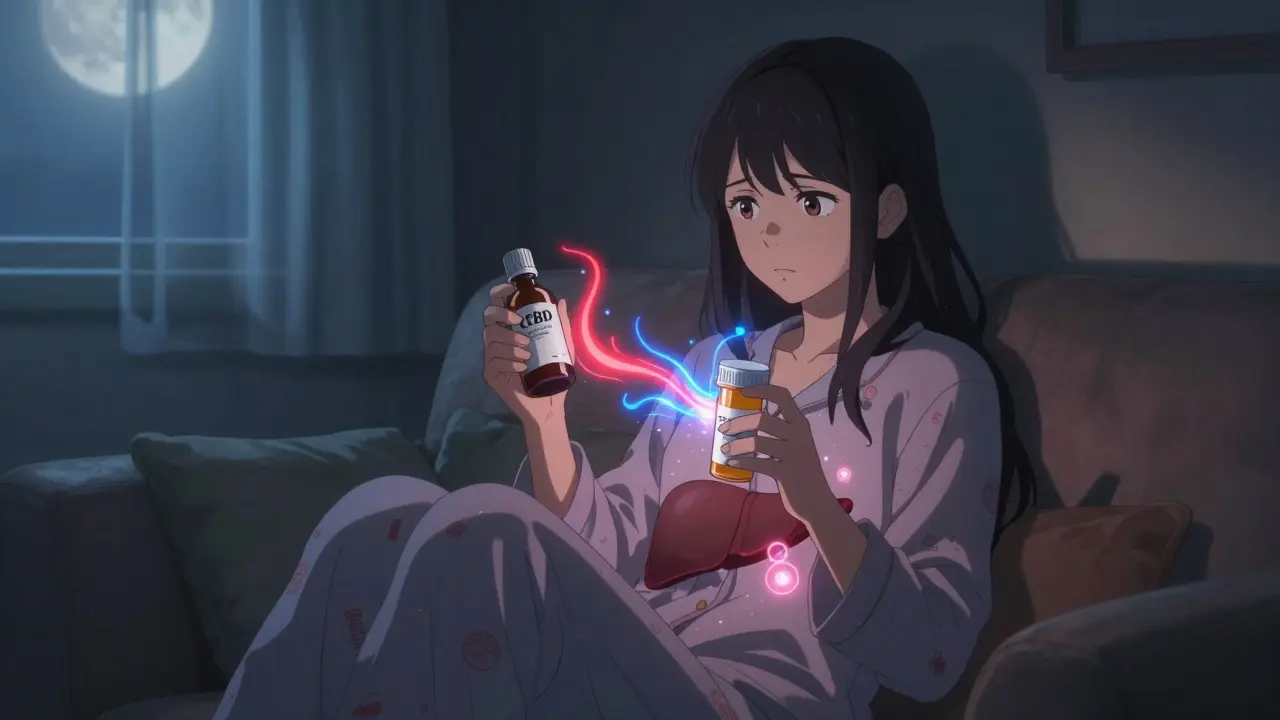
More people are using cannabis - whether it's CBD oil for anxiety, THC for chronic pain, or full-spectrum products for sleep - but few realize how deeply it can affect the medications they're already taking. If you're on warfarin, clobazam, or even common drugs like statins or antidepressants, mixing them with cannabis isn't just a guesswork game. It can lead to dangerous side effects, hospital visits, or even life-threatening outcomes. The science is clear: cannabis doesn't just sit quietly in your system. It actively interferes with how your body processes up to 60% of all prescription drugs.
How Cannabis Changes How Your Medicines Work
Your liver uses a group of enzymes called cytochrome P450 (CYP450) to break down most medications. Think of them as tiny factory workers that process drugs so your body can use or get rid of them. Cannabis compounds - especially CBD and THC - don't just pass through. They shut down or slow down these workers.
CBD is a powerful blocker of CYP3A4 and CYP2C19. THC hits CYP1A2, CYP2C9, and CYP3A4. When these enzymes are inhibited, medications don't get broken down as quickly. That means they build up in your bloodstream. A higher concentration can turn a safe dose into a toxic one. For example, if you're taking warfarin (a blood thinner), adding CBD can spike your INR levels by nearly 50% in just three days. That's not a small change - it's a red flag for internal bleeding.
But it's not just about building up. Sometimes, cannabis makes drugs disappear faster. Smoking cannabis can actually speed up the metabolism of theophylline (used for asthma), dropping its levels by 30% within hours. That means your asthma control could fall apart without you even knowing why.
High-Risk Medications: When Mixing Is Dangerous
Not all drug interactions are created equal. Some are minor. Others can kill you.
Warfarin: This blood thinner has a razor-thin safety margin. Too little, and you risk clots. Too much, and you bleed internally. Studies show that even small doses of CBD (as low as 10 mg/day) can raise INR levels enough to cause nosebleeds, bruising, or worse. One 2022 review tracked 17 cases of serious gastrointestinal bleeding directly linked to cannabis use with warfarin. The American College of Clinical Pharmacy says: avoid this combo unless under strict medical supervision.
Tacrolimus and cyclosporine: These are critical for transplant patients. They prevent organ rejection - but only if their levels stay in a narrow range. Cannabis can cause tacrolimus levels to jump 300-500%. That's not a typo. One case report described a kidney transplant patient who nearly lost the organ because of a CBD oil routine. Dose adjustments aren't optional here - they're life-saving.
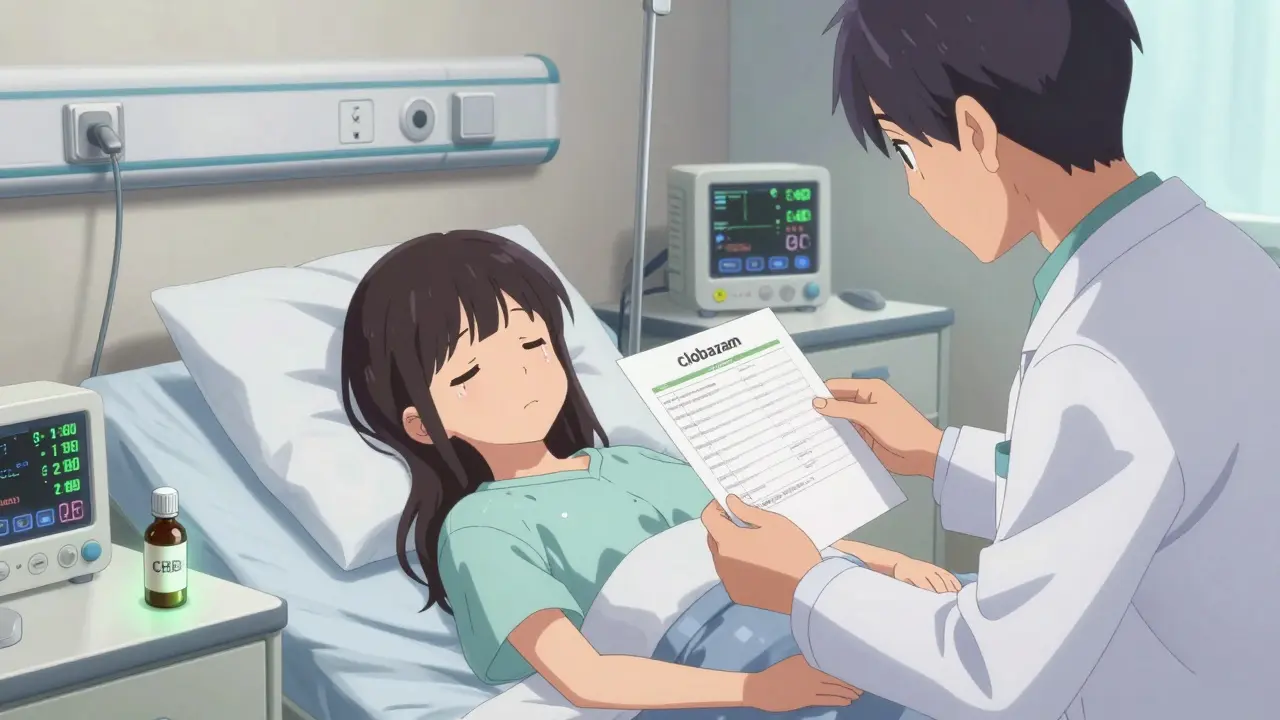
Clobazam: Used for epilepsy, especially in kids with Dravet syndrome. When CBD (like Epidiolex) is added, clobazam levels can rise by 60% to 500%. That's why neurologists routinely cut clobazam doses by 25-50% when starting CBD. Patients report extreme drowsiness, slurred speech, or even falling over. One Reddit user wrote: "I couldn't walk straight. My neurologist cut my clobazam dose by 40% immediately."
Benzodiazepines and opioids: If you're on alprazolam (Xanax), lorazepam, or oxycodone, cannabis multiplies their sedative effects. Controlled studies show a 35-60% increase in drowsiness. For elderly patients, this raises fall risk by 47%. Combine that with alcohol, and you're flirting with respiratory depression - a leading cause of overdose death.
Moderate and Low-Risk Interactions
Not every interaction is a crisis. Some are manageable with monitoring.
Calcium channel blockers (like amlodipine): CBD can raise blood levels by 30-40%. That might cause dizziness or low blood pressure. If you're on this for hypertension, watch for lightheadedness after starting CBD.
SSRIs (like sertraline or fluoxetine): Studies show a 10-15% increase in SSRI levels with CBD. But in real-world use, 41% of users report no noticeable change. The risk is low - but not zero. If you're new to CBD and start feeling unusually anxious, nauseous, or jittery, this could be why.
Statins (like atorvastatin): CBD can increase statin levels by 20-25%. But there's not a single documented case of rhabdomyolysis (muscle breakdown) linked to this combo. Still, if you're on a high dose of statin and start muscle pain, get it checked.
Route of Use Matters - Smoking vs. Oil vs. Edibles
How you take cannabis changes the risk.
Smoking or vaping delivers THC to your bloodstream in 6-10 minutes. That means if you smoke before taking a sleeping pill or painkiller, the effects hit fast and hard. You might feel fine at first - then crash into deep sedation an hour later.
Oral CBD (oils, gummies) peaks in 2-4 hours and lasts 6-8 hours. That creates a long window of interaction. If you take CBD at 8 p.m., and your warfarin dose is at 8 a.m., you're still affecting metabolism 12 hours later. This isn't a one-time thing - it's a daily tug-of-war with your liver.
Full-spectrum products (with THC) are more potent inhibitors than CBD isolates. One 2023 study found they block CYP3A4 22-37% more than pure CBD at the same dose. That’s because THC and other cannabinoids work together - the "entourage effect" - and it's not always helpful.
What Should You Do? A Practical Guide
If you're using cannabis and take any prescription meds, here's what to do:
- Be honest with your doctor. Don't say "I take CBD." Say: "I take 25 mg of full-spectrum CBD oil every night. I started it two weeks ago."
- Check your meds. If you're on warfarin, tacrolimus, clobazam, or any blood thinner, anticonvulsant, or sedative - you need to talk to your pharmacist or prescriber before continuing.
- Get baseline tests. For warfarin users: check INR before starting cannabis. For transplant patients: monitor tacrolimus levels 48-72 hours after starting CBD.
- Watch for signs. Unusual bruising, extreme drowsiness, confusion, dizziness, or muscle pain aren't normal. They're red flags.
- Space it out. Some experts suggest taking CBD at least 2 hours apart from other meds. While evidence is limited, it might help reduce peak overlap.
Pharmacists in Pennsylvania now warn patients: "Even weekend recreational cannabis use can increase bleeding risk by 300% within 48 hours." That’s not fearmongering. It’s data.
What’s Missing? The Big Gaps
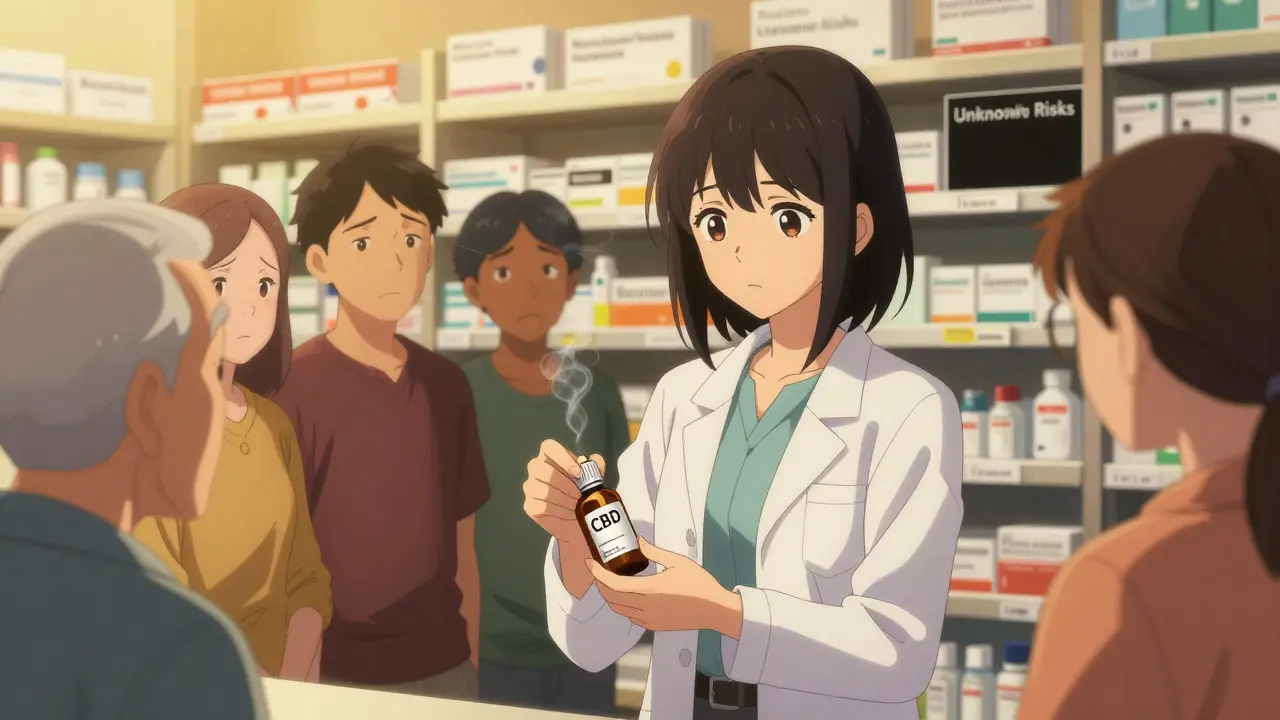
Here’s the scary part: we don’t know most of this yet.
We have solid data on warfarin, clobazam, and tacrolimus. But what about GLP-1 agonists like Ozempic? Or newer antidepressants? Or blood pressure drugs like SGLT2 inhibitors? There are fewer than 12 studies on cannabis interactions with diabetes medications - even though nearly 30% of cannabis users have diabetes.
The FDA has received over 1,300 reports of adverse events from cannabis-medication combos since 2018. But experts say less than 10% of real cases get reported. Most people don’t connect their dizziness or bleeding to their CBD oil.
And here’s another blind spot: product quality. A 2023 study found that 70% of CBD products sold online didn’t match their label. One bottle labeled "10 mg CBD" had 37 mg. Another had THC in it, even though it claimed to be THC-free. You can’t control what you’re taking - and that makes predicting interactions even harder.
Bottom Line: Don’t Assume It’s Safe
Cannabis isn’t a magic bullet. And it’s not harmless when mixed with other drugs. The truth is, we’re still learning. But what we know now is enough to be cautious.
If you’re on a medication with a narrow therapeutic window - like warfarin, seizure drugs, or transplant meds - don’t experiment. Talk to your doctor. Get tested. Adjust doses under supervision.
If you're on SSRIs or statins, the risk is low - but still real. Pay attention to how you feel. If something changes, don’t ignore it.
And if you're just starting CBD or THC for sleep, pain, or anxiety? Ask yourself: "What else am I taking?" Then ask your pharmacist. They’re trained to spot these risks. Most just aren’t being asked.
Can I take CBD with my blood thinner like warfarin?
It’s risky. CBD can increase warfarin levels by 29-48%, raising your INR and your risk of serious bleeding. If you're on warfarin, avoid CBD unless under close medical supervision. Your doctor should check your INR 48-72 hours after starting CBD, and may need to lower your warfarin dose. Never adjust this on your own.
Does CBD make anxiety meds like Xanax stronger?
Yes. CBD and THC both enhance the sedative effects of benzodiazepines like alprazolam (Xanax). This can lead to extreme drowsiness, dizziness, or trouble breathing. In elderly patients, this increases fall risk by 47%. If you're using both, reduce your Xanax dose by 20-30% and monitor for excessive sleepiness. Talk to your doctor before combining them.
Is it safe to use CBD with antidepressants like sertraline?
The interaction is mild. CBD may slightly raise sertraline levels by 10-15%, but most people don’t notice any effect. In surveys, 41% of users reported no change. Still, if you start feeling more jittery, nauseous, or unusually emotional after adding CBD, it could be this interaction. Stop CBD for a few days and see if symptoms improve.
What’s the difference between CBD isolate and full-spectrum oil?
Full-spectrum oil contains THC and other cannabinoids, which together inhibit liver enzymes more strongly than CBD alone. At the same dose, full-spectrum products block CYP3A4 22-37% more than pure CBD isolate. This means higher interaction risk with medications like statins, blood pressure drugs, or seizure meds. If you're on any prescription, isolate is generally safer.
Can I take CBD with my transplant medications?
No - not without strict monitoring. CBD and THC can cause tacrolimus and cyclosporine levels to spike 300-500%. This can lead to organ toxicity or rejection. Transplant patients who use cannabis have been hospitalized for dangerously high drug levels. If you're on these meds, avoid cannabis entirely unless your transplant team approves and monitors your levels closely.
How long do cannabis-drug interactions last?
It depends. For oral CBD, enzyme inhibition lasts 6-8 hours per dose, but the effect can build up over days. If you take CBD daily, your liver enzymes stay suppressed. That means interactions can persist even if you skip a day. For warfarin, the risk remains elevated for 2-3 days after stopping CBD. Don’t assume the interaction stops when you stop using cannabis.

Comments (10)
Shalini Gautam
Cannabis and warfarin? In India, we’ve been mixing turmeric and CBD for decades-no one’s dropping dead. But hey, if your doctor’s scared of plant medicine, maybe they’re stuck in 1998. My aunt takes CBD oil with her blood thinner and her INR’s been stable for a year. Maybe it’s not the cannabis-it’s the fear-mongering.
Natanya Green
OMG. I JUST HAD A PANIC ATTACK BECAUSE I TOOK CBD LAST NIGHT AND I’M ON XANAX. I THOUGHT I WAS DREAMING, BUT NO-MY NECK FELT LIKE IT WAS FALLING OFF. I’M CALLING MY DOCTOR TOMORROW. THIS POST SAVED MY LIFE. THANK YOU. 🙏
Steven Pam
Love this breakdown. Seriously. Too many people treat cannabis like it’s herbal tea when it’s more like a wild card in your liver’s poker game. I’m a nurse, and I’ve seen patients crash because they thought ‘natural’ meant ‘safe.’ The CYP450 enzyme thing? That’s the real MVP here. If you’re on anything with a narrow window-warfarin, transplant meds, seizure drugs-don’t wing it. Talk to your pharmacist. They’re the unsung heroes of this whole mess.
Timothy Haroutunian
This post is technically accurate but misses the forest for the trees. The real issue isn’t enzyme inhibition-it’s the fact that the entire cannabis industry is a regulatory wasteland. A 2023 study found that 70% of CBD products are mislabeled. So even if you know the interaction risks, you have no idea what you’re actually ingesting. One bottle says 10mg CBD, another says 37mg THC, and the third says ‘natural flavoring’ which is just synthetic cannabinoids. This isn’t science-it’s Russian roulette with a side of pseudoscience. And don’t get me started on how the FDA is asleep at the wheel while people are getting hospitalized over something they bought off Amazon.
Erin Pinheiro
so like… i took cbd for my anxiety and then i got super dizzy and thought i was gonna pass out. turns out i was on a statin? duh. i thought cbd was ‘all natural’ so it was fine? lol no. my mom says i’m dumb. she’s probably right. also, i spelled ‘statin’ wrong in my journal. oops.
Michael FItzpatrick
Let’s talk about the real hero here: the pharmacist. Most doctors are overwhelmed. Nurses are stretched thin. But pharmacists? They’re the ones with the drug interaction databases, the time, and the training to catch this stuff. I had a patient come in last week-CBD oil, clobazam, and a Z-pack. She was so groggy she couldn’t hold her coffee cup. We cut her clobazam dose by 40%, spaced out the timing, and she’s been fine since. Don’t just ‘ask your doctor.’ Ask your pharmacist. They’re not just the people who hand out pills-they’re your safety net.
Brandice Valentino
I mean, if you’re taking CBD with warfarin, you’re basically playing Russian roulette with your internal organs. And don’t even get me started on how people think ‘full-spectrum’ is some mystical wellness elixir. It’s just THC with a fancy label. Also, the fact that this post says ‘talk to your doctor’ like they’re some kind of oracle? Lol. Most doctors haven’t read a single study on cannabinoids since med school. You need to go to a cannabis-savvy clinic. Or better yet, don’t touch it. Just live your life.
Larry Zerpa
This entire post is a fear-driven marketing piece disguised as medical advice. The data cited is cherry-picked. You mention 17 cases of bleeding with warfarin and CBD, but ignore the 90% of users who don’t have issues. You cite a 2023 study on full-spectrum inhibition but don’t mention that those doses were 500mg+-equivalent to 10x what most people take. And yet, you still tell people to avoid it entirely? That’s not science. That’s moral panic dressed up in PubMed citations. The real danger isn’t cannabis-it’s the overmedicalization of natural substances. Let people make informed choices instead of treating them like children.
Gwen Vincent
My dad’s on tacrolimus after his transplant. He started CBD for nerve pain last year. We were terrified. But we talked to his transplant team, got his levels checked every week, and adjusted his dose. He’s still alive. His organ’s still working. And he says he sleeps better than he has in 10 years. It’s not about saying ‘never.’ It’s about saying ‘carefully.’ Communication beats fear. And trust, if it’s built right.
Holley T
Everyone’s acting like this is new information, but we’ve known about CYP450 inhibition since the 90s. THC and CBD were studied as potential liver enzyme modulators back then. The real scandal is that the pharmaceutical industry didn’t want this data out because it threatens their monopoly on drug metabolism research. Now that CBD is a billion-dollar industry, suddenly everyone’s acting shocked? Please. This isn’t a public health crisis-it’s a corporate cover-up that’s finally cracking open. And yes, I’ve read the FDA reports. And no, they’re not underreporting-they’re being ignored by the same people who sell you CBD on Instagram.