
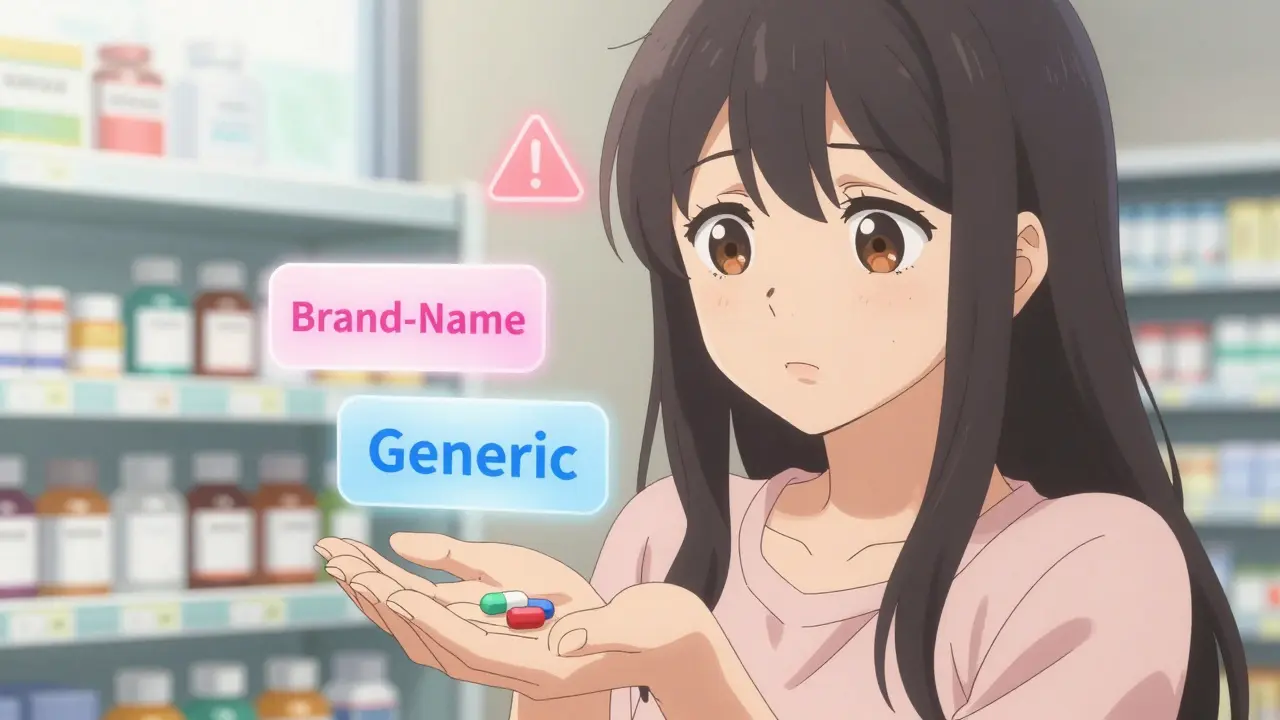
Every year, millions of people switch from brand-name drugs to generics to save money. But here’s the problem: many don’t understand what that switch really means. They see a pill that looks different-maybe it’s pink instead of white, round instead of oval-and they think it’s a different medicine. Some stop taking it. Others take too much. Some even end up in the emergency room.
This isn’t just about confusion. It’s about safety. In the U.S., 80 million adults struggle to understand basic health information. For them, a change in pill appearance isn’t just inconvenient-it’s dangerous. And it’s happening more often. By 2020, 90% of all prescriptions filled in America were for generic drugs. Yet, only 37% of generic drug labels use plain language. That gap between use and understanding is costing lives.
Why Do Generics Look So Different?
Generic drugs have the same active ingredients as brand-name drugs. They work the same way. They’re just cheaper. But because of patent laws, they can’t look exactly the same. That means color, shape, size, and even markings on the pill can change every time a pharmacy switches manufacturers. One month, your blood pressure pill is a small blue oval. The next, it’s a large white round tablet. To someone with low health literacy, that’s not a routine change-it’s a red flag.
Studies show that 42% of patients don’t realize generics are just as effective as brand-name drugs. And it’s not just about knowledge-it’s about trust. A 2018 study found that 68% of patients worried generics wouldn’t work, compared to only 22% who doubted brand-name drugs. That distrust grows stronger among older adults, people with chronic conditions, and those with less education. One patient with diabetes told a forum: “I didn’t take my metformin for three days because it looked wrong. My blood sugar spiked. I ended up in the ER.”
The Hidden Risk: Pill Dumping and Medication Errors
When patients don’t recognize their meds, they do something called “pill dumping.” They throw away the new pills, thinking they’re not theirs. A 2021 study in the Journal of the American Geriatrics Society found that over half of older adults taking heart medications admitted to doing this after a generic switch. That’s not laziness-it’s fear. They’ve been taught that medicine looks a certain way. When it doesn’t, they assume something’s wrong.
These misunderstandings lead to real harm. Between 2015 and 2020, over 1,200 medication errors were reported because patients confused different versions of the same generic drug. That’s 17% of all generic-related errors. And it’s not just the elderly. People with multiple prescriptions-like those with diabetes, high blood pressure, and cholesterol-are especially at risk. One pharmacist on Reddit said: “I see at least two patients a week who refuse generics because they don’t look like what they expect.”
What Patients Need to Know
There are six basic things every patient should understand about their medications, whether generic or brand-name:
- Name of the medicine-both the brand name and generic name
- Why you’re taking it-what condition it treats
- How to take it-dose, timing, with or without food
- How to store it-refrigerated? Dark bottle? Keep away from kids?
- Side effects-what’s normal, and what’s a warning sign
- When to call your doctor-what symptoms mean you need help
That’s it. No jargon. No complex charts. Just clear, simple answers. Yet most patient leaflets still use small print, medical terms like “hypertension” instead of “high blood pressure,” and confusing symbols. The FDA tried to fix this in 2019, but progress has been slow. Only a third of manufacturers follow plain language guidelines.
What Works: Real Solutions That Help
Some places are getting it right-and the results are clear.
The “Ask Me 3” program, used in over 1,200 clinics, trains doctors and pharmacists to ask patients three questions: What is my main problem? What do I need to do? Why is it important? Hospitals using this saw a 31% drop in generic-related medication errors.
Another simple fix? The “Brown Bag” review. Patients bring all their pills-bottles, boxes, whatever-to their appointment. The provider checks them together. It sounds basic, but a 2021 Johns Hopkins study found this reduced medication mistakes by 44%.
Digital tools are helping too. The Medisafe app lets users take a photo of their pill. It identifies the drug, tells them if it’s generic, and reminds them when to take it. In a trial, users improved their understanding of generics by 37%.
In Australia, a color-coding system was introduced: all blood pressure generics are blue, all diabetes meds are green, all cholesterol drugs are orange. Errors dropped by 33%. Now, the FDA is drafting similar guidance. And the WHO is pushing for global standardization.
What You Can Do Right Now
You don’t need a policy change to protect yourself or a loved one. Here’s what works today:
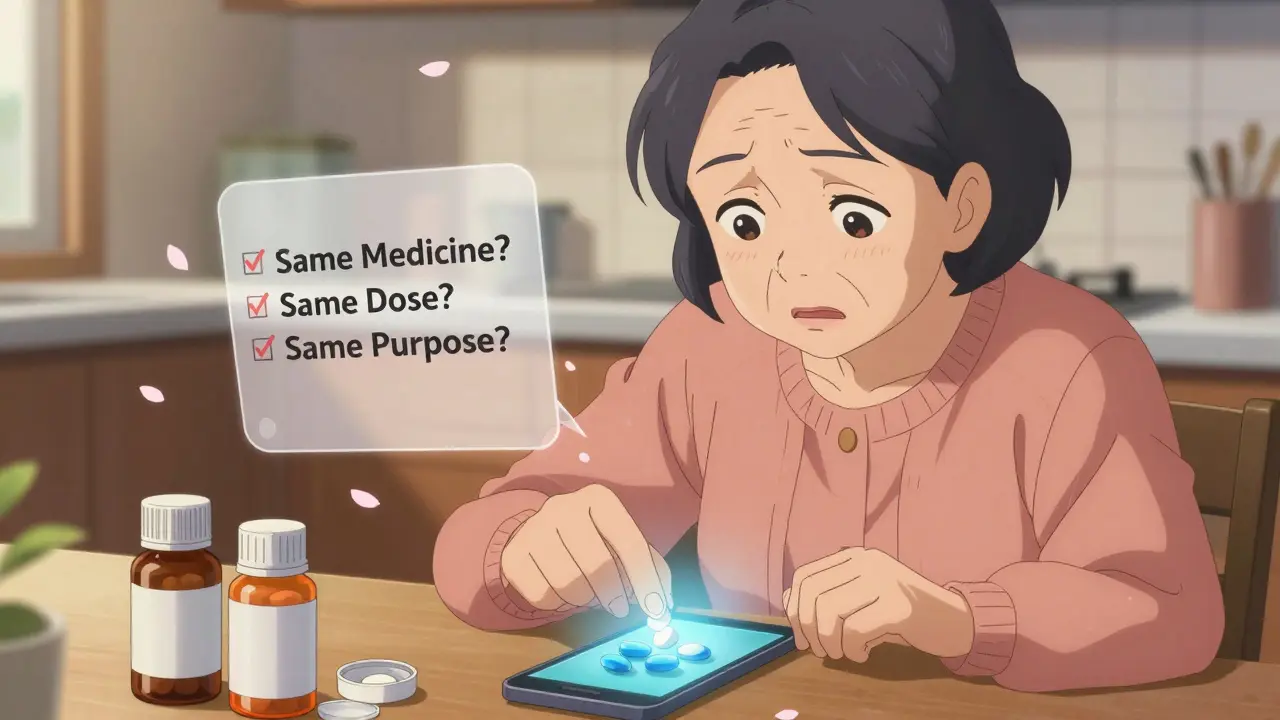
- Ask your pharmacist-“Is this the same medicine I was taking before? Why does it look different?” Don’t be shy. Pharmacists are trained to explain this.
- Take a photo of your pill before you leave the pharmacy. Save it on your phone. Next time you get a refill, compare it.
- Use a pill organizer labeled with the drug name and purpose. Even if the pill looks different, the label stays the same.
- Bring your meds to every appointment. Don’t rely on memory. Show the doctor what’s in your medicine cabinet.
- Don’t stop taking a pill just because it looks different. Call your provider first.
These steps don’t cost anything. They just require a little attention. And they work. People who do this are far less likely to make dangerous mistakes.
The Bigger Picture: Health Literacy Is Everyone’s Job
This isn’t just a patient problem. It’s a system problem. Pharmacies, drugmakers, insurers, and clinics all play a role. If your pill looks different every time, it’s not your fault. It’s the system’s failure to design for real people.
Organizations that invest in health literacy see better results. A 2022 IQVIA report found that companies using clear communication for generics had 18% higher adherence rates-and saved $1,247 per patient each year in avoidable hospital visits.
More than 38 U.S. states are now considering laws that require pharmacists to assess a patient’s understanding before switching to a generic. That’s progress. But change won’t come from laws alone. It comes from conversations. From asking questions. From speaking up.
Health literacy isn’t about how smart you are. It’s about how well the system speaks to you. And right now, too many people are being left behind-just because their pills changed color.
Are generic drugs really the same as brand-name drugs?
Yes. Generic drugs must contain the same active ingredient, strength, dosage form, and route of administration as the brand-name version. They’re required by the FDA to work the same way in the body. The only differences are in inactive ingredients (like fillers or dyes), packaging, and appearance. These don’t affect how the medicine works-only how it looks.
Why do generic pills look different every time I refill them?
Pharmacies often switch between different generic manufacturers to save money. Each company makes the same drug, but with different colors, shapes, or markings. This is legal and common, but it’s confusing for patients. There’s no rule requiring generics to look the same, so changes happen without warning.
What should I do if my generic medicine looks different?
Don’t stop taking it. Don’t assume it’s wrong. Call your pharmacist and ask: “Is this the same medicine I was taking before?” They can confirm it’s the same drug, just from a different maker. You can also check the pill imprint online using tools like the NIH’s PillBox or the Medisafe app. If you’re still unsure, ask your doctor.
Can I ask for the brand-name drug instead of a generic?
Yes, you can. But your doctor must write “Dispense as Written” or “Do Not Substitute” on the prescription. Insurance may charge you more, or not cover it at all. If cost is a concern, ask your pharmacist if there’s a generic version from the same manufacturer you’ve used before. Sometimes they can order it.
How can I help an older relative understand their generics?
Start by helping them take a photo of each pill when they get it. Save it in a folder labeled with the drug name. Use a pill organizer with clear labels. Go with them to appointments and ask the pharmacist to explain the medicine in simple terms. If they’re on multiple drugs, ask about a “Brown Bag” review-where the provider checks all their pills together. Small steps like these prevent dangerous mistakes.
What’s Next?
The future of generic medication safety lies in standardization and technology. Australia’s color-coding system is being studied for adoption in the U.S. AI-powered pill recognition apps are improving fast. And more pharmacists are being trained to check for understanding before dispensing generics.
But none of this matters if patients stay silent. If you don’t ask questions, the system won’t change. If you don’t speak up, your loved ones might pay the price.
Understanding your medicine isn’t a skill you’re born with. It’s a right you’re entitled to. And it starts with one simple question: “Why does this pill look different?”

Comments (11)
Kegan Powell
I used to panic every time my pills looked different 🤯 turns out i was just scared of change. now i take a pic and chill. my grandma even started doing it with me. we got a whole photo album now lol
April Williams
This is why america is falling apart. People can't even read a pill bottle and we wonder why healthcare costs are insane. Someone should just force them to take a basic literacy test before they get a prescription.
Harry Henderson
STOP letting big pharma get away with this. You think they care if you die? No. They make more money off you being in the ER. Fight back. Demand the same pill. Refuse the switch. Burn the system down if you have to.
Paul Taylor
The real issue here isn't that people don't understand generics it's that the entire system is designed to confuse people on purpose. Pharmacies switch manufacturers because it's cheaper not because it's better. The FDA doesn't enforce plain language because nobody's screaming loud enough. And we wonder why people stop taking their meds. It's not laziness it's learned helplessness. We've trained people to distrust their own medicine because the system never gave them a reason to trust it. The brown bag thing works because it humanizes the process. It turns a transaction into a conversation. That's the only fix that matters.
Desaundrea Morton-Pusey
I'm not surprised. America lets people take pills they don't understand. Meanwhile other countries have real healthcare. We're just a bunch of pills and panic.
Murphy Game
You know who benefits from this chaos? The same people who own the pharmacies and the drug companies. They want you confused. They want you scared. They want you to think the blue pill is different from the white one so you'll keep buying the expensive brand. It's all a scam. They even change the shape so you can't tell if it's the same drug. This isn't incompetence. It's intentional.
John O'Brien
My aunt took her blood pressure med for 10 years and then one day the pill turned from yellow to green and she thought it was poison. She didn't take it for two weeks. Ended up in the hospital. We all laughed at first then realized she was right to be scared. That's not her fault. That's the system failing her.
Andrew Clausen
The article contains several factual inaccuracies. The FDA requires generics to be bioequivalent within a 80-125% confidence interval, not 'the same.' Also, 'plain language' is not a regulatory standard but a voluntary guideline. The 37% statistic is misleading without context. The real problem is not literacy but the absence of standardized pill identification systems across manufacturers.
Anjula Jyala
In India we have a different problem. Pharmacies give you generics without even telling you. No labels no info just a plastic packet. People die because they think the generic is weak. We need mandatory pictograms and multilingual instructions. No more English-only leaflets for non-English speakers. This is basic human rights not healthcare policy
Kathy McDaniel
i took a pic of my pill last week and now i have a whole folder called my medicine friends 💙 so easy right?
suhail ahmed
Back home in Kerala we call this 'pill amnesia.' Grandmas forget their meds not because they're forgetful but because every refill looks like a new enemy. One guy took his diabetes pill for six months then stopped because the color changed from white to pink. He thought it was candy. We fixed it with a simple sticker on the bottle - his name his condition his dose. No fancy tech. Just a marker and love. If you can write it by hand you can save a life.