
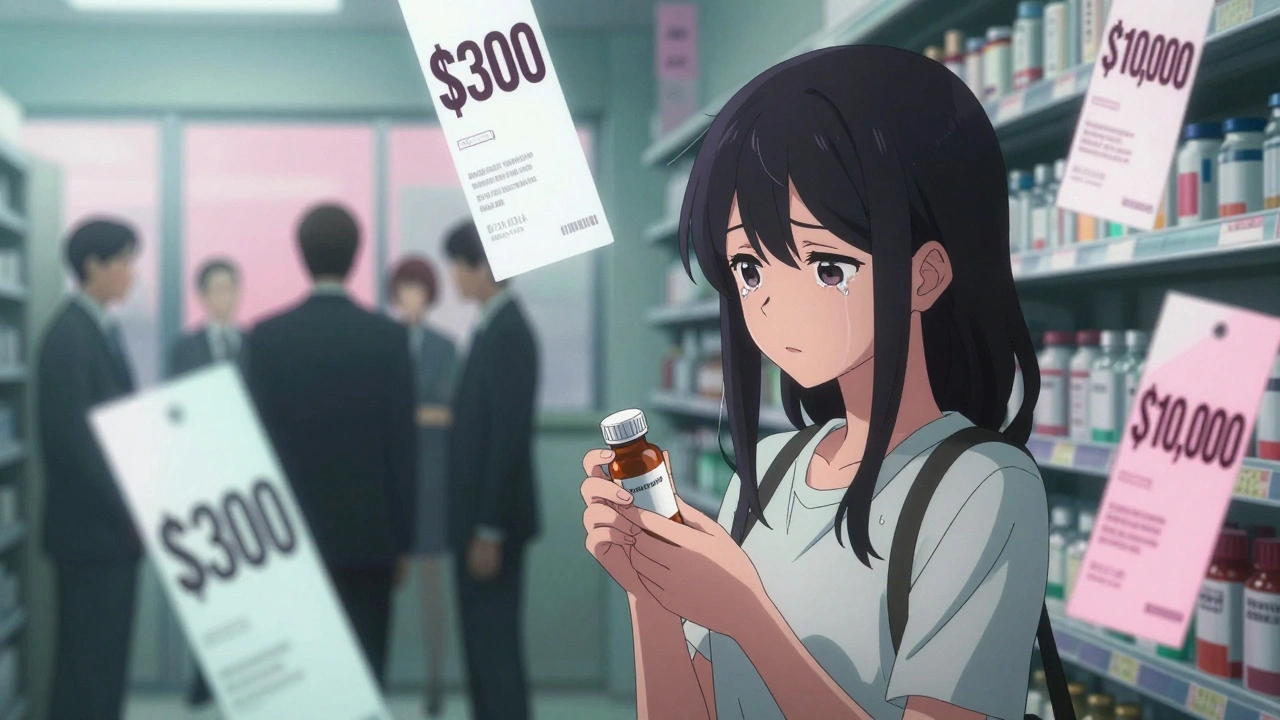
For millions of Americans, filling a prescription isn’t just a routine errand-it’s a financial gamble. A single month’s supply of insulin can cost $300. A life-saving cancer drug might run $10,000. And for some rare disease treatments, the annual bill hits six figures. Meanwhile, people in Canada, Germany, or the UK pay a fraction of that for the exact same pill, made in the same factory. Why does this happen? Why does the United States pay more than three times what other wealthy countries pay for the same medications?
The System Was Built to Let Drug Companies Set Any Price
Unlike most developed nations, the U.S. doesn’t have a government agency that negotiates drug prices on behalf of its citizens. In countries like Germany or Japan, regulators look at how much a drug costs elsewhere and set a fair price. In the U.S., pharmaceutical companies decide the price-and they can raise it whenever they want. This wasn’t always the case. For decades, the system worked quietly because most people got their drugs through employer insurance. But as out-of-pocket costs rose and more people relied on Medicare, the lack of price controls became impossible to ignore. The turning point came in 2003 with the Medicare Modernization Act. It created Medicare Part D, the prescription drug benefit for seniors. But lawmakers made a critical mistake: they banned Medicare from negotiating prices directly with drug makers. That meant the government, which spends over $100 billion a year on prescription drugs, couldn’t use its massive buying power to get a better deal. Instead, private companies called Pharmacy Benefit Managers (PBMs) were handed the job. What was supposed to be a way to lower costs ended up making the system more complex-and more expensive.How Pharmacy Benefit Managers Made Things Worse
PBMs were originally meant to be middlemen who negotiated discounts between drug makers and insurers. Today, they’re huge corporations that own pharmacies, manage insurance plans, and control which drugs get covered. Their business model is built on rebates-discounts drug companies pay them to get their drugs placed on preferred lists. The problem? The bigger the list price, the bigger the rebate. So PBMs have a financial incentive to push drugs with high sticker prices, even if they’re not the best option for patients. This creates a warped market. A drug might be priced at $10,000 a year because the manufacturer knows they’ll pay a $2,000 rebate to the PBM. The insurer sees the $10,000 price and thinks they’re getting a good deal because they only pay $8,000 after the rebate. But the patient still pays a percentage of that $10,000-sometimes hundreds or thousands of dollars out of pocket. Meanwhile, the PBM pockets the rebate. The patient loses. The system is designed to hide the real cost from everyone except the person who has to pay it.Specialty Drugs Are Driving the Surge
The biggest price spikes aren’t coming from old, generic pills. They’re coming from new, complex treatments for diabetes, obesity, cancer, and rare diseases. These are called specialty drugs, and they’re the fastest-growing part of the market. In 2024, U.S. drug spending jumped 11.4%-the biggest increase in years-and specialty drugs were the main reason. Take semaglutide, the active ingredient in Ozempic and Wegovy. These drugs treat type 2 diabetes and obesity. In 2025, after public pressure and new Medicare rules, the price dropped from $1,000 to $350 a month. But that’s still $4,200 a year. In Germany, the same drug costs under $600. Why the difference? Because in the U.S., manufacturers can charge whatever they want, and they argue they need to recover R&D costs. But here’s the catch: the U.S. government funded much of the early research behind these drugs through NIH grants. Taxpayers paid for the science. Then private companies patented it, priced it at a premium, and made billions.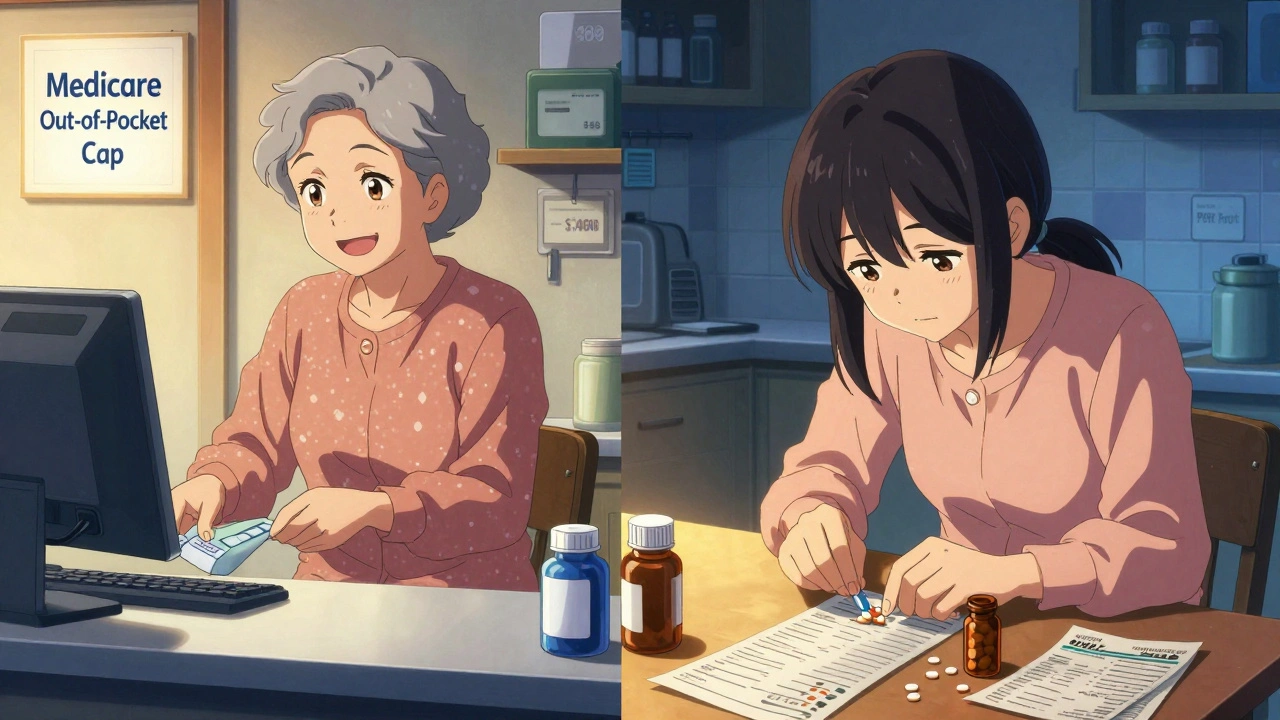
International Comparisons Show the U.S. Is an Outlier
The numbers don’t lie. The same drug, Galzin, used to treat Wilson’s disease, costs $88,800 a year in the U.S. In the UK, it’s $1,400. In Germany, $2,800. That’s a 1,555% markup. The White House confirmed in late 2025 that Americans pay more than three times what other OECD countries pay for brand-name drugs-even after accounting for manufacturer discounts. Countries that control drug prices don’t just cap them-they use reference pricing. They look at what other countries pay and set their own price based on that. Canada does it. Australia does it. Even Switzerland, a wealthy country with strong pharma companies, uses a price-control system. The U.S. is the only developed nation that doesn’t. And it’s not because we’re smarter or more innovative. It’s because we’ve chosen not to regulate.Reforms Are Coming-But They’re Limited
The Inflation Reduction Act of 2022 started to change things. Starting in 2026, Medicare can negotiate prices for 10 drugs. That’s a start-but it’s just 10 out of thousands. And the 2025 budget reconciliation bill weakened the program, making it harder to negotiate more drugs in future years. The law also introduced a cap on out-of-pocket drug costs for Medicare beneficiaries: $2,000 per year. That’s huge. Before this, some seniors were spending $15,000 a year on just one medication. Now, they won’t pay more than $2,000. But this only helps Medicare enrollees. Millions of working-age Americans with private insurance still face unlimited costs. There’s also a new rule requiring drugmakers to pay rebates to Medicare if they raise prices faster than inflation. In early 2025, 64 drugs were identified for rebates. That saved money-but it doesn’t stop companies from raising prices in the first place. It just makes them pay a penalty later.Why Do Drug Companies Resist Change?
The pharmaceutical industry argues that high prices are necessary to fund research and development. But the numbers tell a different story. The U.S. generates about 75% of the world’s pharmaceutical profits-even though it has less than 5% of the global population. That means the rest of the world is effectively subsidizing American drug prices. Drug companies spend far more on marketing and stock buybacks than on R&D. In 2024, the top 10 drugmakers spent $32 billion on advertising and $47 billion on buying back their own stock. R&D? Around $70 billion. That’s less than half of what they spent on stock buybacks. And much of the science behind new drugs was paid for by taxpayer-funded research at universities and government labs. The industry also spends billions lobbying Congress. In 2024 alone, pharmaceutical companies spent over $300 million on lobbying-more than any other industry. They’ve blocked every serious price-control bill for over 20 years. When lawmakers try to fix the system, the industry responds with lawsuits, threats of job losses, and fear campaigns about “killing innovation.”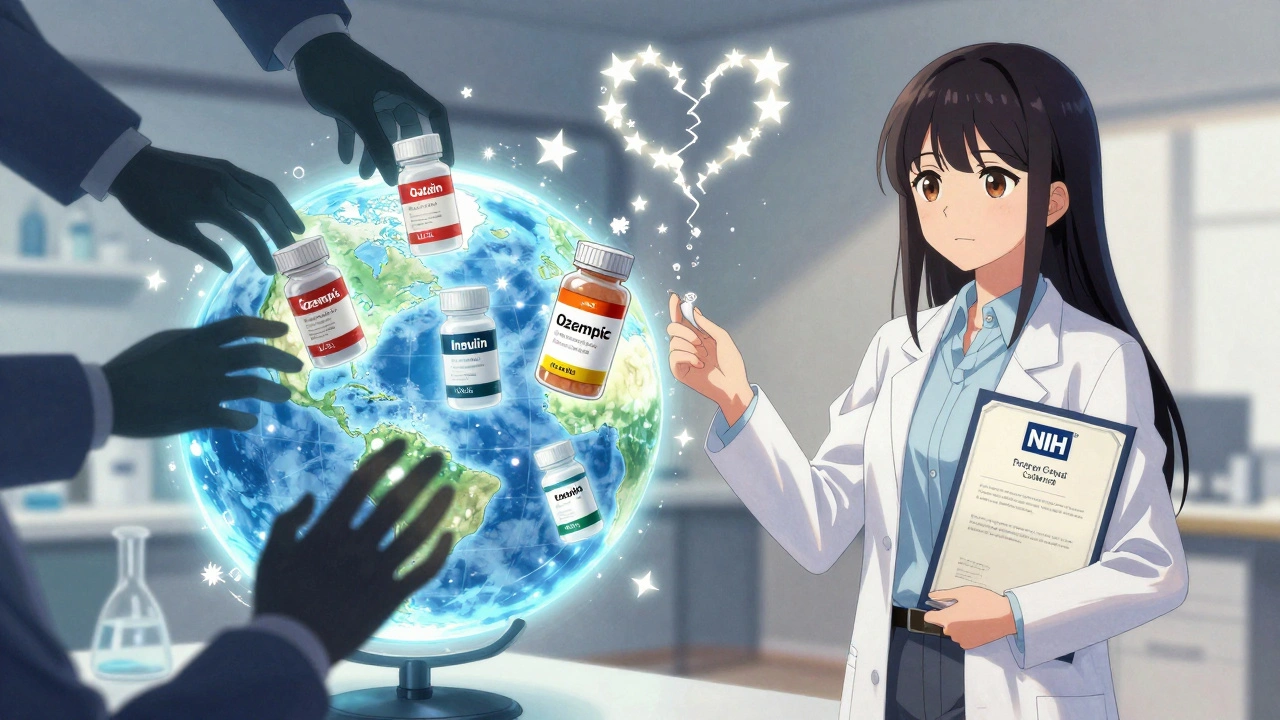
What’s at Stake for Patients
This isn’t just about numbers. It’s about people. A 2025 report found that 1 in 4 Americans skip doses or cut pills in half to make their meds last. Some ration insulin. Others choose between buying their medication and paying rent. One woman in Ohio told a reporter she was using expired insulin because she couldn’t afford the refill. That’s not an outlier. That’s the reality for millions. The American Progress report warns that proposed changes under Project 2025 could increase costs for as many as 18.5 million Medicare beneficiaries. That means more people will face impossible choices. And for those with rare diseases, the stakes are even higher. Some drugs cost over $1 million a year. There’s no way to pay for them without insurance-and even then, many plans have lifetime caps.What Needs to Change
There are three simple fixes that would make a massive difference:- Let Medicare negotiate prices-not just for 10 drugs, but for all of them. The government already negotiates prices for VA patients and Medicaid. Why not for Medicare?
- End the PBM rebate system-require all discounts to go directly to the patient at the pharmacy counter, not into the pockets of middlemen.
- Adopt international reference pricing-if a drug costs $500 in Canada, it shouldn’t cost $5,000 in the U.S.
Will It Ever Change?
Change is slow. But it’s happening. More Americans are speaking out. More lawmakers are pushing for reform. The Inflation Reduction Act proved that government action can lower prices-even if it’s only a start. The next step is to expand it. To make it permanent. To make it universal. For now, patients are stuck in a system that rewards greed over compassion. But the truth is simple: no one should have to choose between their health and their home. No one should pay 15 times more for the same pill just because they live in the United States.Why do prescription drugs cost more in the U.S. than in other countries?
The U.S. doesn’t allow the government to negotiate drug prices, unlike Canada, Germany, or the UK. Drug companies set their own prices, and Pharmacy Benefit Managers (PBMs) profit from high list prices through rebates. This system rewards high pricing instead of affordability.
What role do Pharmacy Benefit Managers (PBMs) play in high drug prices?
PBMs were created to negotiate discounts, but now they often push drugs with higher list prices because they earn bigger rebates from manufacturers. These rebates don’t go to patients-they go to the PBM, while patients still pay a percentage of the inflated list price.
Can Medicare negotiate drug prices now?
Yes, but only for 10 drugs in 2026. The Inflation Reduction Act allowed Medicare to negotiate prices for the first time, but the 2025 budget bill weakened the program, limiting how many drugs can be negotiated in future years.
Are drug companies really spending more on R&D than marketing?
No. In 2024, the top 10 drugmakers spent $47 billion on stock buybacks and $32 billion on advertising. R&D spending was around $70 billion-less than half of what they spent on buybacks. Much of the science behind new drugs was funded by taxpayer dollars through NIH grants.
What’s the $2,000 out-of-pocket cap for Medicare?
Starting in 2025, Medicare beneficiaries won’t pay more than $2,000 a year for prescription drugs. Before this, some seniors paid $10,000 or more annually for a single medication. This cap is life-changing for people who were forced to ration pills or skip doses.
Do other countries control drug prices?
Yes. Countries like Germany, Canada, and Australia use reference pricing-they set drug prices based on what other countries pay. This keeps costs low without hurting innovation. The U.S. is the only wealthy country that doesn’t use this method.
Why are specialty drugs so expensive?
Specialty drugs for cancer, diabetes, and rare diseases are complex to make and often target small patient groups. But their high prices aren’t just about R&D-they’re about market power. Manufacturers know patients have no alternatives, so they charge whatever they want. In 2024, these drugs drove 11.4% of total U.S. drug spending growth.

Comments (10)
Gareth Storer
Oh wow, the US is the only country where you need a second mortgage to buy insulin? Groundbreaking. Next you’ll tell me the sky is blue and water is wet. At least in the UK, we just get it for free and don’t have to cry in the pharmacy aisle while counting coins. Thanks for the reminder that capitalism is a sport and health is just the trophy.
Also, PBMs? More like Profit-Benefit Monsters. I’m shocked, shocked I tell you.
George Graham
I’ve worked in community health for 15 years, and I’ve seen people skip doses, cut pills in half, or just go without because they’re choosing between rent and refills. It’s not a policy issue-it’s a moral failure. The fact that we let this continue while CEOs buy private islands is beyond frustrating. I’m not anti-innovation-I’m pro-human.
That $2,000 cap? It’s a start. But it shouldn’t take a law to make basic care affordable. We’re not a third-world country. We’re just acting like one.
John Filby
Wait so the gov paid for the science with taxpayer money, then pharma took it, patented it, and now charges $5k a month? 😳 That’s wild. I didn’t realize so much of the research was federally funded. So basically we’re paying twice? Once with our taxes and again at the pharmacy?
And PBMs are basically middlemen who get rich by making prices higher?? That’s like a car dealer charging more so they can get a bigger kickback. Why does no one call this out more? 🤦♂️
Elizabeth Crutchfield
my aunt had to choose between her insulin and her heater last winter… she said she’d rather be cold than dead. no one should have to make that choice. this system is broken and everyone knows it. why are we still talking about it like it’s a mystery? 😔
Ben Choy
Guys, I get it. It’s messed up. But let’s not throw the baby out with the bathwater. Innovation doesn’t happen in a vacuum. We need pharma to keep developing stuff-like those new obesity drugs that are changing lives.
What if we capped prices but tied them to R&D transparency? Like, if you get NIH money, you can’t charge more than 2x production cost? We can fix this without killing progress. 🙏
Scott van Haastrecht
Oh here we go. Another virtue-signaling post about how 'evil pharma' is killing grandma. Newsflash: if you don't like the price, don't buy it. There are generics. There are international shipping services. There are patient assistance programs. You people want free stuff? Then stop pretending this is a moral crisis and start taking personal responsibility.
Also, your 'reference pricing' nonsense is just price-fixing. That’s socialism with a fancy label. The market works. You just don't like the outcome.
Bill Wolfe
Let’s be intellectually honest here. The U.S. pharmaceutical ecosystem is the most sophisticated, innovation-driven, capital-efficient system on the planet. To suggest that other nations, many of which have underfunded healthcare bureaucracies and decades-old regulatory frameworks, are somehow 'fairer' is not only naive-it’s statistically illiterate.
Moreover, the notion that taxpayer-funded NIH research somehow negates the risk capital, clinical trial infrastructure, and regulatory compliance burdens borne by private entities is a classic fallacy of composition. You can’t attribute the entirety of value creation to public investment while ignoring the private sector’s role in scaling, optimizing, and commercializing that science. This isn’t capitalism-it’s moral panic dressed as policy.
Ollie Newland
It’s a classic principal-agent problem wrapped in a PBM oligopoly. The misalignment of incentives is structural: PBMs are paid via rebate % of list price, not outcome or affordability. That creates a perverse incentive to inflate ASPs, which then cascades into patient cost-sharing, especially under coinsurance models. And don’t get me started on the lack of transparency in the 340B program or the anti-competitive clauses in formulary agreements.
Reference pricing isn’t just a policy-it’s a market discipline mechanism. The UK’s NICE model, while imperfect, at least forces cost-effectiveness analysis. We’re running a free-market fantasy with no price discovery. It’s not capitalism. It’s rent-seeking with a side of denial.
Rebecca Braatz
To everyone who says 'just don't buy it' or 'it's not that bad'-you’ve never stood in line at a pharmacy with a child who needs a $10,000 shot every two weeks. This isn’t about politics. It’s about dignity.
Let Medicare negotiate ALL drugs. End PBM rebates. Force transparency. These aren’t radical. They’re basic. And if we don’t act, more people will die because they couldn’t afford to live. We can do better. We HAVE to.
Share this. Talk to your reps. This is our fight now.
Jordan Wall
Look, I get the outrage-but let’s not pretend this is a US-specific issue. Even in the UK, we’ve got NHS rationing, waiting lists longer than my ex’s apologies, and drugs that are 'approved' but not 'funded'. The real problem isn’t pricing-it’s scarcity. Everyone wants unlimited healthcare at zero cost. That’s not sustainable. We need to talk about demand-side controls, not just price caps.
Also, NIH funding? Yeah, sure-but NIH doesn’t run Phase III trials, handle GMP compliance, or manage global supply chains. That’s where the real $$$ goes. Maybe we should stop demonizing the people who actually make the drugs work in the real world. 🤷♂️💊