
Pharmacies spend a lot of money on inventory. But here’s the truth: 80 percent of a pharmacy’s drug costs come from just 20 percent of the medicines on the shelf. And guess what? Most of that 20 percent isn’t brand-name drugs-it’s generics. If you’re not managing your generic inventory smartly, you’re leaving money on the table, risking stockouts, and letting pills expire before they’re even used.
Why Generic Medications Need a Different Approach
Generic drugs aren’t just cheaper versions of brand-name pills. They’re a completely different beast when it comes to inventory. A brand-name drug like a hepatitis C treatment might cost $30,000 per bottle and move slowly. But a generic blood pressure pill? It sells for $5, gets refilled every 30 days, and flies off the shelf. That’s why treating all medications the same way is a recipe for disaster.Generics make up 90% of all prescriptions filled in the U.S., but they only account for 20% of total drug spending. That’s a huge gap. It means you can stock way more generics without breaking the bank. But here’s the catch: if you overstock them, you risk expiration. If you understock, patients leave because they can’t get their metformin or lisinopril. The goal isn’t just to have pills on the shelf-it’s to have the right number, at the right time, with the least waste.
The Core Strategy: Minimum and Maximum Inventory Levels
The most effective method for managing generics isn’t fancy software or AI-it’s a simple system called minimum and maximum stocking. This isn’t about guessing. It’s about setting clear thresholds for every generic you carry.For example, if your pharmacy dispenses 15 bottles of atorvastatin 20mg per week, you might set a minimum of 30 bottles and a maximum of 60. That gives you two weeks of buffer. When stock hits 30, the system automatically triggers an order. When it hits 60, it stops. No more manual counting. No more panic calls to distributors.
This method works because generics have stable, predictable demand. Unlike brand-name drugs that can spike or vanish overnight, generics follow patterns. Blood pressure meds? Steady. Antacids? Higher in winter. Laxatives? Spike after holidays. You don’t need a crystal ball-just historical data.
How to Calculate Your Reorder Point (ROP)
You can’t just guess when to reorder. You need math. The formula is simple:Reorder Point = (Average Daily Usage × Lead Time) + Safety Stock
Let’s say your pharmacy uses 2 bottles of metformin per day. Your supplier takes 5 days to deliver. You want a 3-day safety buffer. Here’s the math:
- 2 bottles/day × 5 days = 10 bottles
- Safety stock = 3 bottles
- Reorder Point = 13 bottles
So when you hit 13 bottles left, you order. Not 15. Not 20. 13. This keeps your inventory lean, your cash flow healthy, and your shelves full.
Why You Can’t Ignore Expiry Dates
Generics often have shorter shelf lives than brand-name drugs. Why? Because manufacturers compete on price, not packaging. Lower-cost generics might be produced in bulk with less stable formulations. A bottle of generic omeprazole might expire in 24 months instead of 36.That means you can’t just stockpile. You need to track expiration dates like a hawk. Use your inventory system to flag items with less than 90 days left. Move them to the front of the shelf. Offer them in refill programs. Sometimes, you can even return them to the distributor for credit-if your contract allows it.
One independent pharmacy in Ohio lost $8,000 last year because they didn’t track expiry. They had 1,200 bottles of generic levothyroxine sitting in the back, all expired. That’s not a mistake. That’s poor inventory design.
What Happens When a New Generic Hits the Market?
This is where most pharmacies fail. When a new generic enters the market-say, a cheaper version of a brand-name statin-the old drug doesn’t just disappear. Demand drops, but not all at once. Some patients stick with the brand. Others switch. Some prescribers don’t update their notes.If you don’t adjust your inventory system within days, you’re stuck with overstocked brand-name pills and understocked generics. One pharmacy manager in Texas told us she had $3,200 in obsolete brand-name inventory after a single generic transition. All because her system didn’t auto-adjust.
Here’s what you must do:
- Immediately reduce the maximum stock level for the brand-name drug
- Raise the minimum and maximum for the new generic
- Check your open-to-buy formula: Planned Sales + Planned Markdowns + Planned End Inventory - Planned Beginning Inventory
Do this weekly during transitions. Don’t wait for your monthly report. The market moves faster than that.
How Many Should You Stock? The One-Week Rule
For fast-moving generics-things like antacids, pain relievers, antibiotics-aim for about a week’s supply on the shelf. Why? Because:- Patients feel uneasy if a medication is out of stock-even once
- Stocking too much leads to expiration
- Generics are cheap enough to restock quickly
For example, if you sell 100 bottles of ibuprofen 600mg per month, that’s roughly 3.3 per day. Keep 25-30 on hand. That’s less than a week. If you run out, you order again. No big deal.
But if you stock 200 bottles? You’re tying up cash. You’re risking expiration. And you’re not saving money-you’re losing it.
Technology Isn’t Optional
You can’t do this manually anymore. The market moves too fast. New generics hit the U.S. market at a rate of 15 to 20 per month. That’s one every 2-3 days. Your staff can’t track all that.Modern pharmacy inventory systems now have features specifically for generics:
- Automatic reorder triggers based on usage trends
- Expiry date alerts with color-coded warnings
- Real-time monitoring of new generic approvals
- Integration with supplier pricing feeds
Software that lets you set up therapeutic interchange protocols-where the pharmacist can automatically switch a patient from brand to generic without a new prescription-is now a game-changer. In 17 states, pharmacists already have legal authority to do this under collaborative practice agreements. If your system doesn’t support it, you’re falling behind.
Staff Training and SOPs Make the Difference
Even the best software fails without trained staff. You need clear procedures:- When receiving generics, check the expiration date and enter it into the system immediately
- Return unclaimed prescriptions to stock within 24 hours
- Do weekly cycle counts on your top 20 generics
- Train staff to recognize when a patient asks for a brand-name drug because the generic was out of stock
One pharmacy reduced inventory discrepancies by 22% just by enforcing the 24-hour return rule. That’s not magic. That’s discipline.
What Happens If You Don’t Do This?
Pharmacies that ignore smart generic stocking face three big problems:- Stockouts: Patients leave. They don’t come back. One owner lost $1,200 in sales in three months because metformin was out of stock eight times.
- Expired inventory: You paid for pills you can’t sell. That’s pure loss.
- Cash flow problems: If 60-70% of your assets are tied up in inventory, and half of it’s sitting too long, you can’t invest in anything else.
Independent pharmacies are especially vulnerable. Inventory often makes up 60-70% of their total assets. One bad stock decision can sink a small business.
What the Best Pharmacies Do Differently
The top performers aren’t using AI magic. They’re doing the basics right:- They track turnover rates for every generic
- They set ROP and ROQ using real data, not guesswork
- They adjust inventory weekly during new generic launches
- They train staff to return unclaimed meds
- They use software that flags expirations and auto-orders
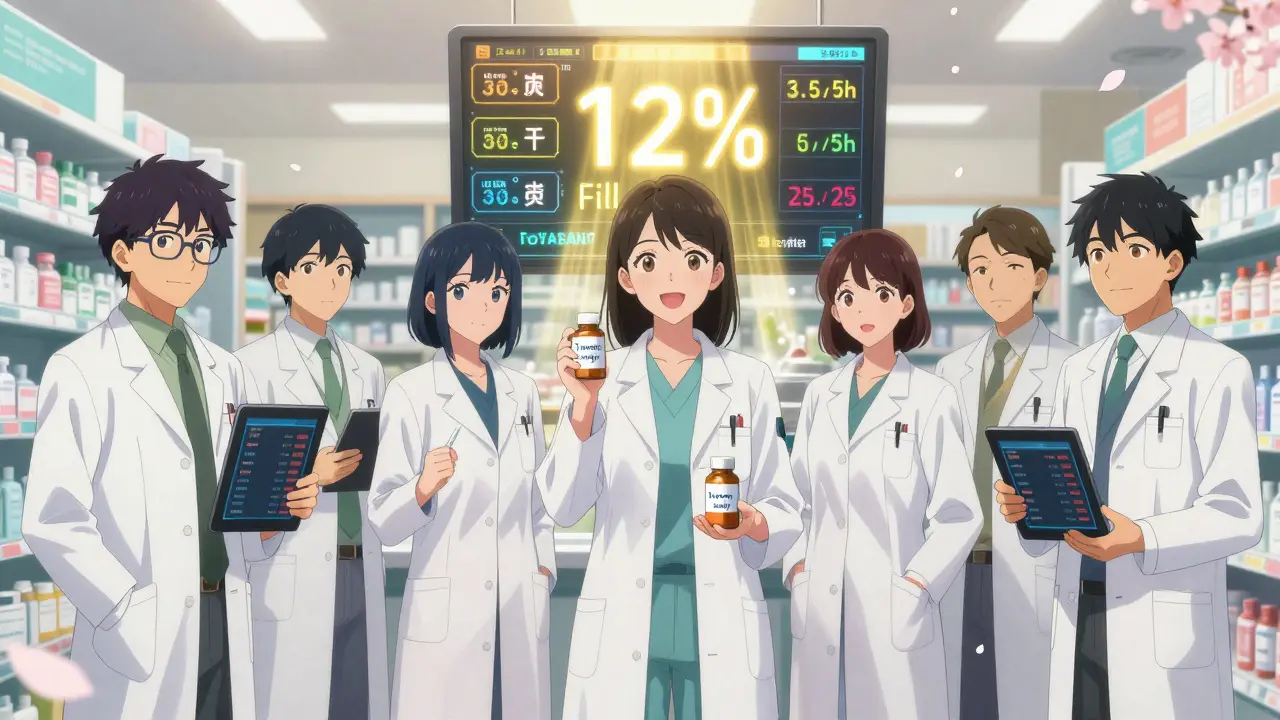
One pharmacy in Arizona reduced its generic inventory costs by 18% and increased fill rates by 12% in six months-just by automating refill synchronization for maintenance meds. No new hires. No big budget. Just better systems.
Final Rule: Don’t Just Manage Inventory-Optimize It
Generic drug inventory isn’t about having more pills. It’s about having the right pills, at the right time, with the least waste. The goal isn’t to fill shelves. It’s to keep patients healthy, cash flowing, and expiration dates far away.If you’re still using monthly budgets and manual spreadsheets, you’re one generic launch away from a crisis. The market isn’t waiting. Neither should you.
How many generics should a pharmacy keep on hand?
For fast-moving generics like blood pressure meds, pain relievers, and antacids, aim for about a week’s supply. This balances availability with cost. For slower-moving generics, use the Reorder Point formula: (Average Daily Usage × Lead Time) + Safety Stock. Always adjust based on actual sales data, not guesswork.
What’s the best inventory system for generics?
Look for systems that support minimum/maximum stocking, expiry date tracking, automatic reorder triggers, and real-time updates for new generic approvals. Systems with therapeutic interchange protocols and supplier pricing integration are ideal. Software that lets you adjust inventory levels weekly during transitions outperforms static systems by 22% in turnover rates.
How do you handle a new generic entering the market?
Immediately lower the maximum stock level for the brand-name drug and raise it for the new generic. Recalculate your open-to-buy formula: Planned Sales + Planned Markdowns + Planned End Inventory - Planned Beginning Inventory. Monitor demand daily for the first two weeks. Many pharmacies fail because they wait too long to adjust-resulting in thousands in expired inventory.
Why do generics expire faster than brand-name drugs?
Generics are often produced with lower-cost packaging and less stable formulations to compete on price. This can shorten shelf life. Some generic versions may expire in 24 months instead of 36. Always check the expiration date upon receipt and prioritize dispensing those nearing expiry.
Can pharmacists switch patients from brand to generic without a new prescription?
Yes-in 17 states, pharmacists can do this under Collaborative Practice Agreements (CPAs) approved by prescribers. This allows automatic substitution without waiting for a new script. It reduces stockouts and improves patient adherence. Check your state’s pharmacy board rules to see if you’re eligible.

Comments (15)
Devin Ersoy
Look, I get it-generics are cheap, but have you seen the quality lately? I worked at a clinic in Ohio where we got a batch of generic metformin that made patients feel like they’d been hit by a truck. The fillers? Probably ground-up cereal boxes. You’re not saving money-you’re gambling with people’s kidneys. And don’t even get me started on the ‘shelf life’ nonsense. Some of these generics expire before they hit the pharmacy shelf. Someone’s gotta call out the snake oil.
Scott Smith
The ROP formula is solid, but most small pharmacies don’t have the data infrastructure to make it work. You need 12+ months of clean sales history, which means no major system migrations, no staffing changes, no pandemic disruptions. Most of us are still using Excel sheets from 2017. The real win isn’t the math-it’s getting leadership to invest in software that auto-updates. Without that, you’re just rearranging deck chairs.
Emma Deasy
Oh, how delightful-another treatise on inventory management that assumes all pharmacies operate within a pristine, data-rich ecosystem. How quaint. The reality? Many of us are running on fumes: one technician, three expired stock alerts, and a distributor who still sends invoices via fax. And yet, you speak of ‘automatic triggers’ and ‘therapeutic interchange protocols’ as if they’re common sense. In truth, they’re luxuries. The real crisis isn’t expired pills-it’s the systemic abandonment of rural and independent pharmacies by corporate distributors and insurance middlemen. You’re diagnosing symptoms while the patient is bleeding out.
tamilan Nadar
Here in India, we manage generics differently. No fancy software. Just a whiteboard, a calendar, and a pharmacist who remembers every patient’s name. We order based on season, local festivals, even monsoon patterns. When it rains, antifungals spike. When Diwali comes, sugar meds go up. No algorithm needed. Maybe the American obsession with data is the problem-not the solution.
Adam M
Stop overcomplicating it. One week’s supply. Do it.
Rosemary Chude-Sokei
I appreciate the thoroughness of this piece, particularly the emphasis on expiration tracking and staff SOPs. However, I wonder if the underlying assumption-that all pharmacies have access to modern inventory systems-is perhaps too optimistic. Many community pharmacies, especially those in underserved areas, operate with legacy systems and minimal IT support. The real barrier isn’t knowledge-it’s infrastructure. Perhaps the next step is advocating for subsidized software access or state-funded inventory management grants for independent pharmacies.
Noluthando Devour Mamabolo
OMG YES!! 🙌 The expiry date thing is a silent killer. I saw a pharmacy in Cape Town lose R120k last year on expired insulin generics-because no one checked the batch labels. We implemented a ‘Red Flag Front’ system-any item under 90 days gets moved to the front counter with a yellow sticker. Patients notice. They appreciate it. And guess what? Sales went up 18% because people trust you more. Also-emoji alert: 🚨⚠️📦
Leah Dobbin
How ironic that the article promotes ‘smart’ inventory while ignoring the fact that generics are often manufactured in unregulated facilities with zero oversight. The FDA doesn’t even inspect 80% of the overseas plants producing these pills. You think your ‘minimum-maximum’ system saves money? You’re just enabling a global supply chain built on lies, expired excipients, and Chinese factories that don’t even wash their vats. This isn’t inventory management-it’s complicity.
Ali Hughey
Let me tell you what they don’t want you to know: the ‘new generic’ announcements? They’re not random. They’re orchestrated. Big Pharma buys out the generic manufacturers, delays production, then floods the market with inferior versions to force patients off brand-name drugs. Then they raise prices on the *original* drug again. The ‘15-20 new generics per month’? It’s a smokescreen. The real game is controlled scarcity. Your ‘automated reorder system’? It’s feeding the machine. Wake up.
Alex MC
Good stuff. I’ve been using the one-week rule for antacids and ibuprofen since last year-huge difference in cash flow. We used to have $15K tied up in expired stock. Now? Less than $2K. The key is consistency. Not tech. Not fancy math. Just doing the thing, every week. Also, training staff to return unclaimed scripts? Game-changer. We picked up 12 extra fills per week just from that one SOP. Simple. Human. Effective.
rakesh sabharwal
How can you be so naïve? You speak of ‘historical data’ and ‘reorder points’ as if these are neutral metrics. But data is a construct. It reflects power. Who decides what ‘average daily usage’ means? The insurance companies. The PBMs. The distributors. Your ‘smart system’ is just a Trojan horse for corporate control over patient access. You’re optimizing for profit, not health. And if you think generics are ‘cheap’-you’ve never paid for them out-of-pocket in rural Alabama.
Aaron Leib
This is exactly the kind of practical, no-fluff guidance pharmacies need. I’ve implemented the ROP formula for our top 15 generics, and our stockout rate dropped by 40%. The real win? Staff morale. No more frantic calls at 6 PM asking, ‘Did we order more lisinopril?’ Now, the system just does it. And yes-we started with the one-week rule. It’s not sexy, but it works. Keep sharing this stuff.
Dylan Patrick
Y’all are overthinking this. I run a tiny pharmacy in rural Montana. We don’t have software. We have a notebook. We write down how many bottles we sell each week. We order 10% more than that. If it sits too long, we mark it down. If it flies off the shelf, we order more. We’ve been doing this for 12 years. No AI. No dashboards. Just paying attention. Sometimes the simplest solution is the right one.
Byron Boror
Generics? Please. The only reason we use them is because the government forces us to. Real medicine costs money. If you want quality care, you pay for brand-name drugs. Your ‘cost-cutting’ strategy is just a gateway to subpar healthcare. This country is falling apart because we’re too cheap to do things right. Shame.
Alex MC
Just saw @Aaron Leib’s comment. Spot on. We did the same thing-started with the one-week rule for high-turnover items. The difference? We now have time to actually talk to patients. Before, we were scrambling to restock. Now, we’re asking, ‘How’s the meds working?’ Turns out, a lot of them aren’t taking them because they’re scared of side effects. We started doing quick counseling sessions. Adherence went up. Stockouts went down. Sometimes the best inventory tool is a human voice.