
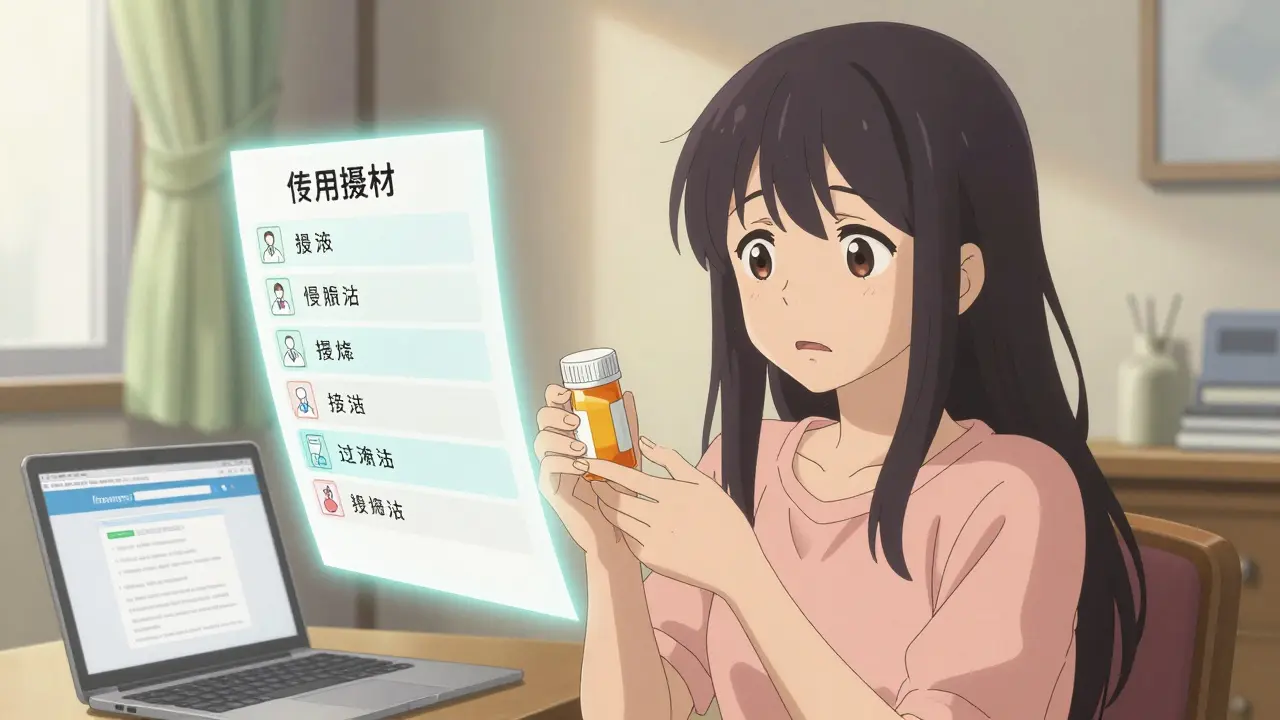
Ever been told your doctor prescribed a medication, but your pharmacy says it won’t be covered until your insurance approves it? That’s prior authorization-and it’s more common than you think. It’s not a glitch in the system. It’s a standard step many health plans use to decide if a drug is covered. For patients, it can feel like a roadblock. For insurers, it’s a way to manage costs and make sure medications are used safely. But here’s the truth: if you understand how it works, you can cut through the confusion and get your meds faster.
What Is Prior Authorization?
Prior authorization, sometimes called pre-authorization or pre-certification, is when your health plan says, "Hold on-we need to approve this drug before we pay for it." It doesn’t mean the drug is banned. It just means they want proof that it’s the right choice for your condition. This isn’t random. Insurers use it for specific drugs that are expensive, have cheaper alternatives, or come with risks. For example, if you’re prescribed a brand-name painkiller when a generic version exists, they’ll want to know why the cheaper option won’t work for you. Same goes for high-cost cancer drugs, mood stabilizers, or medications that can interact dangerously with others you’re taking. Medicare Part D calls this a "coverage determination." The goal? To make sure you get the safest, most effective treatment-not just the most expensive one. According to the Academy of Managed Care Pharmacy, it’s designed to ensure drugs are used "as intended," balancing patient needs with responsible spending.Which Medications Usually Need Prior Authorization?
Not every prescription needs approval. But these types almost always do:- Brand-name drugs with generic equivalents-like Lipitor vs. atorvastatin.
- High-cost medications-think biologics for rheumatoid arthritis or specialty drugs for hepatitis C.
- Drugs with strict usage rules-for example, certain diabetes meds only approved after you’ve tried metformin first.
- Medications with abuse potential-opioids, benzodiazepines, or stimulants like Adderall.
- Drugs used off-label-when a drug is prescribed for a condition it’s not officially approved for, like using an antidepressant for nerve pain.
Who Starts the Process?
You might think you need to call your insurance company. But you don’t. Your doctor or their office staff handles it. When they write the prescription, they check your plan’s rules. If prior auth is needed, they fill out a form with your diagnosis, medical history, and why this drug is necessary. That form goes to your insurer. They review it. Sometimes, they’ll ask for lab results, past treatment records, or even a letter from your specialist. For off-label uses, they might require a literature review or proof from clinical guidelines. The doctor signs off, saying the info is accurate. That’s legally binding. If they lie, they risk penalties. So they’re motivated to get it right.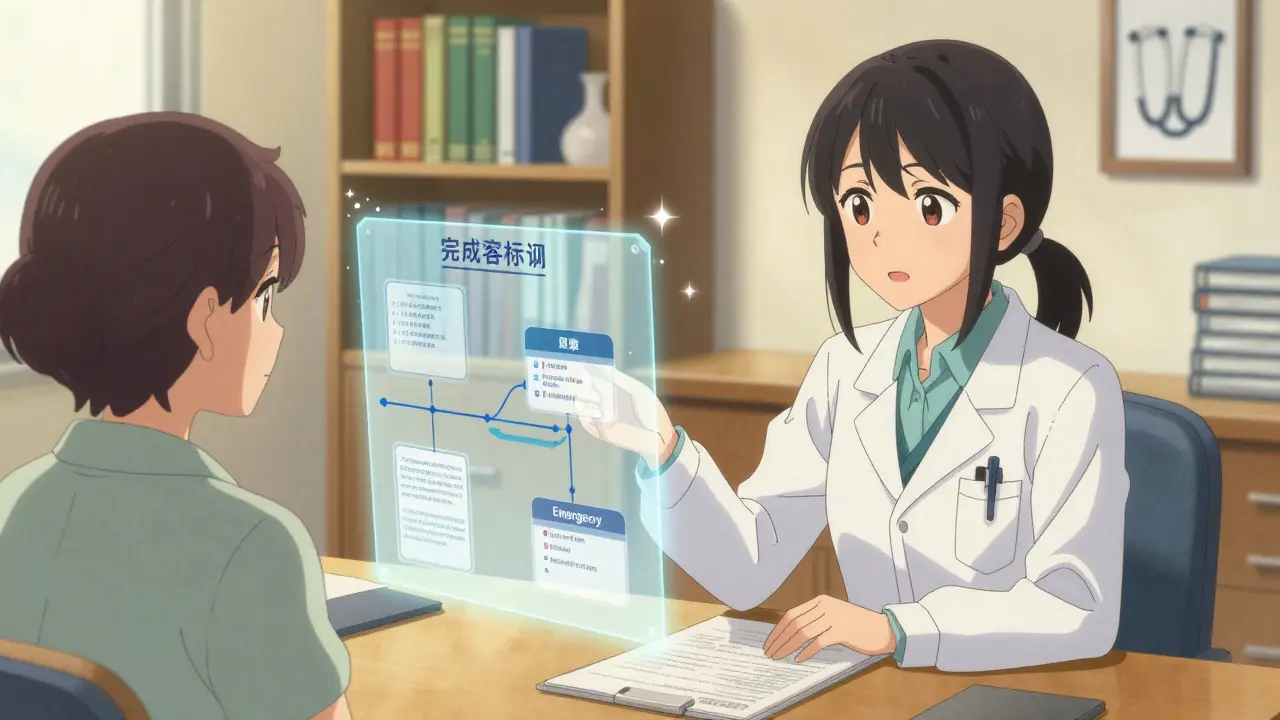
How Long Does It Take?
Timing matters. Approval can take anywhere from 24 hours to two weeks.- Standard requests-usually 3-7 business days.
- Urgent requests-if your condition could worsen without the drug, your doctor can mark it as urgent. Insurers must respond within 72 hours.
- Emergency cases-if you’re in the ER or need a life-saving drug, prior auth isn’t required upfront. But you’ll still need to follow up later.
What Happens If It’s Denied?
Denials happen. Maybe the insurer thinks a cheaper drug would work. Maybe your paperwork was incomplete. Or maybe they just made a mistake. Don’t panic. You have rights. First, ask your doctor to appeal. They can submit more evidence-lab work, specialist notes, or even studies showing the drug is more effective for your case. Many denials get reversed on appeal. You can also file your own appeal directly with your insurer. Medicare members can call the number on their ID card. Commercial insurers usually have a customer service line and a formal appeals process listed on their website. If all else fails, you can pay out-of-pocket for the drug. Some patients do this temporarily while waiting for an appeal. Or they use discount programs like GoodRx to lower the cash price.How Can You Avoid Delays?
You can’t control everything-but you can control a few things:- Ask your doctor before the appointment-"Will this medication need prior authorization?" If they say yes, they’ll be ready.
- Check your plan’s formulary-Most insurers have online tools. Blue Shield’s "Price Check My Rx" lets you search your drug and see if it’s covered and if prior auth is needed.
- Call your insurance-Don’t assume. Call the number on your card and ask: "Is [drug name] covered? Does it need prior authorization?" Get the rep’s name and reference number.
- Follow up-If your doctor says they submitted the request, call their office in 2-3 days to confirm. Sometimes forms get lost.
- Ask about alternatives-If your drug is denied, ask: "Is there another covered option that works just as well?" Sometimes, switching to a different drug in the same class gets you approved faster.

Why Does This System Exist?
It’s easy to hate prior authorization. It feels bureaucratic. It delays care. But there’s a reason it exists. Before these rules, some patients got expensive drugs they didn’t need. Others got the wrong drug because their doctor didn’t know the alternatives. Insurers saw rising costs and wanted to make sure money was spent wisely. The American Medical Association admits it’s a cost-control tactic. But they also say it’s not all bad. When done right, it prevents dangerous drug interactions, stops overprescribing, and pushes doctors toward evidence-based choices. The problem? Too often, it’s used as a barrier-not a guide. Some insurers approve only 30% of requests. Others require 10+ steps for simple refills. That’s where the frustration comes from.What You Can Do Right Now
If you’re on a medication that requires prior authorization:- Call your doctor’s office and ask if the request was submitted.
- Log into your insurance portal and check the status.
- Use a drug pricing tool like GoodRx to see cash prices in case you need to pay out of pocket temporarily.
- If it’s been over a week and you haven’t heard back, call your insurer’s pharmacy line directly.
- Keep a record: dates, names, reference numbers. You’ll need them if you appeal.
Final Thoughts
Prior authorization isn’t meant to block you from getting care. It’s meant to make sure you get the right care at the right cost. But the system is slow, confusing, and often feels impersonal. Your job isn’t to fight the system. It’s to navigate it. Ask questions. Stay organized. Know your options. And don’t be afraid to push back if something doesn’t add up. You’re not alone in this. Millions of people go through it every year. The goal isn’t to eliminate prior authorization-it’s to make it work for you, not against you.Does prior authorization mean my insurance won’t cover the drug?
No. It just means your insurer needs more information before approving it. Many requests are approved once the doctor provides the right medical details. It’s a review step, not a denial.
Can I get my medication without prior authorization?
Only in emergencies. Otherwise, if the drug requires prior authorization and you don’t get it, your pharmacy won’t bill your insurance. You can pay out of pocket, but you’ll likely pay full price. Some pharmacies let you pay upfront and submit for reimbursement after approval.
Why does my doctor have to do all the paperwork?
Because they’re the one who prescribed the drug and understands your medical history. Insurers require proof that the medication is medically necessary. Only your doctor can legally provide that documentation. Pharmacies and patients can’t submit these forms.
Are there drugs that never need prior authorization?
Yes. Most generic medications, common antibiotics, and basic medications like aspirin or ibuprofen don’t require prior authorization. It’s usually reserved for high-cost, high-risk, or specialty drugs.
What if I’m on Medicare?
Medicare Part D plans use prior authorization the same way private insurers do. You can check your plan’s formulary online or call the number on your card. Medicare also allows you to file appeals if a drug is denied. You have the right to a fast review if your health is at risk.
Can I switch to a different drug to avoid prior authorization?
Sometimes. Talk to your doctor about alternatives on your plan’s formulary. A different drug in the same class might work just as well and not need prior auth. But don’t switch without medical advice-some drugs aren’t interchangeable.

Comments (15)
Philip House
This prior auth nonsense is just another way Big Pharma and insurance companies collude to keep prices high. They don't care if you're in pain-they care about profit margins. I've waited three weeks for a simple steroid shot because some bean counter decided my arthritis wasn't 'urgent' enough. Wake up, America. This isn't healthcare-it's a rigged game.
And don't tell me it's for 'safety.' If it were, they'd require prior auth for opioids before they hit the market, not after you're already hooked.
Ryan Riesterer
Prior authorization is a formulary-driven utilization management protocol designed to align clinical interventions with evidence-based guidelines while mitigating financial risk exposure. The system is not inherently flawed-it’s the implementation that’s broken. Most insurers lack interoperable EHR integration, resulting in manual, error-prone workflows that delay care.
Standardized electronic submission via HL7/FHIR would reduce adjudication latency by up to 68%, per AMCP 2023 benchmarks. Until then, we’re stuck in a pre-digital bureaucratic purgatory.
Liberty C
Oh wow, so now we’re supposed to be *grateful* that our insurance company treats us like criminals? Let me get this straight-you’re telling me my doctor, who went to medical school for a decade, knows less about my body than some 22-year-old in a call center in Nebraska who’s never met me and doesn’t even know what ‘metformin’ is?
And you call this ‘cost control’? Please. It’s control. Period. They’re not trying to save money-they’re trying to save face while they pocket the difference. I’ve seen people die waiting for a form to be stamped. This isn’t healthcare. It’s institutional cruelty dressed up as policy.
shivani acharya
They’re watching us. Always. You think this is about drugs? Nah. It’s about data. Every time you get denied, they log it. Every appeal, every letter from your doctor-it’s all fed into an algorithm that decides if you’re ‘high risk’ or ‘low value.’ Next thing you know, your premiums spike because your ‘medication history’ says you’re a liability.
And don’t even get me started on the ‘off-label’ denials. They know that antidepressants help with nerve pain, but they don’t want to pay for it unless it’s FDA-approved for that. So they make you suffer first. Classic. They want you to beg. They want you to break. Then they’ll ‘bless’ you with the drug you needed all along.
And yes, I’ve been denied for gabapentin three times. And yes, I’ve cried in the pharmacy parking lot. And yes, I know who to blame. It’s not your doctor. It’s not the pharmacist. It’s the machine.
Margaret Khaemba
I’m from Kenya and I’ve never experienced anything like this. In my home country, if a doctor prescribes something, you get it. No forms, no waiting, no bureaucracy. I remember my cousin getting insulin without a single signature-just a prescription and a pharmacy.
It makes me wonder if we’ve lost something vital in our obsession with ‘efficiency’ and ‘cost control.’ Are we really safer because we made it harder to get medicine? Or are we just making people suffer more before they get help?
Maybe we need to rethink this whole model. Not just tweak it. Redesign it.
Malik Ronquillo
My doctor’s office sent in the prior auth for my migraine med and it got denied. I called the insurance. The lady said ‘we need more documentation.’ I said ‘what more do you want? He’s a neurologist.’ She said ‘we need a letter from his assistant.’
I hung up. I paid $400 out of pocket. I didn’t care anymore. This system is a joke. And the people who run it? They’re not even trying anymore. They’re just collecting paychecks while we bleed.
Don’t fight it. Just pay. And hate them quietly.
Alec Amiri
Y’all are acting like this is new. It’s been like this for 20 years. The only thing that changed is now you’ve got phones and apps and you think you’re entitled to instant access to everything. Newsflash: medicine isn’t Amazon. You don’t get Prime delivery on your antidepressants.
And honestly? If your doctor can’t handle the paperwork, maybe they shouldn’t be prescribing.
Stop whining. Learn the system. Or switch meds. Or pay cash. Pick one. But don’t act like you’re being persecuted.
Lana Kabulova
Okay, but what about the people who can’t afford to wait 7 days? What about the single mom working two jobs who can’t call her doctor every other day? What about the elderly who don’t know how to log into portals? What about the ones who get denied because their doctor’s fax machine jammed?
And don’t say ‘appeal it’-appealing means more time, more stress, more paperwork, more missed work, more anxiety.
This isn’t a ‘system.’ It’s a trap. And it’s designed to break people before they even get to the medicine.
And the worst part? The people who designed it? They’re on the other side of the glass. They don’t have to wait. They don’t have to beg. They just approve their own prescriptions.
And you wonder why we’re angry.
Lauren Wall
It’s not complicated. If the drug is expensive, they need to check. If the drug is risky, they need to check. It’s not personal. It’s policy. Stop making it emotional. Do the paperwork. Get it done. End of story.
Oren Prettyman
It is my considered and meticulously researched opinion that the prior authorization framework, as currently operationalized within the United States healthcare ecosystem, constitutes a structural impediment to equitable access to therapeutics. While the theoretical underpinnings of utilization management are defensible from an actuarial standpoint, the practical execution-characterized by asynchronous communication, non-standardized documentation formats, and human adjudication latency-creates a cascading series of inefficiencies that disproportionately impact vulnerable populations.
Furthermore, the absence of federal standardization across commercial, Medicare, and Medicaid plans results in a fragmented, jurisdictionally inconsistent regulatory landscape that undermines the very notion of patient-centered care.
It is therefore incumbent upon policymakers to enact uniform electronic prior authorization protocols, mandating real-time adjudication and interoperability with electronic health records, in accordance with the 21st Century Cures Act’s intent.
Tatiana Bandurina
I used to work in a pharmacy. I saw it every day. People crying because their insulin was denied. Grandparents choosing between food and their blood pressure med. Kids with asthma waiting because the inhaler needed ‘clinical justification.’
And the worst part? The insurance reps? They knew. They saw the names. The diagnoses. The history. And they still said no. Because their bonus was tied to how many claims they denied.
They didn’t have to be cruel. But they were. Quietly. Systematically. And now we’re all supposed to be grateful for the ‘transparency’?
Akriti Jain
They’re using AI to deny you now. 🤖
Yeah, you heard me. That ‘review’? It’s not a person. It’s a bot trained on past denials. If your last claim was denied, it auto-denies the next one. Even if your doctor changed the dose. Even if your condition got worse. Even if you’re in a different state.
And when you call? They say ‘system error.’
That’s not a glitch. That’s the plan. 💸
They want you to give up. So they can sell you a ‘premium’ plan that doesn’t have prior auth… for $1,200/month. 😏
Mike P
Let me tell you something. I’ve been through this with my dad’s cancer meds. We got denied 5 times. 5. Each time, my mom cried. Each time, my dad said ‘it’s fine, I’ll wait.’
Then we found a patient advocate through the hospital. She got us through. She knew the forms. Knew who to call. Knew how to say ‘this is life or death’ in a way that made them blink.
So if you’re reading this and you’re stuck? Don’t do it alone. Find someone who’s been through it. A nurse. A social worker. A nonprofit. They exist. And they’re better at beating the system than you are.
And yeah, it’s messed up. But you’re not powerless.
Jasmine Bryant
I just wanted to say I used GoodRx for my ADHD med and saved $180. I didn’t even need prior auth because I paid cash. It’s wild how much cheaper it was than insurance.
Also, my doctor’s office sent in the auth but I forgot to check the portal. I waited two weeks thinking they didn’t do it. Turned out it was approved on day 3. I just didn’t know. So… check your portal. Seriously. It’s right there.
Also, typos happen. I misspelled ‘atorvastatin’ once and it got denied. Took me 3 calls to fix. 😅
Sarvesh CK
One cannot help but reflect on the paradox embedded within the prior authorization paradigm: a system ostensibly designed to safeguard patient welfare through clinical prudence, yet frequently manifesting as an instrument of administrative alienation. The moral economy of healthcare, once rooted in the Hippocratic ideal of healing, has been subsumed by the calculus of actuarial risk.
It is not merely a question of efficiency, but of dignity. When a patient is required to navigate labyrinthine bureaucratic channels to access a life-sustaining medication, we have ceased to treat illness as a human condition and instead reduced it to a transactional event.
Perhaps the true measure of a society’s health lies not in its technological sophistication or its pharmaceutical innovation, but in its willingness to remove barriers between suffering and relief.
Let us not mistake bureaucracy for compassion. Let us not confuse control for care.