
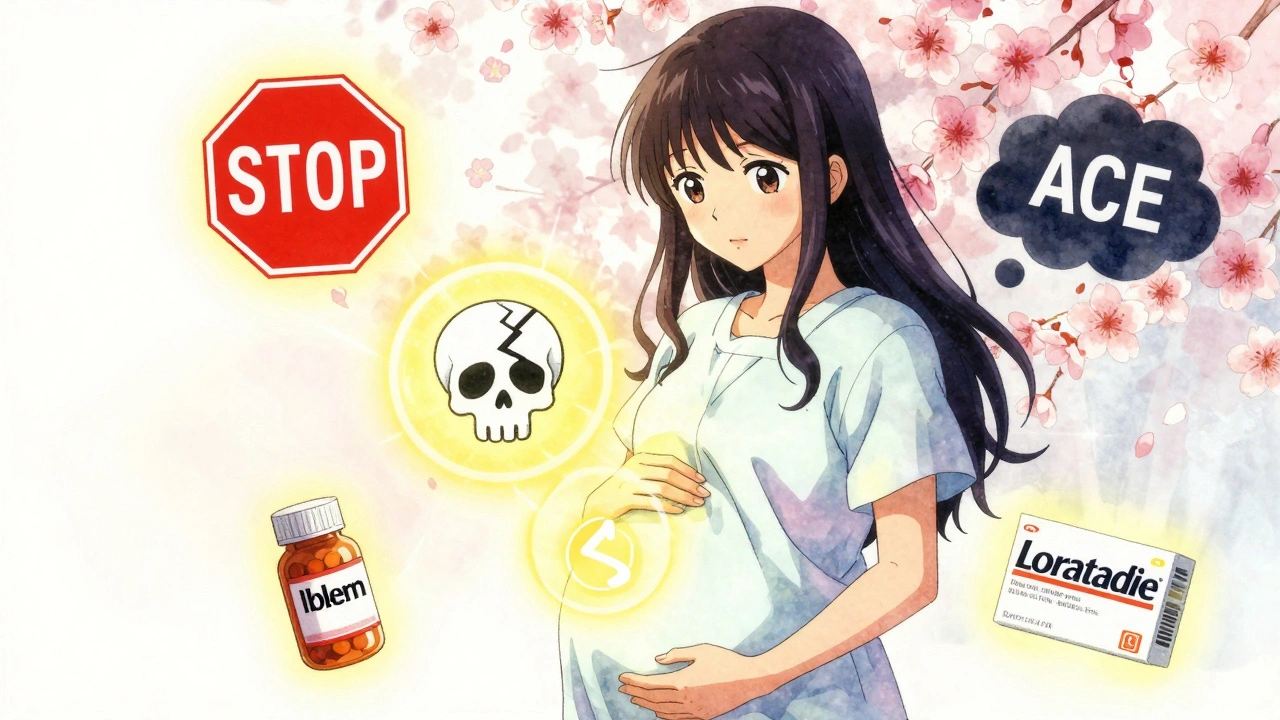
When you're pregnant, everything you take matters-not just what you eat, but what you swallow. A simple headache pill, an allergy tablet, or even a topical cream can cross the placenta and affect your baby’s developing organs. The stakes are real: medications to avoid during pregnancy aren’t just theoretical risks. They’re backed by decades of research, FDA warnings, and tragic outcomes that changed how we treat pregnant women today.
Why Some Medications Are Dangerous During Pregnancy
Your baby’s body doesn’t process drugs the way yours does. What’s safe for you might be toxic for them. The first 12 weeks of pregnancy are the most critical-this is when organs form. A drug that interferes with heart development, brain wiring, or limb growth during this window can cause lifelong disabilities. That’s why the FDA replaced the old A, B, C, D, X categories in 2015 with detailed narrative labels. It’s not about letter grades anymore. It’s about understanding the real, documented risks.NSAIDs: More Than Just a Headache
Ibuprofen (Advil, Motrin), naproxen (Aleve), and high-dose aspirin are common go-tos for pain and inflammation. But after 20 weeks of pregnancy, these drugs can cause serious harm. The FDA issued a warning in October 2020: NSAIDs can shut down a key fetal blood vessel that helps the kidneys work. This leads to low amniotic fluid (oligohydramnios), which can cause lung underdevelopment and limb contractures. Studies show the risk of kidney problems doubles after 20 weeks. Even if you took ibuprofen earlier in pregnancy, stop now. It’s not worth the gamble.Acetaminophen: The New Controversy
For years, acetaminophen (Tylenol) was the gold standard for pain and fever in pregnancy. But in September 2025, the FDA sent a Notice to Physicians that changed everything. Multiple large studies-including one tracking 95,000 mother-child pairs-found a link between long-term acetaminophen use and higher rates of ADHD and autism spectrum disorder. The risk wasn’t from a single dose. It was from taking it for weeks or months, especially across all three trimesters. This doesn’t mean you can never use it. The FDA still says it’s safer than NSAIDs or opioids. But now the message is clear: use the lowest dose for the shortest time. If you have a mild fever or headache, try rest, hydration, or a cold compress first. Save acetaminophen for when you really need it. And if you’ve been taking it daily for nausea or chronic pain, talk to your provider. The risk of untreated high fever (over 102°F) is actually higher than short-term acetaminophen use-hyperthermia can increase neural tube defect risk by over 8 times.Antibiotics That Can Harm Your Baby
Not all antibiotics are safe. Tetracyclines like doxycycline can permanently stain your baby’s teeth and weaken their bones. Fluoroquinolones like ciprofloxacin (Cipro) are linked to a nearly 2-fold increase in musculoskeletal problems in animal studies and are now avoided in pregnancy unless no other option exists. Even common ones like Bactrim (sulfamethoxazole/trimethoprim) carry risks in the third trimester, including a higher chance of jaundice and kernicterus in newborns. Always ask: Is this antibiotic necessary? Is there a safer alternative? Penicillin, amoxicillin, and cephalosporins like cephalexin remain first-line choices with strong safety records.
High Blood Pressure Meds: Stop Immediately
If you’re on lisinopril, enalapril, or valsartan for high blood pressure and find out you’re pregnant, stop these drugs right away. ACE inhibitors and ARBs cause severe kidney damage in the developing fetus, leading to low amniotic fluid, underdeveloped lungs, and even stillbirth. The risk is as high as 50% in some cases. The good news? There are safe alternatives. Methyldopa and labetalol are well-studied and recommended by ACOG. If you’re planning pregnancy and take these drugs, talk to your doctor before you conceive. Switching early can prevent serious complications.Acne and Seizure Meds: High-Risk, High-Stakes
Isotretinoin (Accutane) for acne is one of the most dangerous drugs in pregnancy. It doesn’t just cause minor birth defects-it causes severe, life-altering ones: missing ears, heart defects, brain malformations. The FDA’s iPLEDGE program requires strict controls because the risk is over 25%. If you’re on isotretinoin and thinking of getting pregnant, you need to wait at least one month after stopping-and even then, use two forms of birth control. Valproic acid (Depakote) for epilepsy is another major red flag. It raises the risk of major birth defects to nearly 11%, compared to about 3% in the general population. Lamotrigine and levetiracetam are safer options, and switching before pregnancy can cut the risk in half.Safe Alternatives for Common Pregnancy Complaints
You don’t have to suffer. There are safe, effective options for everyday issues:- Pain and fever: Acetaminophen (Tylenol) at 325-650 mg every 4-6 hours, max 3,000 mg per day. Use only when needed.
- Allergies: Loratadine (Claritin), cetirizine (Zyrtec), or fexofenadine (Allegra) are all Category B with no increased risk of birth defects in over 2,000 tracked pregnancies.
- Nasal congestion: Start with saline sprays. If you need more, pseudoephedrine (Sudafed) is okay after the first trimester-no more than 120 mg per day. Avoid it if you have high blood pressure.
- Constipation: Eat more fiber (25-30 grams daily), drink water, and move. If you need help, docusate sodium (Colace) or polyethylene glycol (Miralax) are safe and effective.

Antidepressants: The Balancing Act
Untreated depression during pregnancy carries real risks: preterm birth, low birth weight, and even suicide. But some antidepressants come with their own warnings. Paroxetine (Paxil) is linked to a slightly higher risk of heart defects. SSRIs as a group may raise the risk of persistent pulmonary hypertension in newborns (PPHN) from 1-2 per 1,000 to 5-6 per 1,000. But here’s the key: stopping your meds increases your chance of depression relapse by 20-25%. The decision isn’t about “safe” vs. “dangerous.” It’s about weighing risks. If you’re stable on an SSRI, switching mid-pregnancy might do more harm than good. Talk to your OB and psychiatrist together. Never stop cold turkey.Warfarin and Blood Thinners: Switch Before Conception
Warfarin (Coumadin) crosses the placenta and can cause fetal warfarin syndrome-facial deformities, bone problems, and brain bleeds. The risk is 6-10%. If you’re on warfarin for a clotting disorder and plan to get pregnant, switch to low molecular weight heparin (like Lovenox) before conception. Heparin doesn’t cross the placenta. It’s an injection, yes-but it’s far safer for your baby. Don’t wait until you’re pregnant to make this change.What to Do Right Now
If you’re pregnant or planning to be:- Make a full list of everything you take-prescription, OTC, supplements, herbal teas.
- Bring it to every appointment. Don’t assume your doctor knows.
- Use MotherToBaby.org for free, expert advice. They’ve answered over 2.3 million questions.
- Don’t panic if you took something risky early on. Many exposures don’t cause harm. But get checked.
- Ask: “Is this necessary? Is there a safer option? What happens if I don’t take it?”
The Bigger Picture
The landscape is changing fast. The FDA’s 2025 notice on acetaminophen isn’t the end-it’s the beginning. The NIH is funding a $15 million effort to find non-drug pain relief for pregnant women. A global study tracking 50,000 pregnancies will deliver answers on acetaminophen by late 2025. Meanwhile, lawsuits are mounting against manufacturers who didn’t warn about neurodevelopmental risks. This isn’t about fear. It’s about awareness. You’re not alone. Millions of women take medications during pregnancy. The goal isn’t perfection-it’s informed choice. With the right information, you can protect your health and your baby’s future.Is it safe to take Tylenol while pregnant?
Tylenol (acetaminophen) is still considered the safest pain reliever during pregnancy, but the FDA now advises caution. Use the lowest dose for the shortest time possible. Avoid daily or long-term use, especially across all three trimesters. Studies link prolonged use to a higher risk of ADHD and autism spectrum disorder in children. For mild symptoms, try non-medication options like rest, hydration, or cold compresses first.
Can I take ibuprofen during pregnancy?
No, ibuprofen and other NSAIDs should be avoided after 20 weeks of pregnancy. They can cause fetal kidney problems, low amniotic fluid, and even heart complications. Even before 20 weeks, it’s best to avoid them unless your doctor specifically recommends them for a medical reason. Acetaminophen is the preferred alternative for pain or fever.
What allergy medicine is safe during pregnancy?
Loratadine (Claritin), cetirizine (Zyrtec), and fexofenadine (Allegra) are considered safe during pregnancy. These second-generation antihistamines have been studied in thousands of pregnancies with no increased risk of birth defects. Avoid first-generation ones like diphenhydramine (Benadryl) for long-term use, as they can cause drowsiness and may affect fetal development in large doses.
Is it safe to take antidepressants while pregnant?
Some antidepressants carry risks, but untreated depression poses even greater dangers-like preterm birth and low birth weight. Paroxetine is linked to a small increase in heart defects, while SSRIs may slightly raise the risk of PPHN. However, stopping medication increases relapse risk by 20-25%. The decision should be made with your OB and mental health provider. Never stop abruptly. Many women safely continue treatment with close monitoring.
What should I do if I took a risky medication before I knew I was pregnant?
Don’t panic. Many exposures don’t lead to birth defects. The timing matters-most major organ development happens in the first 8-12 weeks. Call MotherToBaby (1-866-626-6847) or your provider. They can assess your specific medication, dose, and timing. Most cases don’t require intervention, but getting expert advice gives you peace of mind and helps guide your care going forward.
Are herbal supplements safe during pregnancy?
Many herbal supplements are not tested for safety in pregnancy. Some, like black cohosh, dong quai, and goldenseal, can trigger contractions or affect hormone levels. Even “natural” doesn’t mean safe. Always tell your provider about any supplements you’re taking. Stick to prenatal vitamins unless your doctor approves something else.

Comments (14)
Jade Hovet
OMG YES THIS! 🙌 I took Tylenol for 3 months straight during my first preg and now my kid is in OT for sensory issues... not saying it's 100% linked but why risk it? 🤔
nina nakamura
This post is fearmongering disguised as science. You're scaring women out of taking necessary meds because of correlation studies with tiny effect sizes. Wake up.
Shelby Ume
As a perinatal nurse for 18 years, I've seen the consequences of both untreated maternal illness and reckless medication use. The key is individualized care. There are no universal rules-only risk-benefit analyses guided by evidence and compassion.
Every patient deserves a conversation, not a checklist. The FDA's shift to narrative labeling was long overdue. We stopped relying on letter grades because they reduced complex pharmacology to a simplistic A-F scale-ignoring timing, dosage, and comorbidities.
Acetaminophen isn't evil. It's a tool. Used wisely, it prevents dangerous hyperthermia. Used mindlessly, it contributes to neurodevelopmental risks. The same goes for SSRIs. Depression is not a weakness-it's a medical condition that can kill. The risk of untreated depression often outweighs the pharmacological risk.
Women need to be trusted as decision-makers, not policed by alarmist headlines. We need more providers who listen, not just recite guidelines. And we need better access to non-pharmacological support: therapy, acupuncture, physical therapy, mindfulness. Not everyone can afford a specialist, but everyone deserves to feel safe in their choices.
John Fred
Just want to say the AAP and ACOG both still endorse acetaminophen as first-line for pain/fever in pregnancy-just with caveats. The 2025 FDA notice was a precautionary update, not a ban. We're talking chronic use (weeks/months), not occasional Tylenol for a headache. Also, NSAIDs post-20wks? Absolutely avoid. But don't toss the baby out with the bathwater. 🤲
nithin Kuntumadugu
LMAO they didn't warn us about the 5G baby scanner that tracks your meds. 🤡 Next they'll say coffee causes autism. Wake up sheeple. Big Pharma is scared you'll find out how easy it is to heal naturally. Google 'prenatal herbalism'.
Webster Bull
Stop the panic. Your body knows what to do. If you're stressed about every pill, you're doing more harm than the meds. Chill. Breathe. Talk to your doc.
sharon soila
Every choice a pregnant person makes is an act of love. Not perfection. Not fear. Love.
It's not about avoiding all risk-it's about minimizing avoidable harm while honoring your mental and physical well-being. You are not a vessel. You are a person. Your health matters as much as your baby's.
If you need Tylenol to sleep, take it. If you need Zyrtec to breathe, take it. If you need an SSRI to survive the day, take it.
But also: rest. Hydrate. Walk. Talk. Cry. Ask for help. These are not 'alternatives'. They are foundations.
You are doing better than you think.
Richard Ayres
The real issue here isn't the medications-it's the lack of longitudinal, pregnancy-specific clinical trials. We're making life-altering decisions based on observational data from the 90s. We need better science. Until then, we need humility, not dogma. And we need to stop shaming women for making hard choices under uncertainty.
Sheldon Bird
I took ibuprofen at 16 weeks because I had a killer migraine and didn't know any better. Panic mode for a week. Called MotherToBaby. They said my risk was less than 1%. Calmed me right down. 🙏 You're not alone. Ask. Don't assume the worst.
Donna Hammond
I'm a pharmacist and I work with pregnant patients daily. Let me clear up a myth: acetaminophen isn't 'safe' because it's harmless-it's safe because it's the *least harmful* option among the available ones. Same with loratadine vs. diphenhydramine. We don't have perfect choices-we have better ones.
And yes, warfarin absolutely must be switched before conception. I've seen babies born with limb deformities because the mom didn't know. This isn't scare tactics. It's clinical reality.
But here's the thing: if you're reading this and feeling guilty, stop. You're trying. That's enough. Your provider is your partner-not your judge.
Jennifer Taylor
I took Depakote for 3 years before I got pregnant. They told me to stop. I didn't. My daughter has autism. I feel responsible every single day. Please. Don't be like me. Switch meds before you even try. I'm not trying to guilt you. I'm just saying: I know what it feels like to look into your child's eyes and wonder if you broke them.
Karen Mccullouch
This is why I won't let my daughter get pregnant. America turns mothers into lab rats. They'll ban aspirin next. Next thing you know, they'll tell you not to breathe too hard. 😒
Scott Butler
Why are we letting bureaucrats dictate what pregnant women can take? In my day, we took whatever we needed and didn't whine. This country is soft. You want to take ibuprofen? Do it. Your baby will be fine. Stop listening to the fear machine.
Ronan Lansbury
They say NSAIDs cause oligohydramnios. But did you know the FDA got pressured by Big Pharma to downplay the data? The real study that showed 2x risk was buried for 3 years. And acetaminophen? The NIH study was funded by Johnson & Johnson. Coincidence? I think not. 🤔