
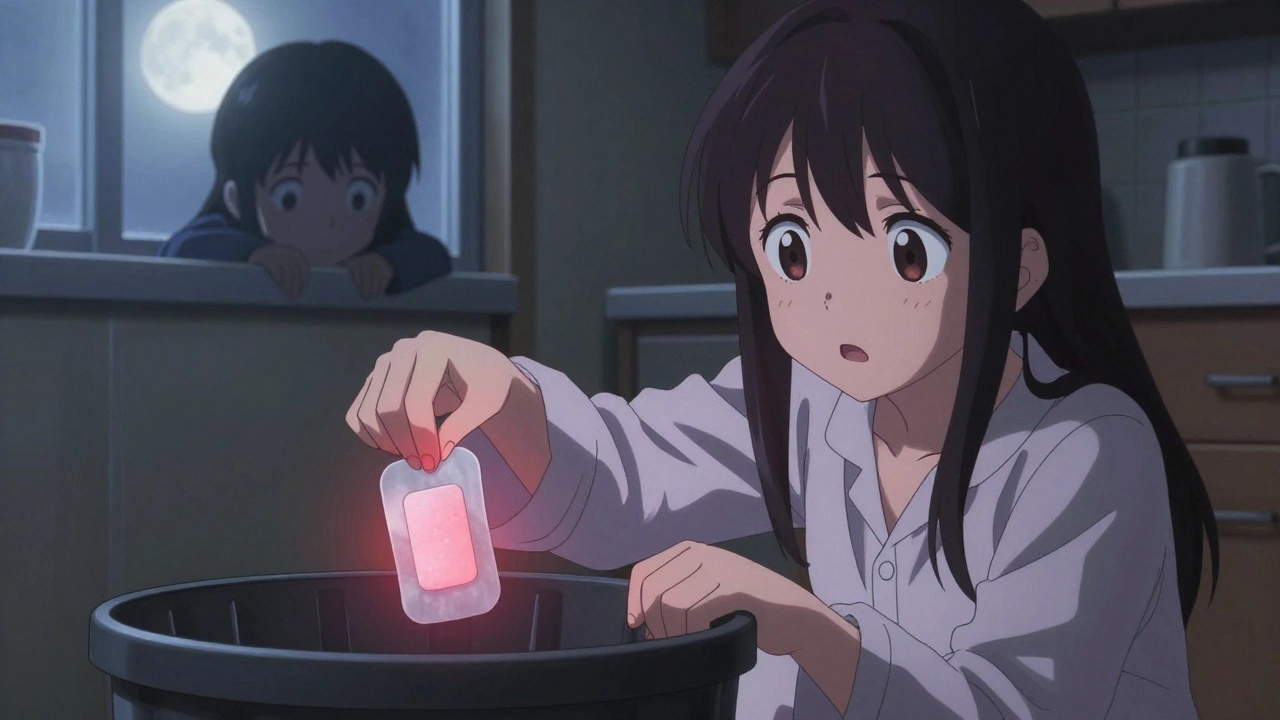
Putting old pills in the trash might seem harmless-until it isn’t. Every year, children, teens, and even adults accidentally-or intentionally-take medications they find in household bins. The results can be deadly. The flush list from the U.S. Food and Drug Administration (FDA) exists for one reason: to stop preventable deaths. These aren’t just guidelines. They’re lifesaving rules for specific drugs that can kill in a single dose.
Why Some Medications Must Be Flushed
Not all expired or unused medications need to go down the toilet. But for certain powerful drugs, flushing is the only safe option. The FDA’s flush list includes medications that are highly addictive, easily abused, and deadly in small amounts. These aren’t your typical painkillers or antidepressants. These are drugs like fentanyl patches, oxymorphone tablets, and methadone-substances so potent that a single patch or pill can stop someone’s breathing. The CDC reported over 107,000 drug overdose deaths in the U.S. in 2021. Nearly 70% of those involved opioids. Many of those deaths didn’t come from users themselves-they came from kids finding a patch in the trash, a teenager grabbing a bottle from a neighbor’s bin, or someone stealing pills from a discarded container. The FDA’s flush list was created because the risk of accidental exposure outweighs the environmental risk of flushing.The Exact Medications on the FDA Flush List
Here’s the full list of medications that must be flushed immediately, not thrown away:- Any product containing buprenorphine (BELBUCA, BUAVAIL, BUTRANS, SUBOXONE, SUBUTEX, ZUBSOLV)
- Any product containing fentanyl (ABSTRAL, ACTIQ, DURAGESIC, FENTORA, ONSOLIS)
- Hydromorphone (EXALGO)
- Meperidine (DEMEROL)
- Methadone (DOLOPHINE, METHADOSE)
- Morphine (ARYMO ER, AVINZA, EMBEDA, KADIAN, MORPHABOND ER, MS CONTIN, ORAMORPH SR)
- Oxymorphone (OPANA, OPANA ER)
- Tapentadol (NUCYNTA, NUCYNTA ER)
- Sodium oxybate (XYREM, XYWAV)
- Diazepam rectal gel (DIASTAT, DIASTAT ACUDIAL)
- Methylphenidate transdermal system (DAYTRANA)
What to Do With Everything Else
If your medication isn’t on the flush list, don’t flush it. Don’t toss it in the trash either-unless you follow the right steps. The FDA’s safe disposal method for non-flush drugs is simple:- Take the pills or liquid out of their original bottles.
- Don’t crush tablets or capsules-just leave them as they are.
- Mix them with something unappetizing: used coffee grounds, kitty litter, or dirt.
- Pour the mixture into a sealable plastic bag or container.
- Throw it in your household trash.
Why Flushing Isn’t the Environmental Nightmare You Think
You’ve probably heard that flushing meds pollutes waterways. That’s true-for most drugs. But the FDA’s position is clear: for these specific medications, the risk to human life is far greater than the risk to aquatic life. Studies show wastewater plants remove only 30-90% of pharmaceuticals. Some, like carbamazepine, barely get filtered at all. But here’s the key: the amount of fentanyl or methadone flushed from a single patch is microscopic compared to the number of lives saved by keeping it out of trash bins. Dr. John Scott from the EPA put it plainly: the environmental impact of flushing one fentanyl patch is negligible compared to the potential for multiple fatalities if that same patch ends up in a child’s hands. The EPA and FDA both agree: for these 11 medications, the toilet is the safest place.Real Stories Behind the Rules
A mother in Ohio found her 8-year-old son unconscious after he chewed on a fentanyl patch she’d thrown in the trash. He survived, but barely. A teenager in Minnesota died after finding a bottle of oxymorphone in a neighbor’s recycling bin. These aren’t rare cases. The American Association of Poison Control Centers recorded over 8,900 single-exposure cases involving fentanyl in 2022-42% of them in children under five. In one heartbreaking case, a pharmacy technician shared that a patient’s 12-year-old granddaughter had taken two doses of methadone from a trash bag. She was rushed to the hospital in cardiac arrest. The grandmother didn’t know she was supposed to flush it. She thought she was doing the right thing by throwing it away. These stories aren’t outliers. They’re why the flush list exists.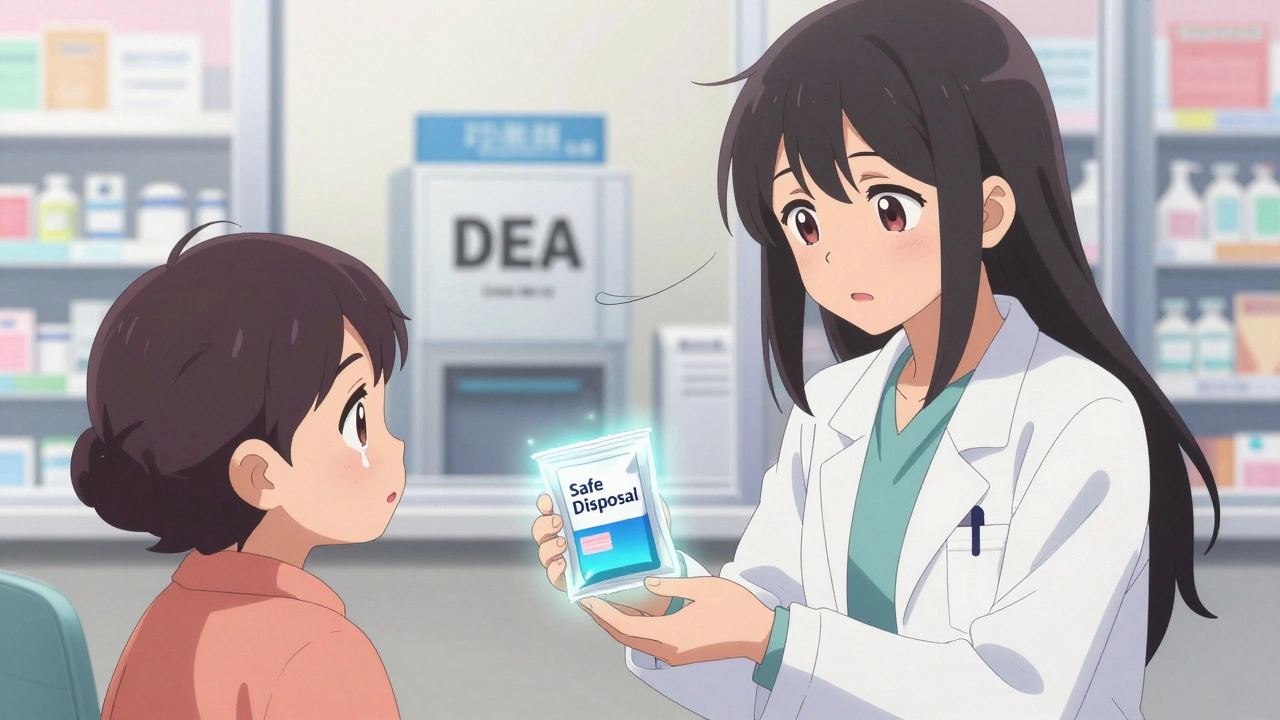
What You Can Do Right Now
1. Check your medicine cabinet. Look for any of the 11 medications on the flush list. If you find them, don’t wait. Flush them now. 2. For everything else, mix with coffee grounds or kitty litter, seal it in a bag, and toss it in the trash. 3. Find a take-back location. Many pharmacies, police stations, and hospitals have drop-off boxes. Walgreens and CVS have over 3,800 kiosks across the U.S. You can search for one near you through the DEA’s website. 4. Ask your pharmacist. If you’re unsure whether a medication belongs on the flush list, ask. Most pharmacists know the list by heart. Don’t guess. 5. Teach others. Share this with family, friends, and neighbors. Especially those with elderly parents or teens at home.The Bigger Picture
The problem isn’t just about disposal-it’s about how we treat powerful drugs. Many people don’t realize that unused prescriptions are a public safety issue. The Secure and Responsible Drug Disposal Act of 2010 was passed because of cases just like these. Now, manufacturers are required to fund take-back programs. Some pharmacies even give out free disposal kits-powder packets that turn pills into gel when mixed with water. But the most effective tool is still awareness. If you know which drugs to flush and which to mix with coffee grounds, you’re already helping prevent a tragedy.What’s Changing Soon
New legislation like the SNIPED Act, introduced in 2023, would require doctors to give disposal instructions with every prescription for Schedule II drugs. Some states are already requiring special packaging-like envelopes with activated charcoal-to reduce improper disposal by over 60%. The market for safe disposal products is growing fast. But until every pharmacy has a drop box and every household knows what to do, your actions matter. Flushing the right meds. Mixing the rest. Teaching others. These small steps save lives.Can I flush any old pills down the toilet?
No. Only medications on the FDA’s flush list should be flushed. Flushing other drugs can pollute water supplies. For all other medications, mix them with coffee grounds or kitty litter, seal them in a plastic bag, and throw them in the trash.
What if I don’t have access to a take-back program?
If you can’t find a drop-off location, follow the FDA’s trash disposal method: remove pills from their original containers, mix them with an unappealing substance like used coffee grounds or cat litter, seal them in a plastic bag, and toss them in your household trash. Never crush tablets or capsules.
Why can’t I just throw all my meds in the trash?
Many powerful drugs, especially opioids and sedatives, can be deadly in a single dose. Children, teens, and people with substance use disorders often search through trash for pills. Throwing these drugs in the trash without proper preparation puts lives at risk. The flush list exists because for these specific medications, the danger of keeping them in the home outweighs the environmental risk of flushing.
Are there any medications I should never flush?
Yes. Almost all medications should NOT be flushed. Only the 11 specific drugs listed by the FDA should go down the toilet. This includes opioids like fentanyl, methadone, and oxymorphone, and a few other high-risk drugs like diazepam rectal gel. For everything else, use the trash method with coffee grounds or kitty litter.
What should I do with empty pill bottles?
Remove or black out your personal information on the label before recycling or throwing them away. Some local recycling programs accept empty plastic bottles, but check your city’s rules. If in doubt, throw them in the trash after removing the label.
Is it safe to flush medications if I have a septic system?
Yes. The FDA’s flush list applies regardless of your water system. Whether you’re on city sewage or a septic tank, flushing these specific medications is still the safest option to prevent accidental poisoning. The environmental impact is minimal compared to the risk of someone finding the drug in your trash.
How do I know if my medication is on the flush list?
Check the active ingredient on the label. If it contains buprenorphine, fentanyl, hydromorphone, meperidine, methadone, morphine, oxymorphone, tapentadol, sodium oxybate, diazepam rectal gel, or methylphenidate transdermal system, it’s on the list. If you’re unsure, ask your pharmacist or check the FDA’s official website.

Comments (13)
Audrey Crothers
Just flushed my dad’s fentanyl patches today. I didn’t know I was supposed to until I read this. Thank you. So many people don’t get this. Lives saved.
Reshma Sinha
This is critical infrastructure for public health. We treat opioids like they’re just ‘meds’-but they’re weapons in the wrong hands. Pharma companies need to fund more take-back kiosks. And pharmacies? Stop acting like it’s not their job.
nikki yamashita
My grandma threw out her methadone bottle last year. I freaked out. Now I check everyone’s meds. This post? Lifesaver.
sandeep sanigarapu
Respectfully, the environmental impact is not negligible. Even micro-doses of opioids in waterways affect aquatic ecosystems. We must push for better disposal tech, not normalize flushing.
Adam Everitt
so like… if i have a patch from duragesic… i just drop it in the toilet? nothin else? wow. i always thought that was bad for the planet. guess not. kinda wild.
Ashley Skipp
Why are we letting the FDA decide what’s safe to flush? Who even are they? I don’t trust institutions anymore. This feels like control
Laura Weemering
Let’s be honest-this isn’t about safety. It’s about liability. The FDA didn’t create this list because they care about children. They created it because someone sued them after a kid died. Now they’ve got cover. The real problem? The pharmaceutical industry’s lobbying power. They profit from addiction, then profit from ‘solutions.’
Flushing? It’s a Band-Aid. We need systemic change: mandatory disposal training with every script, regulated packaging, and real accountability. Not ‘just flush it’ and call it a day.
And don’t get me started on how they market these drugs to elderly patients with ‘chronic pain’-then leave them with a drawer full of lethal pills and zero education. It’s predatory.
Also, why is diazepam rectal gel on here? That’s for seizures. Who’s stealing that from the trash? A toddler? Really? This feels… disproportionate.
And yet-I still flushed my sister’s oxymorphone. Because I’d rather pollute a river than bury another body.
Levi Cooper
Why are we letting foreigners tell us how to dispose of our medicine? India’s got a different culture. They don’t flush anything. We should be building secure drop boxes-not encouraging toilet habits. This is cultural surrender.
Robert Webb
There’s a quiet heroism in checking your medicine cabinet. I used to think it was overkill-until my cousin’s 14-year-old found a bottle of methadone in a recycling bin at a party. He didn’t even know what it was. He just thought it looked like candy. He’s alive because the ER had Narcan. But he won’t be the last. This isn’t about rules-it’s about responsibility. And we’ve been lazy. The fact that we even need a flush list is a failure of our system. But still-thank you for making this clear.
Also-please, if you have unused meds, call your pharmacist. They’ll tell you exactly what to do. Most of them are desperate to help. They just need you to ask.
Nathan Fatal
The environmental argument against flushing is valid-but it’s a false equivalence. We don’t flush every pill because we’re careless. We flush these because they’re existential threats. A single fentanyl patch can kill three adults. The water contamination from one patch? Undetectable. The death of a child? Irreversible. We prioritize human life. Not because we’re sentimental-but because it’s the only moral baseline left.
And yes, we need better infrastructure. But until then-flush the list. It’s not a loophole. It’s a lifeline.
wendy b
Frankly, this is a textbook example of bureaucratic overreach. The FDA has no authority to dictate household waste protocols. This is a slippery slope toward mandatory disposal compliance. Next they’ll tell us how to dispose of our toothpaste. Pathetic.
Rob Purvis
Just wanted to add: if you’re on a septic system, flushing these meds is still safe. The EPA and CDC both confirm this. The concentration is too low to affect bacterial breakdown. The real danger? The patch in the trash. Please-don’t overthink it. If it’s on the list, flush it. End of story.
Also-thank you to whoever wrote this. This is the kind of clarity we need. Not fear. Not guilt. Just facts.
Stacy Foster
THIS IS A COVER-UP. The FDA knows that flushing creates water contamination. But they’re pushing this because they’re in bed with Big Pharma. They don’t want you to know that the same companies that made these drugs are now selling ‘safe disposal kits’ for $20 a pop. This is a money scheme. Don’t be fooled. Your toilet is not a solution-it’s a distraction. Demand real change. Not toilet flushes.