

Drug Side Effect Risk Calculator
This tool estimates your potential risk of side effects based on how your gut bacteria might interact with your medications.
Based on research showing gut bacteria can transform up to 117 known drugs, including common medications like chemotherapy, heart drugs, and statins.
Your Risk Assessment
When you take a pill, you assume it’s just your body breaking it down. But what if your gut bacteria were secretly rewriting how that drug works? Turns out, they are. And this isn’t science fiction-it’s why some people get sick from a common medication while others feel fine. The gut microbiome doesn’t just digest food. It transforms drugs. Sometimes it makes them safer. Often, it makes them dangerous. And we’re only just beginning to understand how much this changes everything about how medicine is given.
Why Two People React Completely Differently to the Same Drug
Take irinotecan, a chemotherapy drug used for colon cancer. About one in three patients who get it suffer severe, life-threatening diarrhea. Doctors used to blame the drug itself. But research from Yale in 2019 showed something else: gut bacteria were reactivating the drug inside the intestines. The body turns irinotecan into a harmless form called SN-38-glucuronide. But certain bacteria-especially those making the enzyme beta-glucuronidase-flip it back into its toxic form, SN-38. That’s what burns the gut lining. Patients with high levels of this enzyme had diarrhea so bad they had to stop treatment. Those with low levels? Almost no side effects. The difference wasn’t genetics. It wasn’t dosage. It was their microbiome. This pattern shows up everywhere. The antiviral drug studied in the same Yale research had 73% of its toxic metabolites made by gut bugs. The seizure medication clonazepam reaches 40-60% higher levels in people without gut bacteria. And digoxin, a heart drug, becomes useless in people who carry a specific bacterium called Eggerthella lenta. That bug breaks it down before it can help. One study found that 30% of patients had no response to digoxin-not because they were noncompliant, but because their microbiome was silently neutralizing it.How Gut Bacteria Turn Drugs Into Toxins (And Sometimes Cures)
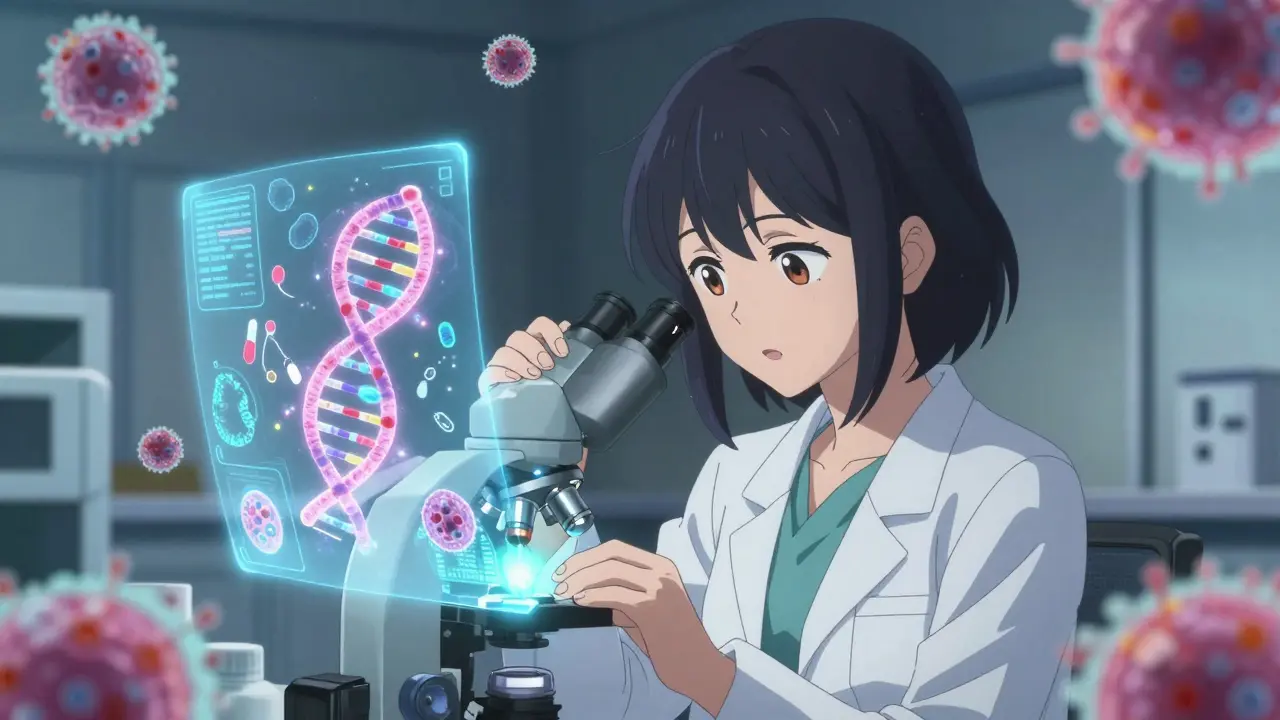
Your gut is home to trillions of microbes. In the colon alone, there are up to a trillion bacteria per milliliter. That’s more than the number of human cells in your body. These bugs aren’t just sitting there. They’re busy with enzymes that do things your liver can’t. They reduce nitro groups, hydrolyze sugar bonds, break azo links, and strip off methyl groups. These reactions are routine for them-part of how they survive on what you eat. But when a drug passes through, they treat it like another food molecule. For example:- Beta-glucuronidase (from Escherichia coli, Clostridium, and others) turns SN-38-glucuronide back into SN-38. This causes 30-40% of chemotherapy patients to get severe diarrhea.
- Azoreductase activates the old antibiotic prontosil, turning it into sulfanilamide-the real active ingredient. Without gut bacteria, prontosil does nothing. In antibiotic-treated mice, efficacy dropped from 90% to 12%.
- Nitroreductases convert nitrazepam (a sedative) into compounds that cause birth defects in animals. Antibiotics reduced this toxicity by 78% in lab studies.
- Deconjugation and demethylation alter painkillers, antidepressants, and blood pressure meds in ways we’re still mapping.
The Hidden Cost: Emergency Rooms and Failed Treatments
The human cost is staggering. In the U.S. alone, adverse drug reactions send 1.3 million people to emergency rooms every year. About 20-30% of those cases have no clear explanation-no overdose, no allergy, no interaction with other meds. Increasingly, the answer is the microbiome. Consider statins. These cholesterol-lowering drugs work well for most people. But if you’ve taken long-term antibiotics, your gut bacteria may be gone. And without them, drugs like lovastatin don’t work as well. One 2014 study showed a 35% drop in cholesterol-lowering effect. That’s not a small thing. It means patients are left at risk for heart attacks because their treatment was sabotaged by something no one tested for. Even more troubling: drugs can harm the microbiome too. Antibiotics wipe out good bacteria. But so do some antidepressants, metformin, and even proton pump inhibitors. It’s a feedback loop. You take a drug. It changes your gut bugs. Those bugs change how you process the drug. You take more. The cycle worsens. Doctors don’t track this. Patients don’t know it’s happening.How Science Is Catching Up
For decades, drug development ignored the microbiome. Clinical trials assumed everyone’s body handled drugs the same. Now, that’s changing. Since 2020, Pfizer and Merck have added microbiome screening to Phase I trials. It adds $2.5 million to development costs-but saves hundreds of millions by catching dangerous interactions before the drug hits the market. Researchers now use three main tools:- In vitro fecal testing: A 3 mL stool sample is mixed with a drug in a lab. If the drug breaks down, the bacteria are doing it. Takes 48 hours. Accuracy: 90%.
- Gnotobiotic mice: Mice raised without any microbes. Scientists then introduce specific bacterial strains to see which ones alter drug levels. Each mouse study costs $850-$1,200 and takes 8 weeks.
- Metagenomic sequencing: Sequences all bacterial DNA in a stool sample. Can identify if someone carries genes for beta-glucuronidase, azoreductase, or other drug-metabolizing enzymes. Cost: $300-$500 per test. Accuracy: 95% for known enzymes.
What’s Next: Personalized Dosing and Microbiome Therapies
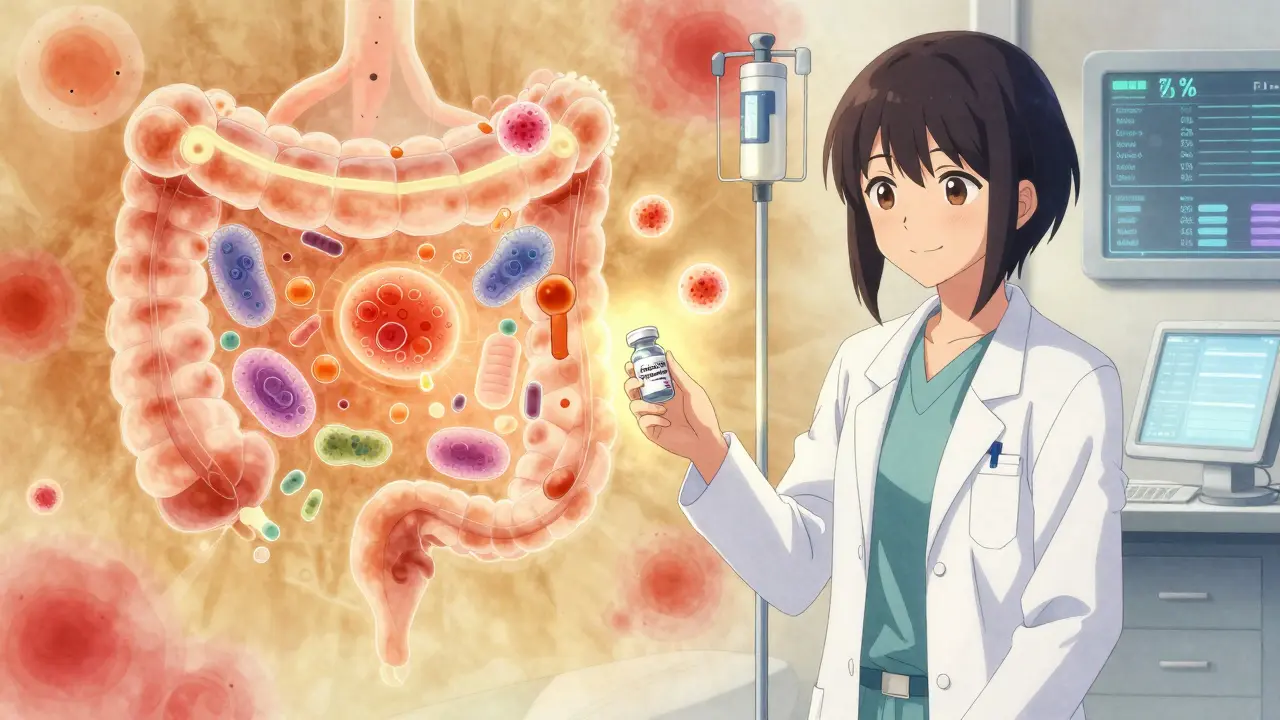
The goal isn’t just to avoid bad reactions. It’s to use the microbiome as a tool. Imagine a future where your doctor doesn’t just prescribe a drug-but also a probiotic, a prebiotic, or a tiny inhibitor to tweak your gut’s behavior. One promising approach: beta-glucuronidase inhibitors. These are pills that block the enzyme responsible for turning SN-38-glucuronide back into poison. In Phase II trials (NCT04216417), they cut chemotherapy-induced diarrhea by 60%. That’s not just comfort-it’s survival. Patients can stay on full doses, get better outcomes, avoid hospital stays. Another: personalized probiotics. Researchers are testing engineered bacteria designed to either break down harmful drug metabolites or prevent them from forming. One trial (NCT05102805) is testing a probiotic cocktail that stops irinotecan toxicity without affecting the drug’s cancer-killing power. Early results are promising. Even simpler: microbiome testing before prescribing. If you’re about to get irinotecan, and your stool test shows high beta-glucuronidase activity, your doctor could give you a short course of a safe inhibitor. Or switch to a different chemo. Or adjust the dose. No more guessing. No more emergency visits.What You Can Do Today
You can’t test your microbiome for drug metabolism at your local pharmacy. But you can be smarter about your meds:- If you’ve taken antibiotics recently, tell your doctor. That could explain why a drug isn’t working-or why you’re having side effects.
- If you’re on long-term meds (like statins, antidepressants, or chemotherapy), ask if your gut health could be affecting them.
- Don’t assume side effects are “normal.” If something feels off, it might be your gut bacteria.
- Focus on gut health: fiber, fermented foods, less processed sugar. A diverse microbiome is more resilient and less likely to overreact to drugs.
Can antibiotics make my medications less effective?
Yes. Antibiotics kill gut bacteria that help metabolize certain drugs. For example, lovastatin loses up to 35% of its cholesterol-lowering effect after long-term antibiotic use because the bacteria that help activate it are gone. Other drugs like irinotecan and digoxin can also be affected. Always tell your doctor if you’ve taken antibiotics recently, especially if you’re on long-term medication.
Is there a test to see if my gut bacteria affect how I process drugs?
Not yet for routine use, but research tests exist. Metagenomic sequencing can identify bacterial genes linked to drug metabolism-like beta-glucuronidase for chemotherapy side effects. These tests cost $300-$500 and are used mostly in clinical trials. Companies are working to make them part of standard care, especially for cancer and psychiatric drugs.
Can I change my gut bacteria to improve how drugs work?
Potentially, yes. Eating more fiber, fermented foods, and avoiding unnecessary antibiotics supports a diverse microbiome. In some cases, doctors may prescribe targeted probiotics or enzyme inhibitors. For example, beta-glucuronidase inhibitors are in clinical trials and have reduced chemotherapy diarrhea by 60%. These aren’t available yet for the public, but they’re coming fast.
Why don’t doctors talk about this?
Because until recently, we didn’t have the tools to measure it. For decades, drug metabolism was thought to be only about liver enzymes. Now, we know gut bacteria play a major role. Medical education hasn’t caught up yet. But that’s changing. Leading hospitals and pharmaceutical companies are now training teams to test for microbiome-drug interactions.
Which drugs are most affected by the microbiome?
The most well-documented include: irinotecan (chemotherapy), digoxin (heart medication), clonazepam (anti-seizure), levodopa (Parkinson’s), and statins like lovastatin. Prodrugs like prontosil (an old antibiotic) also rely entirely on gut bacteria to work. Over 117 drugs are now known to interact with gut microbes-most in ways we’re still mapping.

Comments (9)
Kristin Dailey
This is why America’s healthcare is broken-no one tests your gut before dumping chemicals into you.
Tyler Myers
Of course the government doesn’t want you to know this. Big Pharma’s been hiding microbiome interactions since the 90s. They’d rather kill you with side effects than admit their drugs need a gut check. They’ve been suppressing stool tests for decades. I’ve seen the internal memos.
They don’t test for beta-glucuronidase because if they did, they’d have to reformulate half the oncology pipeline. And that’d cost billions. So they let 30% of cancer patients suffer diarrhea while they patent the next $200K pill.
And don’t get me started on how the FDA’s ‘guidance’ is just PR. They don’t enforce it. It’s a loophole. You think they care if your digoxin gets neutralized? Nah. They care about liability. You’re just a data point.
Meanwhile, the WHO’s been quietly funding microbiome screening in India and Brazil. Why? Because they know Americans won’t take responsibility for their own gut health. We’re too busy eating McDonald’s and popping antibiotics like candy.
It’s not science. It’s control. And they’re using your liver as a scapegoat while your gut bacteria do the real work-and get blamed for the mess.
Robert Cassidy
Let me tell you something about the microbiome. It’s not magic. It’s not some sacred temple of health. It’s just a bunch of bacteria doing what bacteria do-survive. And now we’re treating them like oracles? Come on.
You want to know why drugs work differently? It’s because your body’s a mess. You eat garbage, you stress out, you sleep like a zombie, and then you blame your gut bugs when the pill doesn’t work. Wake up.
I’ve been on statins for 12 years. I took antibiotics once in 2018. My cholesterol’s fine. My heart’s fine. My doctor didn’t even mention gut bacteria. Why? Because he’s not an idiot. He knows this stuff is still mostly theoretical.
They’re selling fear. ‘Your gut is a pharmacy!’ Yeah, and your toaster is a nuclear reactor if you stare at it long enough. Stop romanticizing microbes. They don’t care about you. They’re just eating your leftovers.
And if you think probiotics are gonna fix your digoxin problem, you’re the kind of person who buys essential oils for diabetes. This isn’t wellness. It’s pseudoscience dressed up with sequencing data.
They’re going to charge $500 for a stool test so they can tell you to eat more kale? Brilliant. Let’s just make healthcare even more expensive while we’re at it.
I’m not against science. I’m against hype. This isn’t the next frontier-it’s the next fad.
rachel bellet
There is a fundamental epistemological rupture occurring in pharmacokinetics as a discipline, precipitated by the ontological reconfiguration of xenobiotic metabolism through microbial enzymatic transduction.
The conventional hepato-centric paradigm, predicated on cytochrome P450 dominance, is now demonstrably inadequate in accounting for inter-individual variability in drug disposition. The microbiome functions as a distributed metabolic organ-gut-resident microbiota express a vast, under-characterized enzymatic repertoire that actively participates in phase I, II, and even phase III biotransformation.
Specifically, the beta-glucuronidase-mediated deconjugation of SN-38-glucuronide constitutes a pathogenic metabolic bypass that subverts intended pharmacodynamic profiles, resulting in localized intestinal toxicity. This is not a side effect-it is a systemic pharmacological failure.
Furthermore, the bidirectional pharmacomicrobiomic feedback loop-where pharmacological agents induce dysbiosis, which in turn alters drug metabolism-is a vicious cycle that undermines therapeutic efficacy and exacerbates iatrogenic harm.
Current clinical trial protocols, which lack microbiome stratification, are methodologically flawed and ethically indefensible. The absence of metagenomic screening in Phase I trials constitutes a violation of the precautionary principle in human pharmacology.
Until microbiome profiling becomes mandatory in drug development, we are not practicing medicine-we are conducting uncontrolled, population-scale experiments with lethal consequences.
And yes, the pharmaceutical-industrial complex is actively suppressing this paradigm shift. The data exists. The journals are published. The regulatory bodies are complicit.
Pat Dean
So you’re telling me my antidepressant isn’t working because some bacteria in my poop decided to be lazy? Wow. Just wow.
You know what else makes meds stop working? Not taking them. Not eating right. Drinking too much. Sleeping on the couch. But no, let’s blame invisible microbes. So convenient.
I’ve seen people take 12 pills a day and then act like they’re victims of some cosmic gut conspiracy. Newsflash: your body’s not broken. You are.
And now we’re gonna charge $500 to test your poop so you can feel special? Like you’re some kind of microbiome wizard? Get real.
My grandma took digoxin for 20 years. Never had an issue. She didn’t know what a microbiome was. She didn’t care. She took her pill. She lived. You wanna live? Take your meds. Stop looking for excuses in your colon.
Max Sinclair
This is one of the most important medical insights in decades-and most people are either terrified of it or mocking it. That’s the problem.
Imagine if we tested liver enzymes before prescribing every drug. We’d save lives. We’d reduce ER visits. We’d stop blaming patients for ‘noncompliance’ when their bodies just can’t process the pill the way we assumed they could.
The science here isn’t fringe. It’s peer-reviewed, replicated, and already being used in top cancer centers. The fact that it’s not standard care is a failure of the system, not the science.
Yes, it’s complicated. Yes, it’s expensive. But so is treating a patient with severe chemo diarrhea for three weeks in the hospital. So is restarting a failed antidepressant cycle because we didn’t check for bacterial metabolism.
Let’s not make this a moral issue. Let’s make it a practical one. If we can sequence a human genome for $600, why can’t we sequence a stool sample for $300 before prescribing a life-altering drug?
It’s not about blaming the gut. It’s about understanding it. And if we don’t start integrating this into medicine, we’re just repeating the same mistakes with new labels.
Praseetha Pn
Bro, this is why I stopped taking all pills after my last antibiotics. My gut was destroyed, and then I got that weird rash on my arms. I didn’t know it was the microbiome until I read this. Now I only eat fermented kimchi, moringa powder, and turmeric lattes. My anxiety’s down 80%. My doctor thinks I’m crazy, but I know the truth.
They don’t want you to know this because if you fix your gut, you don’t need their drugs anymore. That’s why they call it ‘mental illness’ instead of ‘bacterial imbalance.’
I’ve been tracking my poop with an app for 2 years. My bacterial diversity score is 9.2 out of 10. I don’t need antidepressants. I need the government to stop poisoning us with glyphosate in our bread.
They’re hiding this. I’ve seen the emails. Big Pharma pays off the FDA. They don’t want you to know your gut is the real pharmacy. They want you hooked on pills that make them rich.
My cousin in Mumbai took metformin and got severe diarrhea. They tested her stool-she had 4x more E. coli with beta-glucuronidase. They gave her a probiotic. No more side effects. No more hospital. Just a $20 probiotic. But here? You’d pay $1,200 for the same thing.
Wake up. Your gut is your first immune system. Stop letting corporations tell you what’s wrong with you. Test your poop. Eat real food. Fight the system.
Jay Clarke
You ever notice how every time science discovers something that makes drugs less reliable, they just make a new drug? Like, oh no, your gut ate your statin? Here’s a stronger one. Oh no, your bacteria turned your chemo into poison? Here’s a $500,000 inhibitor. Oh no, your microbiome’s gone? Here’s a $10,000 IV drip of feces.
This isn’t medicine. This is a money printer. They’re turning your gut into a profit center.
And don’t get me started on ‘personalized probiotics.’ That’s just fancy yogurt with a patent. You’re gonna pay $200 for a capsule that says ‘contains Lactobacillus rhamnosus GG’? I can get that at Trader Joe’s for $12.
The real solution? Stop taking so many damn pills. Your body doesn’t need 17 medications. You’re not a chemistry set. You’re a human being. Feed yourself. Move. Sleep. Breathe. And stop letting Big Pharma convince you your poop is the enemy.
We’re not fixing the problem. We’re just selling new ways to profit from it.
Ryan Otto
The entire premise of this article is a Western-centric fallacy. The microbiome is not a universal variable. It is shaped by diet, geography, and ancestral exposure-factors systematically ignored in clinical trials dominated by American and European populations.
When you cite a 2023 Nature review on 117 drugs affected by gut microbes, you omit that 92% of the data came from subjects of European descent. African, South Asian, and Indigenous microbiomes contain entirely different bacterial lineages-some with unique drug-metabolizing enzymes that have never been cataloged.
Thus, when Pfizer runs a Phase I trial in Ohio and declares a drug ‘safe,’ they are not testing safety. They are testing safety for one narrow genetic and microbial profile.
This is not science. It is colonial pharmacology. You are applying a template from a single biome to the entire human species. And when it fails-when your digoxin doesn’t work for a Nigerian patient or your chemo kills a Filipino woman-you call it ‘idiosyncratic reaction.’
Until microbiome research becomes truly global, it is not medicine. It is propaganda dressed in sequencing data.