

Ever opened your pill bottle and thought, "This isn't the same pill I've been taking for years"? You're not alone. Thousands of people in Australia, the U.S., and around the world face this exact moment - and many panic. The pill is a different color. It's shaped differently. Maybe it even has a weird mark on it. But here's the truth: generic pill appearance changes are legal, common, and usually safe. The problem? They’re causing real harm - not because the medicine is broken, but because patients stop taking it.
Why Do Generic Pills Look Different?
Generic drugs aren’t knockoffs. They’re exact copies of brand-name medicines in every way that matters: same active ingredient, same strength, same how your body absorbs it. But they don’t have to look the same. Why? Because of trademark law. In the U.S. and many other countries, companies can’t make a generic drug that looks identical to the original brand. If they did, it could confuse consumers or be seen as copying the brand’s identity. So each generic manufacturer picks its own color, shape, size, and imprint. One company’s metformin might be a white oval. Another’s could be a pink round tablet. Both work the same. Both are approved by the FDA. But they look nothing alike. This isn’t a glitch. It’s the system. And it’s happening all the time. If you take a medication like sertraline, lisinopril, or gabapentin, you’ve likely seen your pills change shape or color at least once. Some patients report up to nine different appearances over 15 years. That’s not rare. It’s standard.Are Generic Pills Safe When They Look Different?
Yes. Absolutely. The FDA doesn’t require generics to match the brand’s appearance - but they do require them to meet the same strict standards for safety, strength, purity, and performance. Every generic drug must prove it’s bioequivalent: meaning your body gets the same amount of medicine into your bloodstream, at the same speed, as the brand-name version. The inactive ingredients - the fillers, dyes, and coatings - can vary. That’s what changes the color or texture. But those don’t affect how the medicine works. A white tablet and a blue tablet of the same generic drug contain the exact same active ingredient in the same dose. They’re therapeutically identical. Still, the fear is real. People associate colors with effectiveness. A red pill might feel "stronger." A white one might feel "weaker." Some patients think a change means they’ve been given the wrong drug - or worse, a fake. That’s not just anxiety. It’s a well-documented problem.How Appearance Changes Hurt Patients
The biggest danger isn’t the pill. It’s the fear. A study in the Annals of Internal Medicine found that 34% of patients stopped taking their medication after a simple color change. That number jumped to 66% when the shape changed. These aren’t small numbers. These are people with high blood pressure, diabetes, depression, or epilepsy - conditions where missing a dose can lead to hospitalization or death. One patient in Los Angeles told her doctor she stopped taking her potassium pills because they went from bright orange and flat to white and capsule-shaped. She thought she’d been given something else. Another man said his medication changed appearance nine times over 15 years. Each time, he double-checked with his pharmacist. Each time, he worried he was being poisoned. Reddit threads are full of similar stories. "I almost quit my blood pressure meds because the pills turned pink," one user wrote. "I thought it was a mistake. I didn’t know generics could change like that." These aren’t outliers. A 2022 survey by the American Pharmacists Association found that 42% of patients had experienced a pill appearance change in the past year. Nearly 30% were so worried they considered stopping their medicine.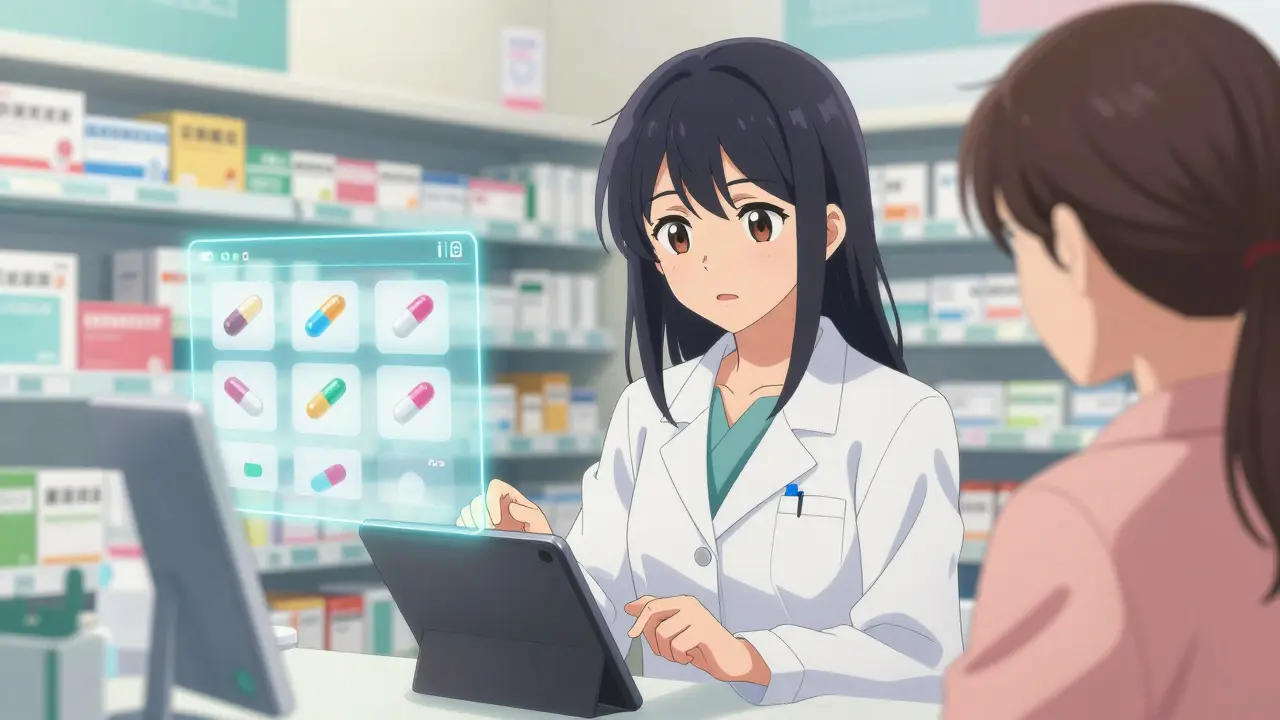
Who’s Responsible When the Pill Changes?
Pharmacies don’t pick the pill design. They pick the cheapest supplier. Generic drug manufacturers compete on price. So if your pharmacy switches from Company A to Company B because Company B’s metformin is $2 cheaper per bottle, your pill changes - even if you didn’t ask for it. Your doctor doesn’t control this either. They prescribe the drug by name, not by appearance. They assume the pharmacy will fill it correctly - and they’re right. The drug is correct. The problem is the system. The FDA knows this is a problem. In a 2014 letter to the American College of Physicians, Drs. Uhl and Peters wrote: "Bioequivalent generic drugs that look like their brand-name counterparts enhance patient acceptance." They’re saying it plainly: appearance matters. And the current system is failing patients.What You Can Do to Stay Safe
You can’t stop appearance changes. But you can protect yourself.- Keep a written list of all your meds - not just the name, but the color, shape, size, and any imprint (like "LIP 10" or "20 M").
- Bring your pill bottles to every appointment. Your doctor or pharmacist can check them side by side.
- Ask your pharmacist every time you refill: "Is this the same pill I got last time?" They’re trained to explain changes.
- Use free online tools like Medscape’s Pill Identifier or the NIH’s "Tracking Your Medications" guide. Take a photo of your pill and match it to the database.
- Don’t assume a new pill is wrong. Call your pharmacist before stopping anything.

Comments (10)
Chandreson Chandreas
Honestly? I didn't even notice my pills changed color until my grandma pointed it out. She's 78 and takes five different generics. Now she keeps a little notebook with pics of each one. 📸💊 I just wish pharmacies would print the name on the pill itself instead of making us play detective. We're not pharmacists, y'know?
Darren Pearson
It is, regrettably, a lamentable consequence of the commodification of pharmaceuticals that patients are subjected to such cognitive dissonance. The FDA's bioequivalence standards, while scientifically robust, fail to account for the psychological architecture of adherence. One might argue that the visual lexicon of medication is an underappreciated component of therapeutic alliance.
Stewart Smith
I used to freak out every time my antidepressants changed shape. Then I started taking a photo of the bottle before I tossed the old one. Now I just smile and think, 'Another day, another pill that looks like it was designed by a 12-year-old with a crayon.' Still works. Still saves my life. 🤷♂️
Aaron Bales
Keep a list. Ask your pharmacist. Use the NIH tool. Done. This isn't rocket science. Stop panicking. Your meds are fine. You're not being poisoned. Just check.
Lawver Stanton
Okay but have you ever thought about how many people die because they think their blood pressure pill turned pink and it's actually poison? I mean, I get it, the FDA says it's fine, but why do we let corporations decide what our pills look like? Why can't we just have one standard design? Why is this still a thing? I swear, if I see another white oval labeled 'LIP 10' I'm going to scream. And don't even get me started on the dye. I think they're using food coloring from a Walmart bulk bin. It's a conspiracy. It's gotta be.
linda permata sari
In Indonesia, we don’t have this problem. Our generics all look the same because the government controls the manufacturers. No color wars. No shape confusion. Just medicine. Maybe America needs to stop letting big pharma play with our brains and just… regulate?
Hanna Spittel
I KNEW IT. 🤫 They're swapping out the real stuff for placebo pills. That's why my anxiety got worse after the pill turned from blue to green. They're testing on us. The FDA is in on it. I saw a documentary. The colors are coded. Red = strong. White = weak. Pink = fake. I'm switching to herbal tea now. 🌿👁️
anggit marga
This is why America is weak. In Nigeria we take what we get and we don't cry. If the pill looks like a rock and tastes like chalk you still swallow it because your life depends on it. You think your pink pill is scary? Try getting your diabetes meds from a village clinic with no label at all. You survive. You adapt. Stop being soft
Joy Nickles
I... I just found out my thyroid med changed shape... AGAIN... and I didn't even notice because I'm always distracted by my cat... and now I'm paranoid that I've been taking the wrong one for 3 months... I think I'm dying... I need to call my doctor... but what if they don't believe me... I took a photo... I'm gonna post it on Reddit... I'm not crazy... I'm just... really really scared...
Emma Hooper
I used to be the person who'd panic every time my pills changed. Then I started calling my pharmacist and asking, 'Hey, what's the story on this one?' Turns out, they love explaining it. They’re basically the unsung heroes of healthcare. Now I even ask them about the color choices-like, 'Why pink?' And they’ll say, 'Because the last batch had a dye shortage.' It’s wild. It’s weird. But it’s not dangerous. And honestly? I kinda like the surprise. It’s like a little pill-based Easter egg. 🥚💊