Malassezia folliculitis: Causes, Treatments, and Antifungal Options
When your skin breaks out in itchy, acne-like bumps that won’t go away with regular acne treatments, it might not be acne at all. It could be Malassezia folliculitis, a fungal infection caused by yeast that lives naturally on the skin but overgrows under certain conditions. Also known as fungal acne, this condition often shows up on the chest, back, shoulders, and sometimes the face—looking like small red bumps or pustules that don’t respond to benzoyl peroxide or salicylic acid. Unlike bacterial acne, Malassezia folliculitis thrives in warm, oily, and sweaty environments, which is why it’s common in teens, athletes, or people who wear tight clothing for long periods.
This condition is closely tied to how your body handles antifungals, medications designed to kill or slow down fungi like Malassezia. Not all antifungals work the same way—some are taken orally, like fluconazole or itraconazole, while others are applied topically as creams, shampoos, or lotions. The most effective ones target the yeast directly without disturbing your skin’s natural balance too much. But here’s the catch: some antifungals can cause liver damage, especially when used long-term or combined with other drugs. That’s why you can’t just grab any antifungal off the shelf and expect results. Doctors often start with topical treatments first, like selenium sulfide shampoo used as a body wash, because they’re safer and just as effective for mild cases.
What makes Malassezia folliculitis tricky is how easily it’s mistaken for regular acne. Many people spend months trying retinoids, antibiotics, or harsh cleansers, only to make it worse. The yeast loves oily skin and sweat, so if you’re using heavy lotions, oily sunscreens, or working out in tight gear, you’re feeding it. Changing your skincare routine isn’t just helpful—it’s often the key to stopping the cycle. And while antifungals can clear it up fast, the infection often comes back if the root causes aren’t addressed.
What you’ll find in the posts below are real stories and clinical insights about how this condition is diagnosed, treated, and prevented. You’ll see which antifungals work best, how drug interactions can mess with your recovery, and why some people need more than just a cream to get relief. There’s no one-size-fits-all fix, but with the right approach, you can beat it—and keep it from coming back.
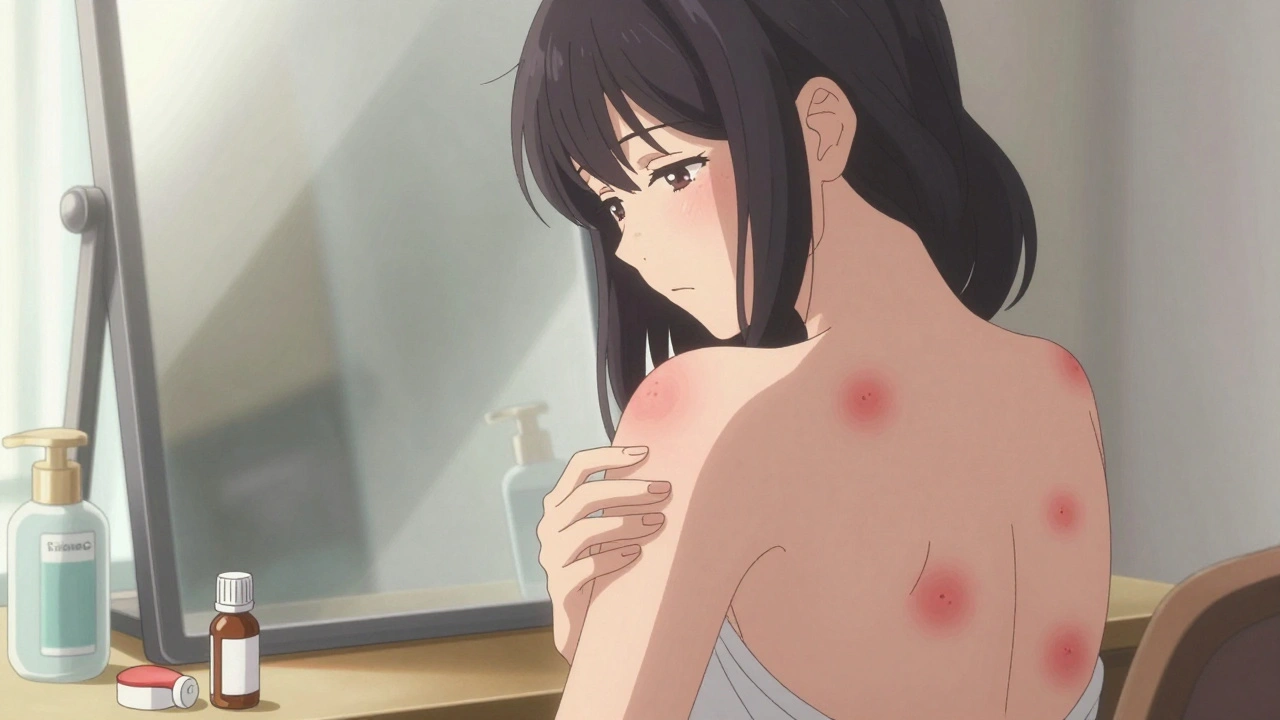
Steroid-Induced Acne and Skin Changes: Topical and Lifestyle Solutions
Steroid-induced acne appears as uniform red bumps on the chest and back after starting corticosteroids or anabolic steroids. Topical tretinoin, benzoyl peroxide, and antifungal shampoos can clear it-even while continuing steroid therapy.
View More
© 2026. All rights reserved.