
Most people assume the U.S. pays the most for everything-including medicine. But when it comes to generic drug prices, that assumption falls apart. In fact, Americans often pay less for generic prescriptions than people in Canada, Germany, or Japan. Yet at the same time, the same U.S. patient might be paying over four times more for a brand-name drug than someone in France. This isn’t a contradiction. It’s the reality of how drug pricing works in America-and why the numbers don’t tell the whole story.
Why U.S. Generic Drugs Are Cheaper Than Almost Everywhere Else
The U.S. market for generic drugs is unlike any other. Roughly 90% of all prescriptions filled in America are for generics. That’s far higher than in any other developed country, where generics make up about 40% of prescriptions on average. This massive volume gives U.S. buyers enormous leverage. When three or more companies start making the same generic drug, prices drop fast-often to just 15-20% of the original brand-name price. The FDA found that when a second generic enters the market, prices fall by about half. With three or more, they drop another 50-70%.
Compare that to countries like the UK or Australia, where the government sets fixed prices for generics. Those systems keep prices low, but they also discourage new manufacturers from entering. In the U.S., the opposite happens: more competition drives prices down even further. A 2023 FDA report showed that the 773 new generic approvals that year are projected to save the U.S. healthcare system $13.5 billion in just one year. That’s not a guess-it’s based on actual wholesale pricing data from IQVIA and CMS.
For the average American, this means a 30-day supply of generic metformin for diabetes might cost $4 at Walmart. Lisinopril for high blood pressure? Often under $5. Even newer generics like generic Jardiance, which costs $204 under Medicare negotiation, are still cheaper than the brand version-but still higher than what Australians pay for the same drug ($52). The difference isn’t in the pill. It’s in the system.
The Brand-Name Price Gap: Where the Real Problem Lies
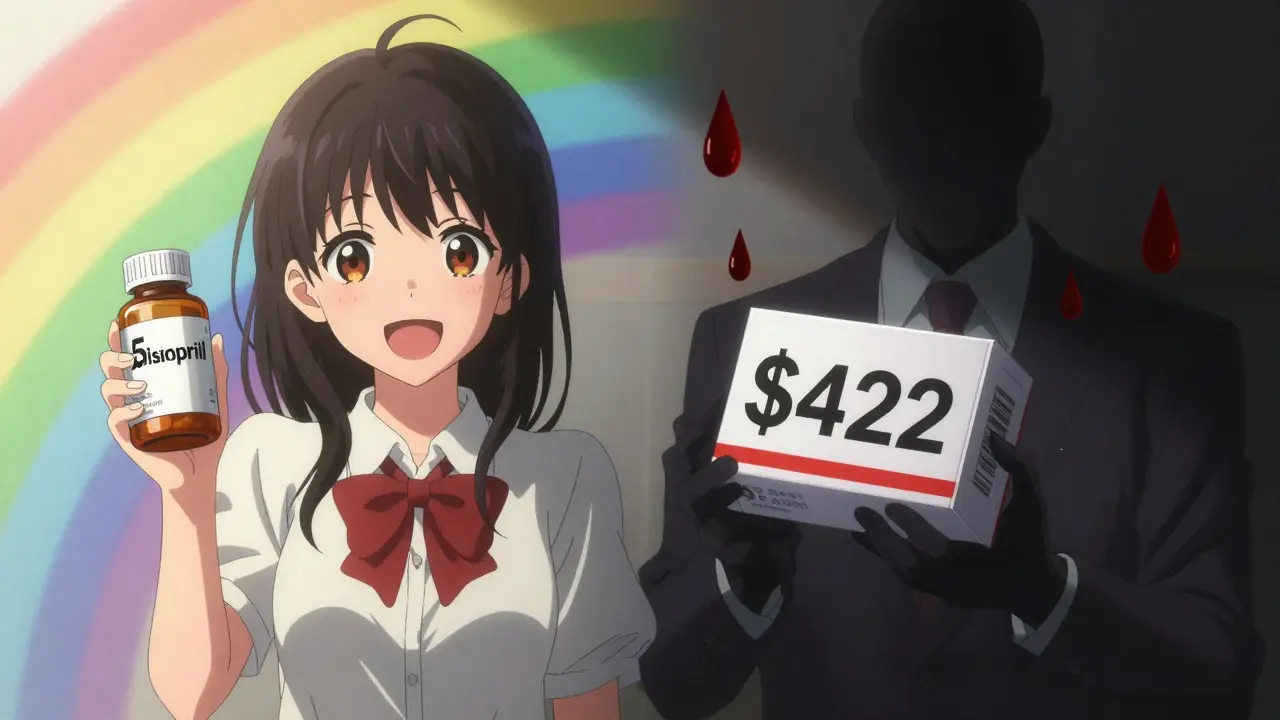
While generics are cheaper, brand-name drugs in the U.S. are the most expensive in the world. A 2022 RAND study found that U.S. list prices for originator drugs (the original, patented versions) are 422% higher than in other OECD countries. That means if a drug costs $100 in Japan, the same pill in the U.S. starts at $422 before any discounts.
Why? Because the U.S. doesn’t negotiate brand-name prices the way other countries do. In Canada, Germany, and France, governments use centralized bargaining to force drugmakers to lower prices. In the U.S., drugmakers set list prices, and insurers or pharmacy benefit managers (PBMs) try to negotiate rebates behind closed doors. The result? The sticker price is sky-high, but the actual amount paid-after rebates-is often much lower.
Here’s the twist: that’s where the confusion comes in. A 2024 University of Chicago study found that when you look at net prices-what insurers and Medicare actually pay after rebates-the U.S. is actually 18% cheaper than peer countries for public-sector spending. That’s because Medicare and Medicaid have massive buying power. But for the uninsured, or those with high-deductible plans, they still see the full list price. That’s why someone without insurance might pay $1,000 for a month’s supply of a brand-name drug, while their neighbor on Medicare pays $50 after negotiation.
How Medicare’s New Price Negotiations Are Changing the Game
In 2022, Congress gave Medicare the power to directly negotiate prices for the most expensive brand-name drugs. The first 10 drugs were selected based on high spending and lack of competition. The results? Medicare’s negotiated prices are still 2.8 times higher than the average in 11 other OECD countries. For example, the negotiated price for Stelara is $4,490 per month. In Germany, the same drug costs $2,822. In Japan? $2,100.
But here’s what’s often missed: in every single case except one (Stelara in Germany), the U.S. negotiated price is still higher than what other countries pay. That means even with negotiation, the U.S. isn’t catching up-it’s just slowing the gap. The pharmaceutical industry argues this will hurt innovation. But the data shows something else: the U.S. has been funding global innovation for decades by paying more. Other countries benefit from U.S.-funded R&D while keeping their own prices low.
Some experts, like Dr. Andrew Mulcahy of RAND, argue that if the U.S. lowers its prices too much, drugmakers might raise prices elsewhere to make up the difference. Others, like Dr. Dana Goldman from USC, say the real issue isn’t global fairness-it’s domestic fairness. “Americans do quite well in the generic market,” she says. “It’s the brand-name drugs that are broken.”
Why Some Generics Suddenly Become Expensive
It’s not always smooth sailing. Sometimes, a generic drug that’s been cheap for years suddenly spikes in price. Why? Market consolidation. If a company buys out its competitors, or if others exit the market due to thin margins, the remaining manufacturer can raise prices with little pushback.
The FDA has documented this pattern. In one case, a generic antibiotic dropped to $1 per pill after five companies started making it. Then three of them shut down. The price jumped to $25. That’s not a glitch-it’s a feature of a market with low barriers to entry but high risk of monopolies.
This is why regulators now track “market concentration” for generics. If only one or two companies are left making a drug, the FDA can fast-track approval for a new competitor. But it’s reactive, not proactive. And it doesn’t help patients who need the drug right now.
What This Means for You as a Consumer
If you’re on a generic drug, you’re probably paying less than people in most other rich countries. Check your copay. If it’s under $20, you’re getting a deal. The average generic copay in the U.S. is $6.16. The average brand-name copay? $56.12. That’s nearly nine times more.
But if you’re on a brand-name drug without insurance-or with a high deductible-you’re in the most expensive healthcare system in the world. Ask your doctor if there’s a generic alternative. If not, ask about patient assistance programs. Many drugmakers offer discounts if you meet income requirements. And always compare prices at different pharmacies. A drug that costs $80 at CVS might be $25 at Walmart or Costco.
Also, don’t assume that “importing” drugs from Canada is a magic fix. It’s risky. The FDA doesn’t guarantee safety for drugs bought outside the U.S. supply chain. And the savings aren’t always there. Some Canadian pharmacies charge U.S. prices too.
The Bigger Picture: Innovation vs. Access
The debate over drug pricing isn’t just about money. It’s about who pays for research. The U.S. spends more on R&D because it pays more for drugs. Other countries benefit from that innovation without bearing the cost. That’s called “free riding.”
Some economists, like those at the University of Chicago, argue that the U.S. should push for global price alignment-not to lower prices here, but to make other countries pay more. Their idea? Tie drug access in other countries to fairer pricing. That way, innovation doesn’t rely on American consumers carrying the entire burden.
But for most people, that’s not the issue. The issue is: why does a diabetic in Florida pay $5 for insulin, while a diabetic in Toronto pays $30? Why does a heart patient in Chicago pay $10 for a generic, while a patient in London pays $12? It’s not about innovation. It’s about structure.
The U.S. system is messy. It’s complex. But it’s not broken everywhere. Generics work. They’re cheap, abundant, and effective. The problem is the 10% of drugs that cost 90% of the money. Fix that, and the whole system changes.
Why are generic drugs cheaper in the U.S. than in other countries?
The U.S. has a highly competitive generic drug market with far more manufacturers than other countries. When three or more companies make the same generic, prices drop to 15-20% of the brand-name price. The FDA estimates that market entry of just two or three generics cuts prices dramatically. Plus, U.S. pharmacies and insurers buy in massive volumes, giving them leverage to drive down costs.
Are brand-name drugs really that much more expensive in the U.S.?
Yes. U.S. list prices for brand-name drugs are over four times higher than in countries like Japan and France. For example, the drug Jardiance costs $204 under Medicare negotiation, while the average international price is $52. The difference comes from the lack of government price negotiation in the U.S. and the use of list prices as starting points for private negotiations.
Why do some generic drugs suddenly get more expensive?
When manufacturers exit the market due to low profits, competition drops. If only one or two companies are left making a generic drug, they can raise prices without fear of losing customers. The FDA tracks these cases and can fast-track approval of new competitors, but it takes time. This is why some generics go from $5 to $50 overnight.
Can I save money by buying drugs from Canada or Mexico?
Sometimes, but it’s risky. The FDA doesn’t regulate drugs bought from foreign online pharmacies, so safety isn’t guaranteed. Also, many Canadian pharmacies now charge U.S. prices, especially for brand-name drugs. The real savings come from using U.S.-based discount programs, pharmacy loyalty cards, or Medicare negotiation-not international shopping.
Does Medicare negotiation make U.S. drug prices more like other countries?
Not yet. Even after negotiation, Medicare’s prices for the first 10 drugs are still 2.8 times higher than the average in other OECD countries. In most cases, every country studied pays less than Medicare does. The program is a step forward, but it’s not closing the gap-it’s just slowing the rise of U.S. prices.

Comments (14)
Renia Pyles
So let me get this straight - we pay less for generics because we have a free-for-all market that drives prices down, but we pay 4x more for brand-name drugs because nobody’s holding the drug companies’ feet to the fire? Sounds like capitalism with a side of chaos. And now Medicare’s trying to fix it? Good luck with that.
Aishah Bango
You people are missing the point entirely. This isn’t about affordability - it’s about moral bankruptcy. We let pharmaceutical companies exploit the system, then act shocked when someone can’t afford insulin. If you’re okay with paying $5 for metformin while your neighbor pays $300 for the same brand, you’re not saving money - you’re complicit.
Simran Kaur
As someone from India, I’ve seen this play out in real life. Our generics are cheap because we have a huge domestic manufacturing base - and we don’t let patents strangle access. But here? You have this beautiful, chaotic system where competition works... until it doesn’t. One company buys out the others, and boom - $50 pill. It’s heartbreaking. I’m so glad Americans get $4 metformin, but I cry thinking about how many still can’t afford it. 🙏
Neil Thorogood
So the U.S. is the only country where you can get a generic drug cheaper than your coffee... but your brand-name insulin costs more than your rent? 😂 Classic America. We’re the land of the free and the home of the overpriced pill. At least Walmart’s got a $4 prescription program - if you’re lucky enough to live near one. 🙃
Ashley Karanja
The structural asymmetry here is fascinating from a health economics standpoint. The U.S. generic market operates under a perfectly competitive paradigm with high elasticity of supply - multiple entrants, low barriers to entry, and volume-driven price discovery. Meanwhile, brand-name pricing reflects a monopolistic rent-seeking model, where patent exclusivity enables price discrimination via PBMs, resulting in a dual-tiered system where net prices are artificially depressed for payers with bargaining power, while out-of-pocket costs remain catastrophically high for the uninsured. The Medicare negotiation program, while incremental, represents a shift from cost-shifting to cost-containment - but until we decouple list prices from reimbursement mechanisms, we’re just rearranging deck chairs on the Titanic.
Robin Van Emous
I’ve been on generic lisinopril for years. $5 at CVS. My cousin in Canada pays $12. I’m not mad - I’m grateful. But I also know people who pay $1,200 a month for a brand-name drug because their insurance won’t cover the generic. That’s the real problem. Not that we’re cheap. That we’re unfair.
Skye Kooyman
Generics are cheap. Brands are crazy. That’s it.
Rakesh Kakkad
As an Indian professional working in pharma, I can confirm: the U.S. generic model is a marvel of market-driven efficiency. But it’s also fragile. In India, we have over 200 manufacturers of metformin. In the U.S., when three companies exit, the price spikes. We need policy safeguards - not just market forces. Also, the FDA’s fast-track approvals are too slow. We need pre-emptive monitoring, not reactive fixes.
James Nicoll
So we’re the only country where you can buy a generic drug for less than a burrito... but your kid’s ADHD med costs more than a used car? Yeah, that’s the American Dream right there. 🤡
Peter Sharplin
I’ve worked in hospital pharmacy for 18 years. The generic price drops are real - I’ve seen them. A drug goes from $40 to $3 in six months when the third manufacturer hits the market. But when one company buys the others? That’s when patients get crushed. We need mandatory minimum competition rules - like, if a drug drops below 3 manufacturers, auto-trigger a new generic approval. Simple. Effective.
John Wippler
It’s not about innovation vs. access - it’s about who gets to be the sacrifice. The U.S. pays the price so the rest of the world can have affordable meds. We fund the R&D. They get the benefits. That’s not fair. But neither is letting a diabetic in Ohio choose between insulin and rent. Maybe the answer isn’t lowering U.S. prices - maybe it’s making everyone pay their fair share. Let’s stop pretending this is a moral issue. It’s an economic one. And we’re the ones holding the bag.
Faisal Mohamed
Let’s be honest - the U.S. isn’t ‘cheaper’ on generics. We’re just better at externalizing costs. The real cost is hidden in insurance premiums, tax subsidies, and the opioid crisis fueled by overprescribing generics. And don’t get me started on how PBMs pocket 30% of the savings. This isn’t a market success - it’s a regulatory failure dressed in a suit.
rasna saha
My mom in Delhi takes the same generic metformin as my cousin in Texas - same pill, same factory. She pays $0.50. He pays $4. She’s not ‘poor’ - she just lives in a country that values health over profit. I wish we could learn from that.
Angie Thompson
So let me get this straight - we’re the only country where you can buy a 30-day supply of a life-saving drug for less than a pizza... but if you need the brand version, you might as well sell your car? 😭 That’s not a system. That’s a glitch in the matrix. And yet we still act like we’re the best at healthcare? Honey, we’re the ones who made the rules - and then forgot to fix the bugs.