
Getting your medication right isn’t just about following a prescription. It’s about staying alive. Every year, over 1.3 million people in the U.S. end up in the emergency room because of medication mistakes. Many of these aren’t caused by doctors or pharmacists - they happen at home, when people take the wrong pill, at the wrong time, or without knowing why they’re taking it. The good news? Most of these errors are preventable. Here are five essential rules that actually work - backed by hospitals, pharmacists, and patient safety experts.
Rule 1: Know Exactly What You’re Taking
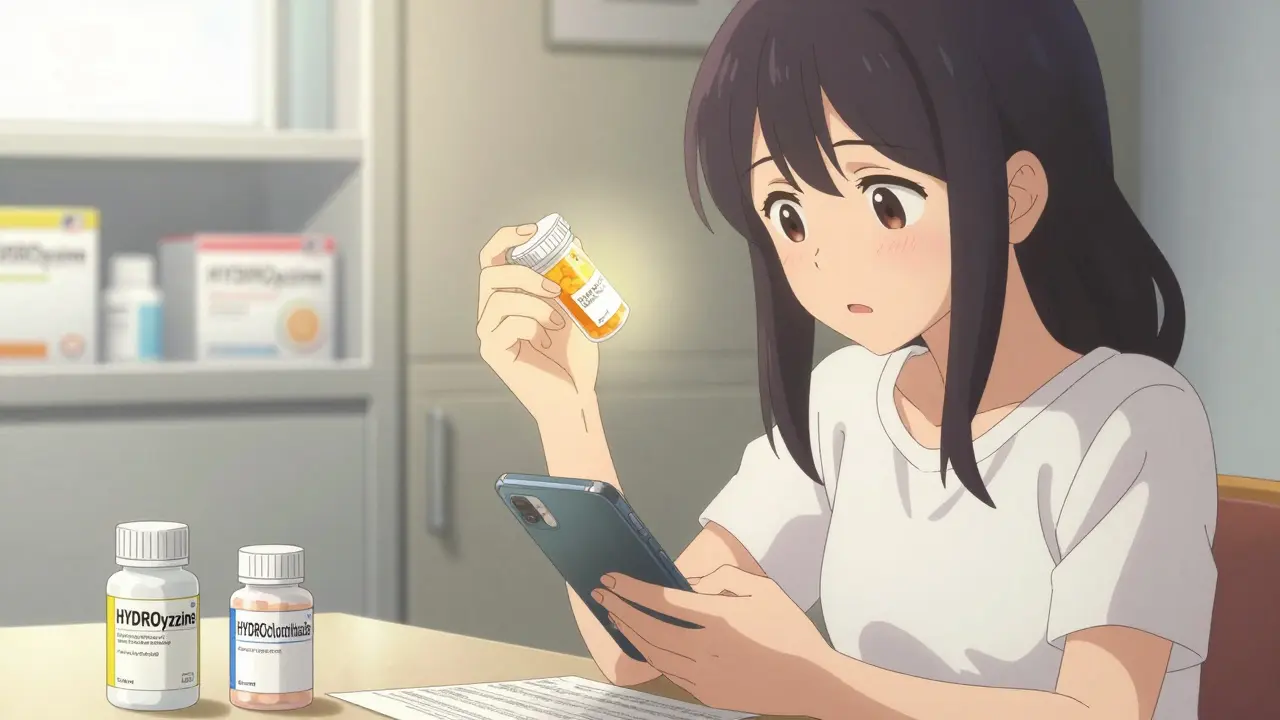
Don’t assume the pill looks the same as last time. Medications change. Generic brands switch manufacturers. Pills can look identical but contain completely different drugs. One common error involves hydroxyzine (an antihistamine) and hydrochlorothiazide (a blood pressure pill). They sound alike. They’re both white, round pills. Mix them up, and you could end up with dangerous side effects.Always check the label. Look at the generic name, the brand name, and the strength - like 10 mg or 500 mg. If you’re unsure, hold the bottle up to the light and compare it to the picture on the pharmacy’s website or the patient information sheet. Some pharmacies now use Tall Man lettering - like HYDROmorphone vs. HYDROchlorothiazide - to make look-alike names easier to spot. If yours doesn’t, ask for it.
Keep a written list of every medication you take - including over-the-counter drugs, vitamins, and supplements. Update it every time something changes. Bring this list to every doctor’s visit. It’s the single most effective way to catch dangerous interactions before they happen.
Rule 2: Take It at the Right Time
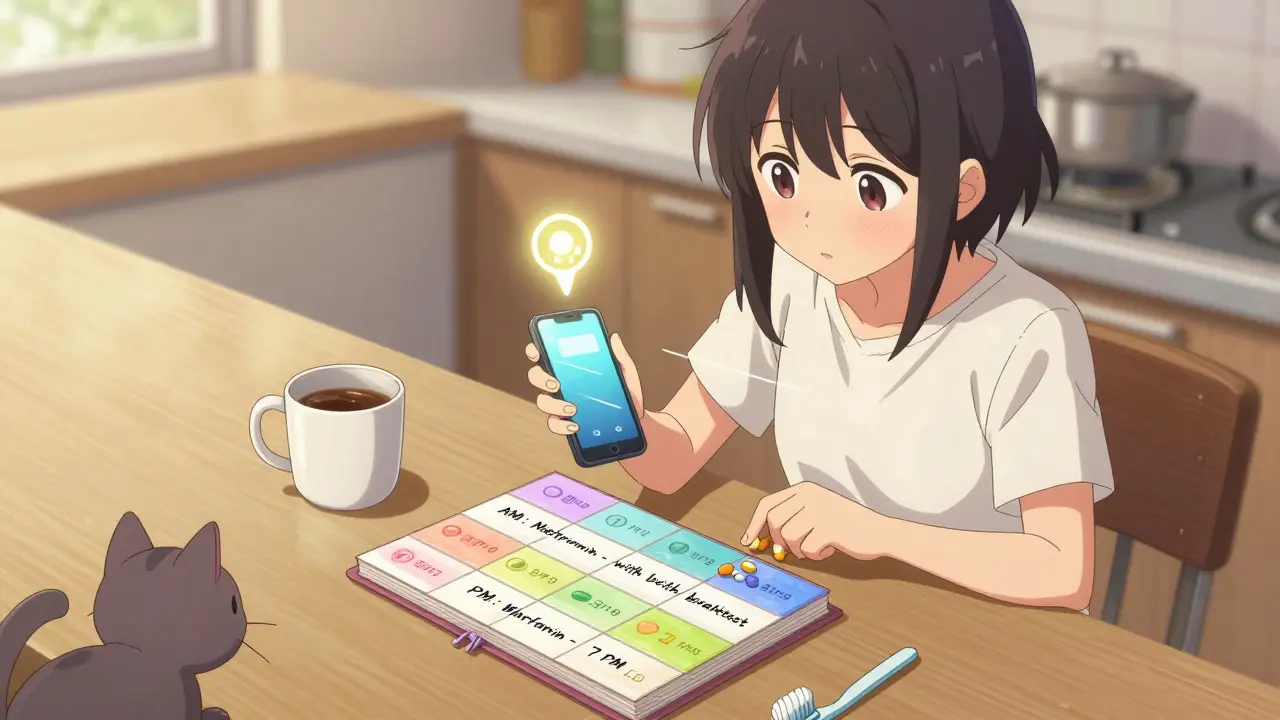
Timing matters more than you think. Some meds need to be taken on an empty stomach. Others must be taken with food to avoid nausea or to help absorption. Antibiotics like amoxicillin work best when spaced evenly - every 8 hours, not just when you remember. Missing a dose or taking two at once can make treatment fail or cause toxicity.For time-critical drugs like insulin, blood thinners, or heart medications, being off by even 30 minutes can affect how well they work. A 2022 Kaiser survey found that nearly 30% of seniors skipped doses because they couldn’t keep track of the schedule. Use a pill organizer with alarms. Set phone reminders labeled clearly: “AM: Metformin - with breakfast,” “PM: Warfarin - 7 PM.”
Don’t rely on memory. If you’re taking five or more medications, you’re at higher risk. Studies show people on polypharmacy regimens make errors up to 60% more often. A simple trick: keep your pills in the same place every day - next to your toothbrush or coffee maker. Out of sight, out of mind isn’t safe.
Rule 3: Verify the Right Patient - Even at Home
This rule sounds like it’s only for hospitals. But think again. How many people in your house take pills? If you share a medicine cabinet, you’re at risk. A child grabbing a parent’s blood pressure pill. A spouse taking the wrong bottle after a long day. It happens more than you’d expect.Always confirm: Is this medicine for YOU? Check your name on the label. Double-check the date of birth if it’s printed. If you’re helping an elderly parent or a child, never assume. Read the label aloud. Ask: “Who is this for?” before handing it over.
Keep medications locked away or in separate containers if multiple people use them. Never transfer pills to unmarked containers like candy jars or pillboxes without labels. Even if you think you’ll remember - you won’t. One study found that 1 in 4 seniors who used unlabeled pill organizers accidentally took the wrong drug.
Rule 4: Understand the Route - How It’s Supposed to Be Taken
A pill meant to be swallowed shouldn’t be crushed. A patch meant to go on the skin shouldn’t be eaten. A liquid meant for the mouth shouldn’t be injected. The route matters. In hospitals, 16% of medication errors happen because the wrong route is used. At home, it’s less common - but just as deadly.Insulin pens are a big one. People sometimes mistake them for syringes and try to swallow the liquid. Result: severe low blood sugar. Or, people crush extended-release tablets thinking it’ll make them work faster - but that can release the whole dose at once, causing overdose.
Always read the instructions. If it says “swallow whole,” don’t break it. If it says “place under tongue,” don’t chew it. If you’re unsure how to use an inhaler, nebulizer, or injection device - ask your pharmacist to demonstrate. Watch a video from the manufacturer. Don’t guess. One wrong move can land you in the ER.
Rule 5: Know What to Expect - and When to Call for Help
Taking medication isn’t just about following directions. It’s about monitoring your body. Every drug has side effects. Some are harmless. Others are warning signs.Before you start a new medication, ask: “What are the common side effects? What’s dangerous?” Write them down. For example, if you’re on a blood thinner like warfarin, know the signs of bleeding: unusual bruising, pink or red urine, black stools. If you’re on statins, know what muscle pain feels like - it’s not just soreness. It’s deep, persistent, and doesn’t go away with rest.
Also, ask: “What should I do if I miss a dose?” and “What happens if I take too much?” Don’t wait for symptoms to get bad. If something feels off - dizziness, rash, trouble breathing, confusion - call your doctor or pharmacist immediately. Don’t wait until your next appointment. Many fatal reactions happen because people assume it’s “just a side effect.”
Keep a journal for the first two weeks on a new drug. Note how you feel each day. This helps your doctor spot patterns. It also helps you remember what’s normal and what’s not.
Extra Tip: Get a Medication Review Every Year
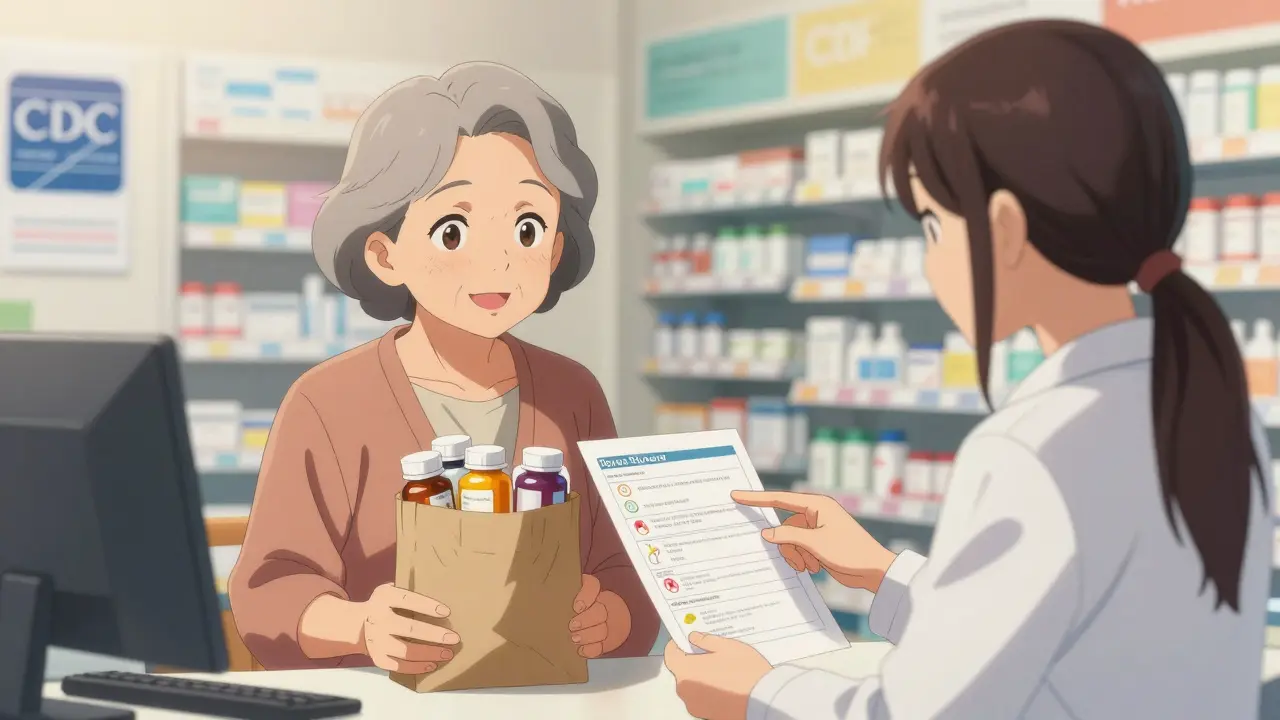
Most people don’t realize how many medications they’re taking - and how many might no longer be needed. Older adults often carry 10+ prescriptions, some from years ago. One pill might interact with another. A drug prescribed for pain might worsen your blood pressure. A vitamin might cancel out your thyroid med.Ask your pharmacist for a “brown bag review.” Bring every bottle - pills, creams, inhalers, patches - to your pharmacy. They’ll sort them, check for duplicates, interactions, and outdated meds. Many pharmacies offer this for free. It takes 20 minutes. It could save your life.
What If You’re Still Confused?
You’re not alone. A 2023 survey found that 61% of adults over 65 had at least one moment where they didn’t understand how to take their medicine. If you’re unsure, ask again. Don’t be shy. Say: “I want to make sure I’m taking this right. Can you explain it one more time?”Use trusted resources. The CDC’s website has simple guides on safe medication use. The Institute for Safe Medication Practices (ISMP) offers free printable checklists. Your pharmacist is your best ally - they’re trained to catch errors before they happen. Talk to them like you would a doctor.
Medication safety isn’t about being perfect. It’s about being aware. It’s about asking questions. It’s about double-checking. One small mistake can have big consequences - but so can one small habit of caution.
What should I do if I take the wrong medication?
If you realize you took the wrong pill, don’t wait. Call your pharmacist or poison control immediately (1-800-222-1222 in the U.S.). Have the pill bottle handy - they’ll need the name, strength, and how much you took. Don’t try to induce vomiting unless told to. Even small mistakes with certain drugs - like blood thinners or insulin - can be life-threatening within hours.
Can I split my pills to save money?
Only if the pill is scored (has a line down the middle) and your doctor or pharmacist says it’s safe. Some pills, like extended-release tablets or capsules, shouldn’t be split. Splitting them can change how the drug is absorbed, making it too strong or too weak. If cost is an issue, ask your pharmacist about generic versions, patient assistance programs, or mail-order options.
Why do some medications need to be taken at the same time every day?
Many drugs work best when your body has a steady level in the bloodstream. Blood pressure meds, thyroid hormones, and seizure drugs are examples. If you take them inconsistently, your levels swing - which can make the condition worse or cause side effects. For antibiotics, timing ensures the drug kills all the bacteria. Skipping doses lets them come back stronger.
Are over-the-counter drugs safe to mix with prescription meds?
Not always. Common OTC drugs like ibuprofen, acetaminophen, antacids, and sleep aids can interact badly with prescriptions. For example, taking ibuprofen with blood thinners increases bleeding risk. Acetaminophen with alcohol or liver meds can cause liver damage. Always check with your pharmacist before adding any OTC product - even if it’s “natural” or “herbal.”
How do I know if my medication has expired?
Check the expiration date on the label. It’s usually printed on the bottle or box. Don’t rely on how the pill looks - some meds still look fine after expiring, but lose potency. Others, like insulin or liquid antibiotics, can become toxic. If the pill is cracked, discolored, or smells odd, throw it out. When in doubt, ask your pharmacist. Most pharmacies will replace expired meds at no cost if you bring them in.

Comments (9)
Chloe Hadland
Just started using a pill organizer with alarms after my grandma nearly took my dad's blood pressure med by accident. Life changing. I used to think I was too young to need this stuff but now I get it. One mistake and boom. Not worth it.
Thanks for the post. Really needed this reminder.
Michael Camilleri
People think meds are candy. They pop pills like Skittles because they saw a TikTok ad. No wonder we have a healthcare crisis. It's not the system's fault. It's the collective ignorance. You don't get to be lazy and expect medicine to work like magic. Discipline isn't optional. It's survival.
And yes I'm talking to you, the person who takes metformin with a beer.
lorraine england
My mom used to keep all her meds in a candy jar because she said it made her feel better. One day she took my dad's beta blocker thinking it was her vitamin. She ended up in the hospital. Now everything's labeled in big letters, locked up, and we do a weekly check together. It's not about control. It's about love.
Also - brown bag reviews are FREE? Why didn't anyone tell me this sooner?
Himanshu Singh
Bro this is gold 🙌
Just got my first prescription last month and I was so overwhelmed. Took me 3 days to even remember what each pill was for. Now I write it on sticky notes next to my coffee maker. Small habits = big wins.
Also - if you're on 5+ meds, you're not broken. You're just human. The system failed you. Not you.
Keep going. You got this 💪
Izzy Hadala
While the intent of this article is commendable, the empirical foundation for several assertions requires further scrutiny. For instance, the claim that 60% more errors occur in polypharmacy regimens lacks citation to a peer-reviewed longitudinal study. Furthermore, the efficacy of Tall Man lettering remains contested in the literature, with meta-analyses indicating marginal reduction in error rates when contextual factors are controlled.
Nevertheless, the procedural recommendations are pragmatically sound and warrant dissemination.
blackbelt security
Medication safety isn’t a suggestion. It’s a discipline. Like lifting weights, you don’t skip days. You don’t wing it. You show up. Every. Single. Day.
Set the alarm. Write it down. Lock it up. Your future self will thank you.
Be the person who doesn’t end up in the ER because they were too lazy to read the label.
Patrick Gornik
Let’s be real - the entire pharmaceutical-industrial complex is a pyramid scheme disguised as healthcare. They sell you 12 pills to fix the side effects of 8 pills they sold you last year. The real rule? Don’t take anything unless you can pronounce it and know what it does to your liver.
And don’t trust a pharmacist who says ‘it’s fine’ - they’re paid by the corporation too. The only safe medication? The one you never took.
Also - why are we still using paper labels in 2025? QR codes. Every bottle. QR codes.
Karen Conlin
My uncle died because he thought ‘as needed’ meant ‘whenever I feel like it.’ He was on a blood thinner. Took it three times in one day because his knee hurt. No one told him that wasn’t how it worked.
So now I make sure every elderly person I know has a medication buddy. Someone who checks their pills every Sunday. No shame. No judgment. Just care.
And yes - I do brown bag reviews with my mom every year. She thinks I’m overdoing it. I think she’s lucky to be alive.
asa MNG
bro i took my moms clonazepam once bc i was stressed and now im addicted and also i think i might have a brain tumor from it?? idk but i think its because i took it wrong?? can someone help??