
Pediatric Excipient Safety Checker
Check Your Child's Medicine Safety
This tool helps identify potentially dangerous excipients in children's medications based on age and weight.
When you give your child a liquid medicine, a syrup, or even a topical cream, you assume the inactive ingredients are harmless. After all, they’re called "excipients"-fillers, sweeteners, preservatives. But in babies and young children, these so-called inert substances can turn dangerous. Alcohol, sorbitol, and benzyl alcohol are common in pediatric medicines, and their hidden risks are real, serious, and often overlooked.
Why Children Are at Higher Risk
Children aren’t just small adults. Their bodies handle drugs and chemicals differently. Their livers don’t break down toxins the same way. Their kidneys can’t flush them out as fast. Their skin is thinner. Their blood-brain barrier is still developing. This means even small amounts of excipients that are safe for adults can build up to toxic levels in infants and toddlers. A 2020 study in the Journal of Pediatric and Neonatal Individualized Medicine found that 63% of neonates in a sample of 726 babies were exposed to medications containing harmful excipients. In one hospital, 92% of newborns received at least one medicine with propylene glycol-a type of alcohol-on a daily basis. The median daily dose? 18.7 mg/kg. That’s above the safety threshold.Alcohol: More Than Just a Hangover
When you hear "alcohol" in medicine, you might think of ethanol. But the bigger threat is propylene glycol. It’s used to dissolve drugs, keep them stable, and make liquids taste better. It’s in liquid lorazepam (80% propylene glycol), esmolol (25%), and phenobarbital (40-70%). In adults, propylene glycol is mostly harmless. In newborns? Not even close. Their bodies can’t metabolize it efficiently. The result? A buildup that can cause:- Central nervous system depression (lethargy, coma)
- Seizures
- Low blood pressure
- Heart rhythm problems
- Acute kidney injury
- Hemolysis (red blood cells breaking apart)
Sorbitol: The Sweet Trap
Sorbitol is a sugar alcohol used to sweeten syrups and chewable tablets. It sounds harmless-maybe even healthy. But in children, especially those under two, it can cause serious gut distress and worse. Unlike lactose intolerance, which causes bloating and diarrhea, sorbitol toxicity can lead to:- Severe, prolonged diarrhea
- Dehydration
- Bacterial overgrowth in the gut
- Metabolic acidosis (dangerous drop in blood pH)
- Electrolyte imbalances
Benzyl Alcohol: A Silent Killer in Neonates
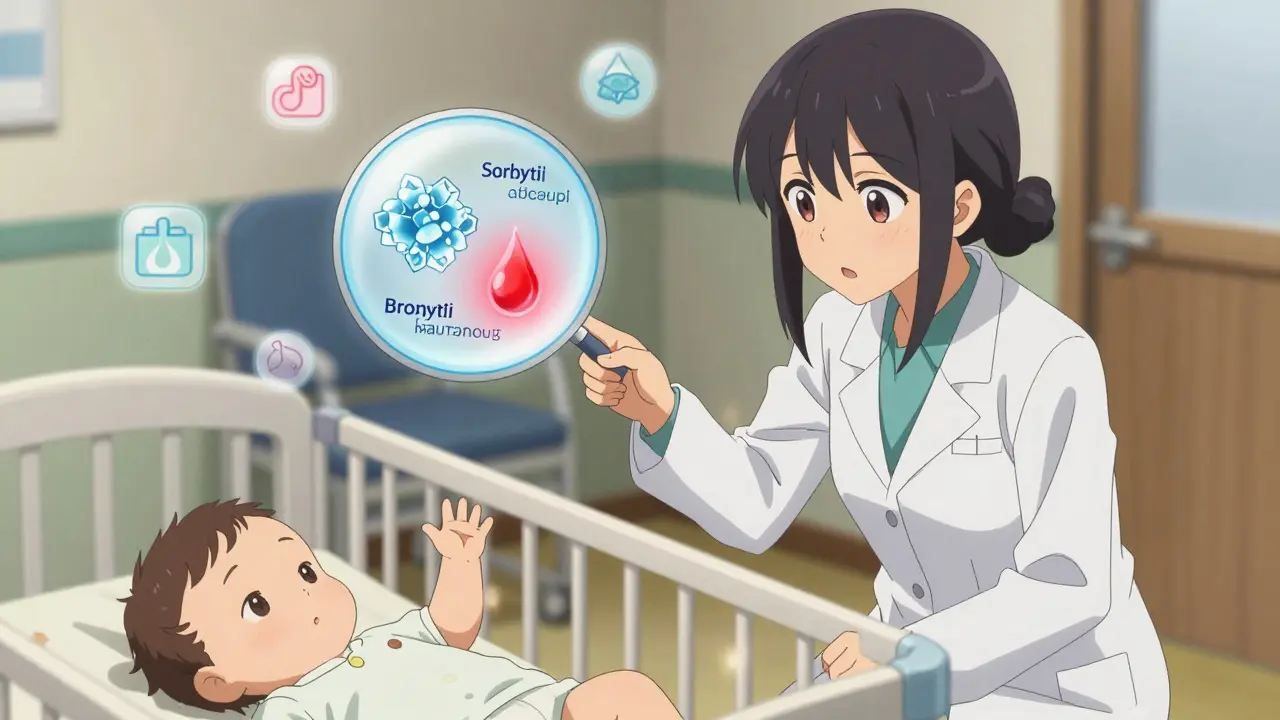
Benzyl alcohol is a preservative. It’s in injectables, eye drops, and nasal sprays. It’s also in some topical anesthetics like benzocaine and lidocaine. In adults? Low risk. In newborns? Deadly. The body of a premature infant can’t break down benzyl alcohol. It accumulates. And when it does, it can trigger:- Respiratory failure
- Seizures
- Cardiac arrest
- Metabolic acidosis
- Multi-organ failure
What’s Being Done? Not Enough
Regulators know this is a problem. The European Medicines Agency created the STEP database to track excipient toxicity. The FDA launched the Best Pharmaceuticals for Children Act. The European Paediatric Formulation Initiative (EuPFI) now lists 17 new excipients in development that are safer for kids. But progress is slow. In 2023, 78% of hospital pharmacists said they struggled to find age-appropriate formulations. Many had to dilute adult pills or use adult syrups, exposing kids to toxic excipient levels they’d never get if dosed properly. Even worse? Labeling. In the U.S., excipients don’t have to be listed by risk level. In Europe, they’re listed-but not explained. Parents read "sorbitol" and think "natural sweetener." They don’t see "potentially toxic in infants under 6 months."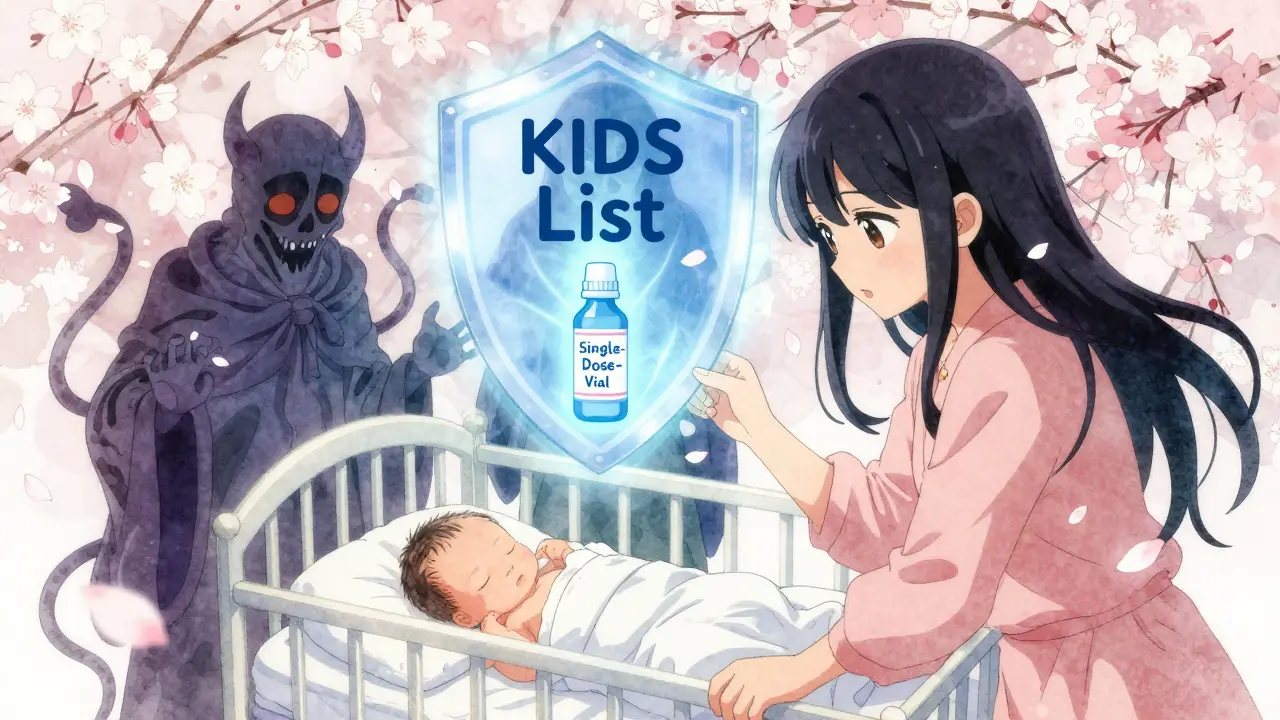
What Parents and Caregivers Can Do
You can’t fix the system alone. But you can protect your child.- Ask for the full ingredient list. Don’t accept "it’s just sugar." Ask: "Does this contain alcohol, sorbitol, or benzyl alcohol?"
- Check the KIDs List. The Pediatric Pharmacy Association’s 2025 KIDs List is free online. It tells you which excipients to avoid by age.
- Use single-dose vials. They don’t need preservatives like benzyl alcohol.
- Choose alcohol-free syrups. Many brands now offer sorbitol-free and propylene glycol-free options. They cost a little more-but so does a hospital stay.
- Report adverse reactions. If your child has a seizure, rash, or breathing trouble after taking medicine, report it to your doctor and to your country’s drug safety agency.
The Bottom Line
Excipients aren’t harmless. In children, especially newborns, they’re hidden hazards. Alcohol, sorbitol, and benzyl alcohol aren’t just ingredients-they’re potential toxins. And the system still isn’t catching them. The science is clear. The risks are proven. The solutions exist. What’s missing is awareness. You have the right to know what’s in your child’s medicine. Demand transparency. Ask questions. Push for safer options. Because when it comes to children’s health, nothing should be assumed-especially not "inert."Are all liquid medicines for children safe?
No. Many liquid medications for children contain alcohol (like propylene glycol), sorbitol, or benzyl alcohol-excipients that can be toxic in infants and neonates. Even medicines labeled "child-friendly" may contain these ingredients. Always check the full ingredient list and consult a pediatric pharmacist if unsure.
Can sorbitol cause long-term damage in kids?
Yes. Repeated exposure to high doses of sorbitol can lead to chronic diarrhea, dehydration, and metabolic acidosis, which can affect kidney and liver function over time. Children with underlying conditions like prematurity or intestinal disorders are at higher risk. Long-term use of sorbitol-containing medications is not recommended without medical supervision.
Why isn’t benzyl alcohol banned in all children’s medicines?
Benzyl alcohol is still used in multi-dose vials because it’s a cheap and effective preservative. While it’s banned in neonates under 28 days in the U.S., enforcement is inconsistent, especially with generic drugs and imported products. Regulatory agencies are working on stricter rules, but change is slow due to cost and supply chain challenges.
What should I do if my child had a reaction after taking medicine?
Stop giving the medicine immediately. Contact your pediatrician or go to the emergency room if your child has trouble breathing, seizures, extreme drowsiness, or blue skin. Report the reaction to your country’s drug safety agency (like the FDA MedWatch program or TGA in Australia). Also, ask the pharmacist for a list of ingredients to identify the culprit.
Are there safe alternatives to sorbitol and alcohol in children’s medicines?
Yes. Safer alternatives include starch, dehydrated calcium hydrogen phosphate, erythritol, and cellulose powder. Some brands now offer alcohol-free and sorbitol-free formulations. Look for products labeled "neonate-safe," "excipient-free," or "for infants under 6 months." Always verify with a pharmacist before use.

Comments (13)
Michaela Jorstad
I can't believe this isn't common knowledge. My cousin's baby had a seizure after a routine antibiotic syrup. The pharmacist said, "It's just sugar." Turns out? Sorbitol overload. I cried for three days. Now I check every label like it's a bomb schematic. Parents need to be armed with this info.
Chris Beeley
Ah yes, the classic American pharmaceutical-industrial complex at work-where profit margins trump pediatric safety, and regulatory agencies are more concerned with quarterly财报 than with the neurological integrity of neonates. Propylene glycol? A biochemically inert substance? Please. It's a slow-burning neurotoxin masquerading as a solvent. And benzyl alcohol? A relic of 1940s cost-cutting. The fact that we're still using these in multi-dose vials in 2025 is a moral failure masquerading as policy. We need a global pediatric excipient watchdog-like the WHO, but with teeth.
Arshdeep Singh
You think this is bad? Wait till you see what's in the 'natural' gummies they sell in India. I've seen kids on ayurvedic syrups with ethanol concentrations higher than wine. And no one checks. No one cares. The real problem? We treat kids like tiny adults because it's easier. Convenience over caution. That's the real disease here.
Danielle Gerrish
I work in NICU nursing. I've seen it. I've watched a 780g preemie go into cardiac arrest after a single dose of phenobarbital because the pharmacy didn't switch to the alcohol-free version. We had to scramble. The parents didn't know. The doctor didn't know. The label didn't say 'DANGEROUS TO NEWBORNS' in bold red. It said 'FOR INFANT USE.' That's not a warning-it's a death sentence wrapped in a smiley face. I'm not crying. I'm just... furious. Every time I see a syringe, I think: what's in this? And why isn't anyone talking about it?
Maddi Barnes
This is why I always ask for the ingredient list like I'm interrogating a suspect 😤 I once got called 'overly cautious' by a pharmacist. I replied: 'My child isn't a lab rat.' 🤷♀️ And now? I have a laminated cheat sheet taped to my fridge. Alcohol? No. Sorbitol? No. Benzyl alcohol? NOPE. If it doesn't say 'neonate-safe' on the bottle? I don't touch it. #ParentingIsWar
Benjamin Fox
Why are we even having this conversation? Just give kids the medicine and stop overthinking. America's got the best pharma in the world. If it's FDA approved, it's fine. You want organic tea and yoga? Go to Europe. We got science here. 🇺🇸
Jonathan Rutter
I used to think this was overblown. Then my son got hospitalized after a cough syrup. We didn't even know it had propylene glycol. Now I'm convinced this is a conspiracy. Big Pharma doesn't want you to know. They know parents won't pay extra for 'safe' versions. They're killing kids quietly. I've started a petition. 12,000 signatures. You should sign it. This isn't about medicine-it's about control. And they're winning.
Jana Eiffel
The ethical imperative to prioritize pediatric safety in pharmaceutical formulation is not merely a clinical concern but a foundational tenet of medical deontology. The continued utilization of excipients with known metabolic vulnerabilities in neonatal populations constitutes a systemic failure of precautionary principle adherence. One must interrogate the epistemological foundations of regulatory tolerance in the face of documented morbidity and mortality. The absence of mandatory, risk-stratified labeling is not an oversight-it is an abdication of moral responsibility.
aine power
I read the whole thing. You're right. I'm changing my kid's meds tomorrow.
Irish Council
The FDA doesn't ban it because they're paid off. Benzyl alcohol? It's not just in meds. It's in vaccines. In the water. In the air. They're testing how low a dose you can give before the kid stops crying. The WHO knows. The CDC knows. They just don't tell you. I've got documents. I've got emails. I've got a spreadsheet. You think this is about medicine? It's about population control. And we're all lab rats.
Laura B
I'm a pediatric nurse practitioner. I can't tell you how many times I've had to explain to parents that 'natural' doesn't mean 'safe.' One mom said, 'But it says 'sugar-free' on the bottle!' I had to pull up the chemical structure of sorbitol. She cried. I cried. We changed the med. It's not about fear. It's about informed consent. Ask for the leaflet. Read it. You're the only one who will.
Robin bremer
bro i had a seizure as a baby from some syrup my mom gave me and no one ever told me why 😭 now i know it was propylene glycol. i'm 27 and still scared of liquid meds. someone please make a safe one. 🥺
Amrit N
Man, this is wild. I never thought about this when I gave my niece syrup last year. She was fine, but now I'm paranoid. I checked the bottle-sorbitol, no alcohol. Still, I switched to a powder now. Better safe than sorry. Also, the KIDs List? Saved my life. Literally. Thanks for sharing this. 🙏