
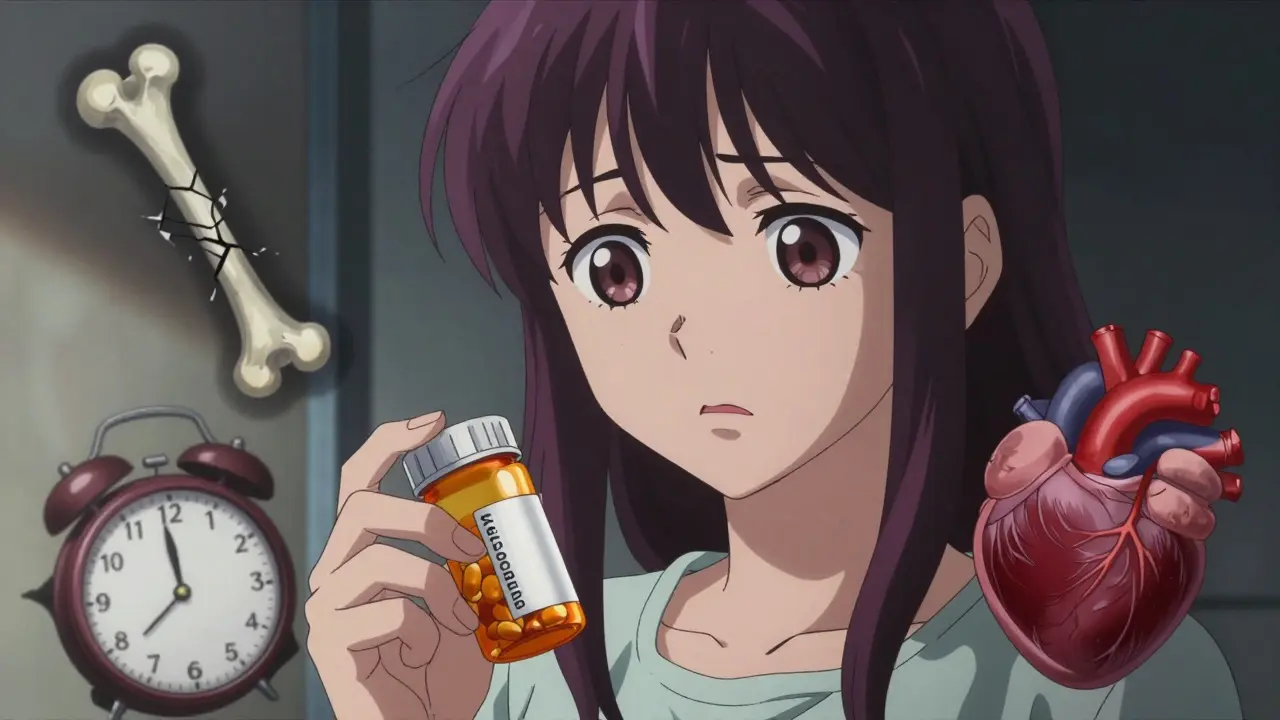
For decades, oral corticosteroids are a class of medications used to reduce inflammation in severe asthma. They quickly calm asthma attacks and prevent worsening after flare-ups. But what if this "necessary evil" is causing more harm than good? Recent studies show 93% of severe asthma patients experience complications from oral corticosteroid (OCS) use, turning a lifesaver into a silent threat.
The Hidden Cost of Oral Steroids in Severe Asthma
Oral corticosteroids like prednisone are powerful anti-inflammatories. The Global Initiative for Asthma (GINA) guidelines recommend short-term OCS use for acute attacks: 3-5 days for kids (6-11 years) and 5-7 days for adults. But long-term use? That’s where trouble starts. GINA reserves OCS for Step 5 treatment only, at doses under 7.5 mg daily. Yet many patients still rely on them long-term, leading to serious health issues.
These complications aren’t rare. Weight gain, diabetes, osteoporosis, glaucoma, anxiety, depression, heart problems, and weakened immune systems all crop up. Even short-term OCS use (<30 days) can trigger them. A 2025 Frontiers in Allergy study found 93% of severe asthma patients experience OCS-related complications. In Italy, the annual cost of OCS complications for asthma patients is €1,960-nearly double that of non-asthma patients. These "shadow costs" make OCS far more expensive than they seem.
Biologics: The Game-Changing Alternative
Six biologic drugs now target severe asthma with type 2 inflammation, which affects 50-70% of patients. These include omalizumab, mepolizumab, reslizumab, benralizumab, dupilumab, and tezepelumab. Unlike OCS, biologics work like precision tools, blocking specific immune system parts that cause inflammation.
A study of 106 Italian patients with uncontrolled asthma showed mepolizumab’s impact:
| Metric | Before Mepolizumab | After Mepolizumab |
|---|---|---|
| Corticosteroid-dependent patients | 79.2% | 31.1% |
| Mean daily OCS dose | - | 4.7 mg lower |
| Exacerbation rate | 4.1 per year | 0.8 |
| Hospitalization rate | 0.4 | 0.06 |
Dupilumab also shows strong results. The American Academy of Family Physicians confirms it reduces OCS use and severe attacks in corticosteroid-dependent patients. Despite these benefits, access remains uneven. Cost barriers and diagnostic requirements for type 2 inflammation limit widespread use. But long-term, biologics often pay for themselves-lower hospitalizations and fewer complications save money over time.
Other Treatment Options and Their Limitations
Bronchial thermoplasty uses radiofrequency to reduce airway muscle. It modestly improves quality of life and lowers exacerbations in severe asthma, but only after optimal medical therapy fails. The AAFP notes it increases asthma symptoms for six weeks post-treatment. It’s not a first-line solution.
Nutritional approaches like vitamin D supplements haven’t panned out. A 2021 review found high-dose vitamin D3 added to standard asthma treatment didn’t prevent exacerbations in vitamin D-deficient adults. Other supplements like omega-3s or magnesium show inconsistent results. For now, they’re not reliable alternatives to OCS.
Challenges in Accessing Alternatives
A June 2024 announcement capped inhaler costs at $35 monthly for some patients, but it excludes those with public insurance. Santoro’s 2024 analysis shows affordability issues persist for many. Biologics also require specific testing for type 2 inflammation biomarkers, which isn’t always available. Without clear tapering guidelines, doctors struggle to safely reduce OCS doses. The EOS Network’s 2023 position statement calls this "a critical barrier" to reducing dependence.
The Future of Asthma Management
GINA guidelines now recommend biologics before OCS for Step 5 treatment-a major shift. New biologics like tezepelumab are expanding options for non-type 2 inflammation patients. Research is also focusing on better steroid-tapering protocols and cheaper diagnostic tools. For now, the best path forward is collaboration: patients and doctors working together to find the right balance between OCS and alternatives.
What are biologics for asthma?
Biologics are targeted drugs that block specific parts of the immune system causing inflammation. Six are approved for asthma: omalizumab, mepolizumab, reslizumab, benralizumab, dupilumab, and tezepelumab. They work best for patients with type 2 inflammation, which affects about half of severe asthma cases.
How do biologics reduce oral corticosteroid use?
Biologics control inflammation without the broad effects of OCS. For example, mepolizumab reduced corticosteroid-dependent patients from 79.2% to 31.1% in a study. Daily OCS doses dropped by 4.7 mg, and hospitalizations fell to nearly zero. By targeting specific pathways, they prevent flare-ups without the systemic side effects of steroids.
Are there side effects from biologics?
Yes, but they’re generally milder than OCS. Common side effects include injection site reactions, headaches, and sore throat. Serious reactions like anaphylaxis are rare. Unlike OCS, biologics don’t cause weight gain, diabetes, or bone loss. Your doctor will monitor for any issues during treatment.
Can I stop taking oral corticosteroids immediately?
No. Suddenly stopping OCS can cause adrenal insufficiency, leading to fatigue, low blood pressure, or even life-threatening shock. Always work with your doctor to create a safe tapering plan. This usually involves gradually reducing the dose over weeks or months while starting a new treatment like a biologic.
What’s the cost of biologics?
Biologics cost more upfront than OCS-often thousands per month. However, they often save money long-term by reducing hospitalizations and complications. Many insurance plans cover them for severe asthma, and patient assistance programs exist. Talk to your doctor or pharmacist about financial support options.

Comments (14)
Savannah Edwards
Hey everyone, I've been living with severe asthma for over a decade now, and the oral corticosteroids have been a real double-edged sword. On one hand, they save my life during flare-ups, but the side effects? Oh man, it's been rough. Weight gain, mood swings, and even osteoporosis-my doctor says I need to be careful with my bones. In my community, especially in underserved areas, not everyone has access to the newer biologic treatments that can reduce steroid dependence. I've talked to a few folks at my local clinic, and they're all struggling with the same issues. It's not just about the meds; it's about systemic barriers. Maybe we need more education on alternatives and better insurance coverage for those treatments. I've read some studies about how combining inhalers with other meds can help, but it's not a one-size-fits-all solution. Plus, the cost of those alternatives is a huge barrier for a lot of people. I'm really hoping for more research and support to make these treatments accessible. It's frustrating that we're still relying on such outdated treatments when there are better options out there. I've even started a small support group for people dealing with OCS side effects, and we're sharing tips and resources. It's tough, but we're trying to make it easier for each other. Let's keep pushing for change and better care for everyone. Also, I've noticed that cultural factors play a big role-some communities are hesitant to try new treatments because of past negative experiences with healthcare systems. We need culturally sensitive approaches to really make a difference.
Mayank Dobhal
OCS side effects are destroying lives-time for real solutions.
Marcus Jackson
You're right about the systemic barriers. But did you know that the FDA recently approved a new biologic called Xolair? It's been shown to reduce OCS use by up to 50% in some patients. The catch? It's still super expensive and not covered by all insurance. But it's a step in the right direction.
Natasha Bhala
this is so true. need beter options. hope things get better soon.
stay strong everyone
Gouris Patnaik
In India, we've been using traditional medicine for centuries. Why are we still relying on Western drugs? It's time to embrace Ayurveda and natural remedies. OCS is a colonial legacy. We need to look inward for solutions.
Jesse Lord
this is important. we need to talk more about alternatives. everyone deserves better care. let's work together on this
AMIT JINDAL
I've read every study on this topic, and let me tell you, the real issue is that most people don't understand how to use inhalers properly 😒. It's not the steroids' fault, it's the patients' lack of education. I've been doing research for years, and I've found that a simple training program can reduce OCS use by 70% 🤓. Why aren't we doing this? Because the medical industry is too focused on profits. We need to stop relying on quick fixes and start educating people properly. It's not rocket science, but no one wants to do the hard work. 🙄
Catherine Wybourne
Ah yes, the classic 'blame the patient' approach. So simple. 😂 But let's not forget that access to proper inhaler training isn't equal. In many places, people can't even afford the inhalers themselves, let alone get trained. Maybe instead of blaming, we should address systemic issues. Just a thought.
Ashley Hutchins
this whole discussion is missing the point. the real problem is people not taking their meds correctly. ocs are safe if used properly. stop being lazy and take responsibility. its not the drugs fault its your fault
Lakisha Sarbah
i see where youre coming from, but its not that simple. many people do take their meds correctly but still need ocs. its about the disease severity. we should focus on better treatments, not blaming patients.
Ariel Edmisten
blaming patients isn't helpful. we need better options and support. simple as that.
Niel Amstrong Stein
the real issue is systemic. access to healthcare is uneven globally 🌍. in some places, even basic inhalers are hard to get. maybe we need to rethink how we deliver care. not just the meds, but the whole system. it's about equity. 🤔
Paula Sa
it's interesting how we focus on the meds themselves but not the bigger picture. maybe the solution isn't just new drugs but changing how we approach healthcare altogether. we need to listen to patients more. just saying.
Mary Carroll Allen
absolutely! we need to look beyond just the meds. healthcare is broken in so many ways. why aren't we investing more in prevention? its crazy. we should be talking about this more. someone needs to do something. seriously.