
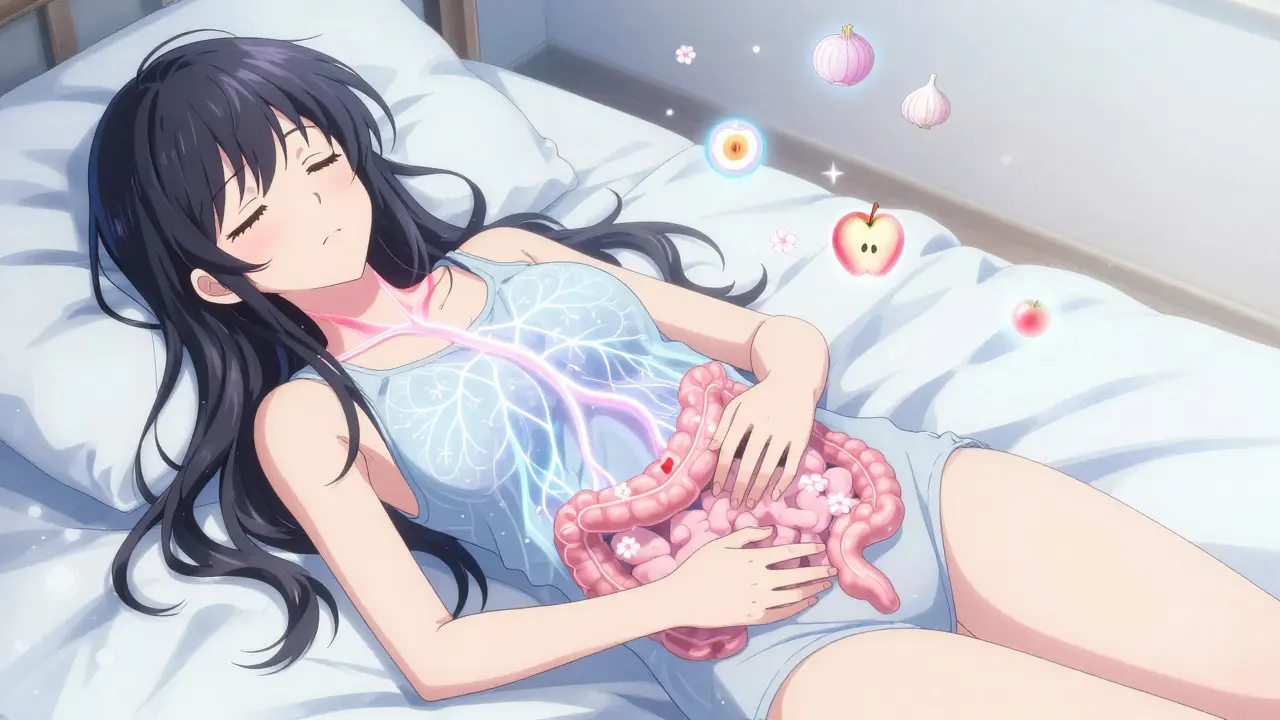
For millions of people around the world, stomach pain, bloating, and unpredictable bowel changes aren’t just annoying-they’re life-limiting. If you’ve been told your symptoms are "just stress" or "all in your head," you’re not alone. But here’s the truth: irritable bowel syndrome isn’t a psychological disorder. It’s a real, measurable breakdown in communication between your gut and your brain.
What’s Really Going On Inside You?
Irritable bowel syndrome, or IBS, affects between 5% and 10% of people globally. That’s one in every 10 to 20 people you know. For decades, doctors treated it like a simple bowel problem-too much gas, too slow, too fast. But modern science has flipped that idea on its head. We now know IBS is a disorder of brain-gut-microbiome interactions. That means your gut isn’t broken. It’s being misheard. Your gut has its own nervous system-the enteric nervous system-often called the "second brain." It talks to your central nervous system through nerves, hormones, and immune signals. When this conversation goes wrong, your brain starts misreading normal gut activity as pain. Your gut, in turn, reacts to stress, anxiety, or even certain foods by tightening, speeding up, or slowing down in ways that feel uncontrollable. The Rome IV criteria, used by doctors worldwide since 2016, define IBS by three key signs: recurrent abdominal pain at least once a week for three months, linked to bowel movements, changes in stool frequency, or changes in stool appearance. But here’s what most people don’t tell you: 76% of IBS patients report discomfort without sharp pain. And 60-70% also struggle with anxiety or depression-not because they’re weak, but because their nervous systems are stuck in a loop.The Gut-Brain Axis: Your Body’s Hidden Wiring
Think of your gut-brain axis like a two-way radio system. Your gut sends signals to your brain about what’s happening inside. Your brain sends back instructions: slow down, speed up, release more fluid, tighten the muscles. In IBS, that radio gets static. Three main channels carry these signals:- Neural: The vagus nerve is the main cable connecting your gut and brain. In IBS, this nerve often fires too easily, turning normal digestion into a pain signal.
- Endocrine: Hormones like cortisol (your stress hormone) and serotonin (your mood and gut mover) get out of balance. About 95% of your body’s serotonin is made in your gut, not your brain. In diarrhea-predominant IBS (IBS-D), serotonin levels spike-causing faster movement and watery stools. In constipation-predominant IBS (IBS-C), serotonin drops, slowing everything down.
- Neuroimmune: Your gut’s immune cells release chemicals that can make nerves hypersensitive. People with IBS often have lower levels of natural painkillers like β-endorphin, making even mild bloating feel intense.
Why Food Makes It Worse (And What Actually Helps)
You’ve probably tried cutting out dairy, gluten, or spicy food. Maybe it helped a little. But the real culprit for many is a group of short-chain carbohydrates called FODMAPs-fermentable oligosaccharides, disaccharides, monosaccharides, and polyols. These include onions, garlic, apples, wheat, beans, and artificial sweeteners like sorbitol. FODMAPs pull water into the gut and get fermented by gut bacteria, creating gas and stretching the intestinal wall. In a healthy person, this causes mild bloating. In someone with IBS, the nerves are already turned up too high. That stretch becomes pain. Studies show the low-FODMAP diet helps 50-76% of people. But it’s not a forever diet. It’s a tool to identify triggers, then rebuild tolerance. The problem? The elimination phase takes 4-6 weeks. And 65% of people find it too hard to stick with. Working with a dietitian who knows IBS makes all the difference. Generic advice like "eat more fiber" can backfire. Soluble fiber (oats, psyllium) often helps. Insoluble fiber (bran, whole wheat) can worsen bloating.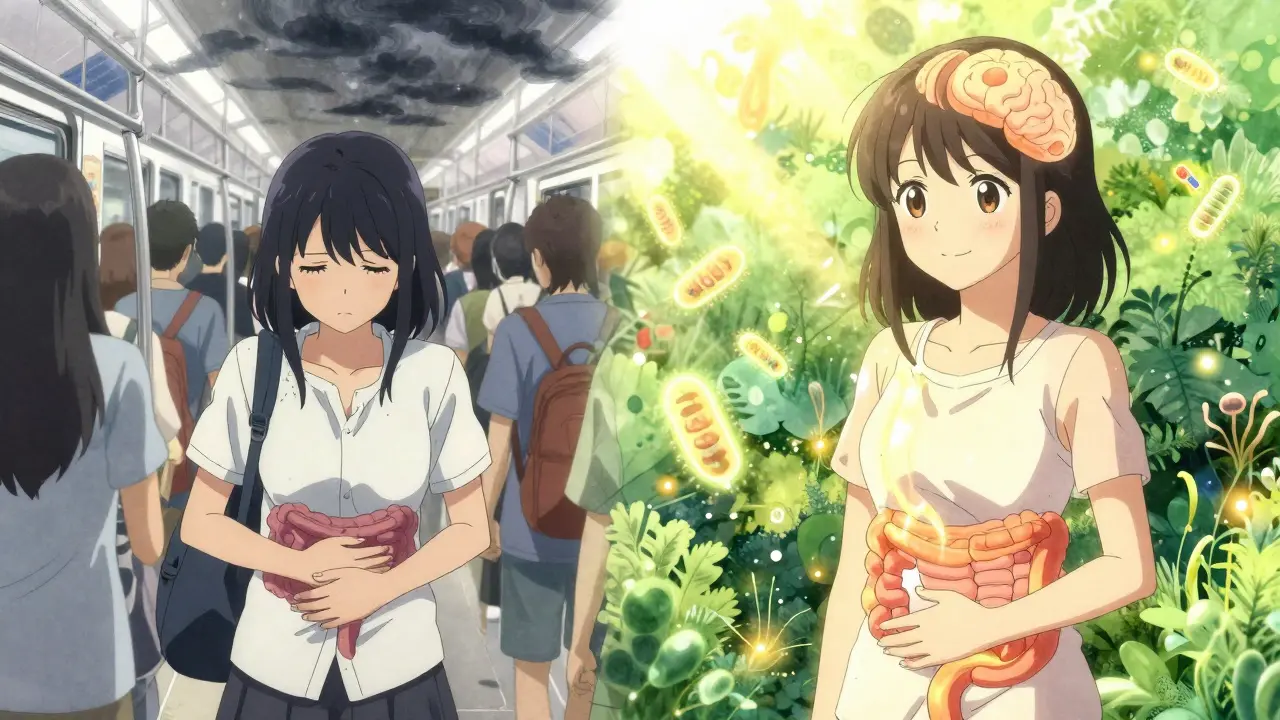
Medications: What Works, What Doesn’t
Traditional IBS meds like antispasmodics or loperamide (Imodium) offer temporary relief for some. But 63% of users report side effects-drowsiness, dry mouth, constipation-and nearly half quit within three months. Newer drugs target the gut-brain axis directly:- Alosetron (for IBS-D): Blocks serotonin receptors in the gut. Helps 50-60% of women with severe IBS-D. But it carries a rare risk of serious intestinal blockage, so it’s only prescribed under strict monitoring.
- Prucalopride (for IBS-C): Boosts serotonin activity to speed up movement. Works for 45-55% of patients.
- Etrasimod (new in 2023): A pill that calms immune activity in the gut. In a major trial, it reduced overall symptoms by 52% versus 31% for placebo.
The Most Effective Treatment You’ve Never Heard Of
Gut-directed hypnotherapy is the most powerful treatment for IBS-and it’s not what you think. It’s not about being put under. It’s about retraining your brain to stop misinterpreting gut signals. In a typical session, you lie down, relax, and listen to a therapist guide you through calming imagery: your gut is soft, warm, and calm. Your brain learns to associate gut sensations with safety, not danger. Studies show 70-80% of people improve significantly. The benefits last longer than drugs. And unlike medications, it has no side effects. The catch? It’s hard to find. Only one certified practitioner exists for every 500,000 people in rural areas. Sessions cost $1,200-$2,500 out-of-pocket. But many online programs now offer validated, therapist-led digital versions with similar results.Probiotics, FMT, and the Microbiome
Your gut is home to trillions of bacteria. In IBS, the balance is off. The ratio of Firmicutes to Bacteroidetes is often abnormal. Certain probiotics can help:- Bifidobacterium infantis 35624 (found in Align): Shown in trials to reduce bloating, pain, and bowel irregularity in 30-40% of users.
- Lactobacillus plantarum 299v: Helps with bloating and gas.

What No One Tells You About Getting Better
Most people spend 3-7 years bouncing between doctors before getting a proper IBS diagnosis. Many see five or more providers. Why? Because IBS doesn’t show up on scans. No blood test confirms it. Doctors are trained to look for tumors, infections, or inflammation. When they don’t find them, they assume it’s stress. But understanding the gut-brain axis changes everything. A 2022 survey found patients who learned how their brain and gut connect had 30% higher treatment adherence and 25% greater symptom improvement. Knowledge isn’t just power-it’s healing.What’s Next? The Future of IBS Treatment
In 2023, the first gut-brain axis biomarker panel-called VisceralSense™-launched. It measures 12 microbial metabolites and neurotransmitter levels to predict which treatment will work for you. No more trial and error. The NIH launched a $15 million project in early 2024 to build personalized IBS treatment plans based on your unique gut-brain profile. Companies are developing drugs that target microbial byproducts like short-chain fatty acids. The goal? Move from treating symptoms to fixing the root communication breakdown.Where to Start Today
You don’t need to wait for the future. Here’s what to do now:- Learn the science. Read up on the gut-brain axis. Understanding why you feel this way reduces shame and fear.
- Try a low-FODMAP diet with help. Don’t guess. Work with a dietitian trained in IBS.
- Try gut-directed hypnotherapy. Look for certified programs online if local options are limited.
- Consider probiotics. Bifidobacterium infantis 35624 is the most studied for IBS.
- Track your symptoms. Note food, stress, sleep, and bowel changes. Patterns emerge over time.

Comments (12)
vivek kumar
The gut-brain axis isn't just a buzzword-it's the missing link in 90% of GI diagnoses. IBS isn't 'stress'-it's neuroinflammation misfiring. I've seen patients on 12 meds fail, then go low-FODMAP + hypnotherapy and vanish from the ER. Science isn't late-it's being ignored by docs still stuck in the 90s.
Nick Cole
Finally, someone gets it. I spent 5 years being told I was 'anxious'-turns out my serotonin was tanking because my gut was screaming and my brain was deaf. The low-FODMAP diet didn't fix everything, but gut-directed hypnotherapy? That was the first thing that actually calmed my nervous system. No pills. No side effects. Just quiet.
Nicholas Gabriel
Wow. This is. Exactly. What. I've. Been. Trying. To. Explain. To. My. Doctor. For. Five. Years. The vagus nerve. Is. The. Key. Not. just. 'stress'. Not. 'eat less beans'. The. brain. is. misreading. the. gut. like. a. corrupted. audio. file. And. yes. Bifidobacterium. infantis. 35624. is. the. only. probiotic. that. actually. worked. for. me. After. all. the. others. failed. Thank. you. for. writing. this.
Allen Davidson
As someone who’s coached 30+ IBS patients through this, I can tell you the biggest mistake is thinking it’s a diet problem. It’s a nervous system problem. The low-FODMAP diet? It’s a diagnostic tool-not a lifestyle. And hypnotherapy? It’s not woo. It’s neuroplasticity. Your brain rewires itself when you give it safe signals. I’ve seen people go from 7 panic attacks a week to zero. No drugs. Just training.
Find a certified practitioner. Use the IGNT program if you’re in a rural area. And stop blaming yourself. Your gut isn’t broken. Your wiring is just loud.
Samyak Shertok
Oh wow, so IBS is just ‘your brain being dramatic’? How original. Next you’ll tell me my existential dread is caused by an overactive insula. I’ve got news for you, doc: my gut doesn’t care about your biomarkers. It just wants to explode in public. And no, I don’t want to ‘retrain’ my brain. I want to eat a taco without becoming a human toilet. But hey, if you wanna pay $2,500 to whisper to your colon… go ahead. I’ll be over here, blaming gluten.
Corey Chrisinger
It’s wild how we’ve spent decades pathologizing the body’s natural responses. The gut isn’t ‘broken’-it’s trying to tell you something. Your stress, your sleep, your trauma, your microbiome-all of it’s talking. And your brain? It’s been trained to ignore it. Maybe the real cure isn’t a pill or a diet… but listening. 🤔
Bianca Leonhardt
Of course it’s stress. You’re just weak. If you could control your emotions, you wouldn’t be crying in the bathroom every morning. And no, probiotics won’t fix your lack of discipline. Stop looking for magic bullets and grow up. You’re not special. You’re just lazy.
Travis Craw
hey so i just found out i have ibs after 4 years of being told im 'just sensitive'... i tried the low fodmap thing but honestly it felt like i was starving. i ended up just eating plain rice and chicken and it helped a bit. i never heard of gut hypnotherapy tho... sounds kinda weird but if it works? i'm in. thanks for the post man
Christina Bilotti
How adorable. You actually believe this pseudoscientific fluff? The 'gut-brain axis' is a marketing term created by supplement companies to sell $80 probiotics. FODMAPs? That’s just another fad diet for people who think their intestines are sentient. And hypnotherapy? Please. If your brain can't handle a little bloating, maybe you should try therapy for your anxiety instead of wasting money on charlatans.
Jody Fahrenkrug
Been living with IBS for 12 years. This post? Saved my sanity. I tried everything-meds, elimination diets, yoga, acupuncture. The only thing that stuck? A 10-minute daily hypnotherapy app. No magic. Just consistency. And honestly? I didn’t even believe it at first. Now I’m the one recommending it to my friends. You don’t need a $2,500 therapist. Just an app and 10 minutes a day.
Kasey Summerer
So… you’re telling me my gut is basically a moody teenager with a 2-way radio to my brain? 😅 I get it now. I thought I was just 'bad at digestion'-turns out my colon is just emotionally neglected. Low-FODMAP? Check. Hypnotherapy? Trying it this week. And yes, I’m crying while listening to it. But it’s… kinda nice? Like a spa for my insides. 🌿
john Mccoskey
Let’s be brutally honest here: the entire IBS industry is a profit-driven illusion. The gut-brain axis is a vague metaphor dressed in neuroscientific jargon to make patients feel like they’re part of some cutting-edge revolution when in reality, we’re still operating on guesswork. The low-FODMAP diet? A temporary bandage that starves your microbiome. Probiotics? Mostly placebo with a side of overpriced yogurt. And hypnotherapy? A glorified relaxation technique that works because it distracts you from the fact that no one actually knows what’s causing this. The NIH’s $15 million project? A PR stunt. We don’t need more biomarkers-we need better diagnostic tools, not more self-help podcasts disguised as medicine. The truth? We’re treating symptoms because we’re too afraid to admit we don’t understand the root cause. And until we do, we’re just selling hope to desperate people.