
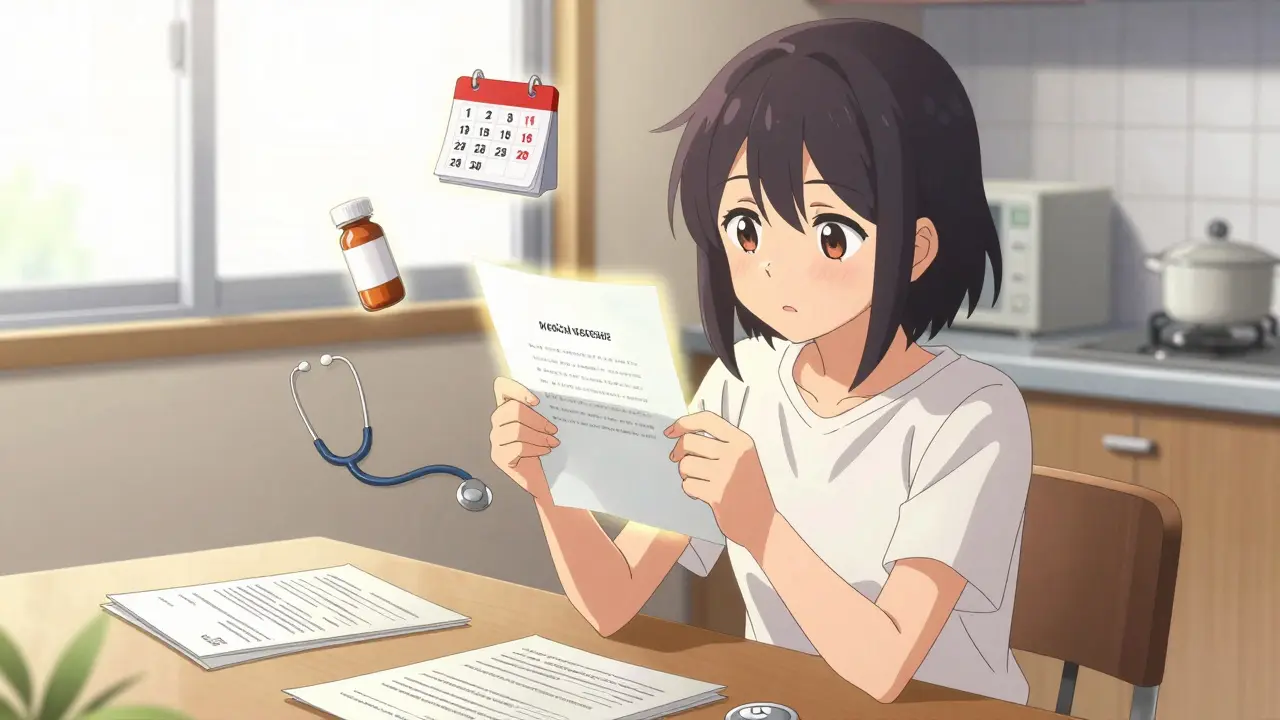
When your doctor prescribes a brand-name medication, but your insurance says you must switch to a cheaper generic version - and you know it won’t work for you - you’re not alone. Every year, millions of people face this exact situation. Insurance companies use formularies and step therapy rules to cut costs, but sometimes those rules ignore real medical needs. The good news? You can fight back. And with the right steps, you have a strong chance of winning.
Understand Why Your Insurance Denied the Medication
Your first step is to read the denial letter. It should come with your Explanation of Benefits (EOB), either by mail or in your online portal. Look for phrases like “generic substitution required,” “step therapy not completed,” or “prior authorization denied.” These aren’t random decisions. They’re based on your plan’s formulary - a list of drugs they cover, often with restrictions. For example, if you’re on a brand-name asthma inhaler because generics caused you severe tremors, your insurer might still push you to try the cheaper version first. That’s step therapy. But if you’ve already tried it and had a bad reaction, you have grounds to appeal.Get Your Doctor on Your Side
This is the most important step. No appeal succeeds without a strong letter from your doctor. Insurance companies don’t care what you think - they care what your doctor says. Your doctor needs to write a letter of medical necessity. It must include three things:- Why the generic won’t work for you - specific side effects, allergic reactions, or lack of effectiveness
- Proof you’ve already tried alternatives - list names, dates, and outcomes
- Clinical guidelines that support your doctor’s choice - cite sources like the American College of Rheumatology or the American Diabetes Association
Submit the Formal Appeal
Once you have the letter, you need to file the appeal. Most insurers have a form you can download from their website. Look for names like “Prior Authorization Exception Request” or “Step Therapy Override Form.” If you can’t find it, call customer service and ask for the form for “prescription drug coverage exception.” You have 180 days from the denial date to file an internal appeal with commercial insurance. Medicare gives you only 120 days. Don’t wait. Fill out every field. Include your name, policy number, the exact drug name and dosage, and the denial date. Attach your doctor’s letter and any lab results or pharmacy records that support your case.Request a Peer-to-Peer Review
This is where many appeals get approved. After you submit your paperwork, the insurer’s medical team will review it. If they still deny it, ask for a peer-to-peer review. That means your doctor talks directly to the insurance company’s medical director. Dr. Scott Glovsky, a healthcare attorney specializing in insurance disputes, says this step alone increases success rates to over 75%. The conversation is usually brief - 10 to 15 minutes. But if your doctor clearly explains why the generic won’t work, and cites clinical guidelines, the insurer often backs down.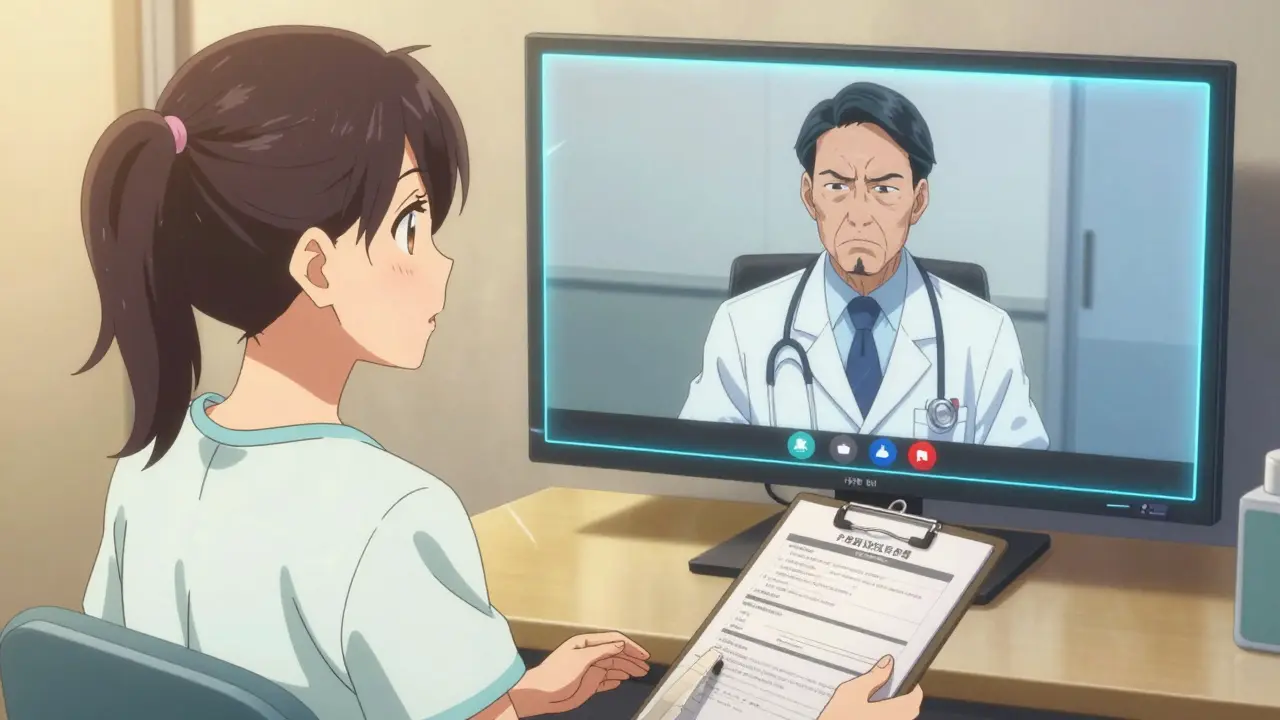
Know Your Timelines
Insurers have strict deadlines to respond. For non-urgent cases, they must reply within 30 days. If you’re already taking the medication and stopping it would harm you, mark your appeal as “urgent.” That triggers a 4-business-day deadline. Don’t be afraid to push. If they miss the deadline, your appeal is automatically approved. For Medicare Part D, the process is longer but more structured. There are five levels of appeal. The second level - handled by an independent reviewer - overturns denials 63% of the time. Keep copies of every submission. Track dates. If you’re denied at any level, move to the next one immediately.What to Do If Your Appeal Is Denied
If your internal appeal is denied, you can request an external review. This means an independent third party - not your insurer - looks at your case. This is your last shot before legal action. All commercial plans must offer this. Medicare Part D gives you this option after the fourth level of appeal. Medicaid rules vary by state, but 45 states now require external review. You can file this request yourself. But if your case is complex - like a rare autoimmune condition or cancer treatment - consider reaching out to your state’s insurance commissioner. California’s Department of Insurance resolved 92% of formal complaints in 2022. Other states have similar offices. They don’t handle appeals directly, but they can pressure insurers to act.Common Mistakes That Cost People Their Appeals
Most appeals fail because of simple errors:- Waiting too long to file - missing the 180-day window kills your case
- Not including enough proof - one failed generic isn’t enough. Document at least two
- Using vague language - saying “it didn’t work” isn’t enough. Say “I had severe nausea and vomiting within 48 hours of switching to generic metformin”
- Forgetting to include your insurance ID or policy number
- Not following up - if you don’t hear back in 25 days, call and ask for a status update

Real Stories That Won
One patient in Texas had Type 1 diabetes. Her insulin pen was being switched to a cheaper generic version. She had severe hypoglycemic episodes with the generic - once, she passed out at work. Her doctor wrote a letter citing ADA guidelines and attached her glucose logs. The appeal was approved in 11 days. Another in Florida had Crohn’s disease. The insurer denied her biologic drug, saying she hadn’t tried three generics first. She’d already tried two and developed a rash. Her doctor attached her allergy test results. The peer-to-peer review lasted 12 minutes. Approval came the next day. These aren’t rare. The Crohn’s & Colitis Foundation found 63% of appeals with full documentation succeeded.How to Speed Up the Process
Use digital tools. Many insurers now have online portals where you can upload documents. Some hospitals have electronic prior authorization systems that auto-fill forms. A 2023 AMA survey showed providers using these systems had 62% higher approval rates. Also, keep a folder - digital or physical - with everything: denial letters, doctor’s notes, pharmacy receipts, emails. If you need to escalate, you’ll be ready.What’s Changing in 2026
New rules are coming. In January 2024, the National Association of Insurance Commissioners updated its model law to require insurers to review step therapy exceptions within 48 hours if a patient has a documented adverse reaction. The Biden administration is also pushing to cut Medicare Part D review times from 7 days to 3 for urgent cases. More insurers are using AI to screen appeals - but human review is still required for denials. That means your doctor’s letter still matters most.Final Advice
You don’t need a lawyer. You don’t need to be an expert. You just need to be organized and persistent. The system is designed to make you give up. But 72% of denials are overturned on appeal - if you follow the steps. Start today. Get your doctor’s letter. File your appeal. Track every date. And remember: your health is worth fighting for.Can I appeal if my insurance won’t cover any generic version of my medication?
Yes. If your insurance denies coverage for all generics of your prescribed drug - or requires you to try multiple generics before approving the brand-name version - you can still appeal. Your doctor’s letter must explain why all alternatives are clinically inappropriate. This is common with medications like biologics, epilepsy drugs, or certain psychiatric treatments. Success rates are higher when you document multiple failed trials.
How long does an insurance appeal usually take?
For non-urgent cases, insurers have 30 days to respond. If your condition is urgent - meaning stopping the medication could cause serious harm - they must respond in 4 business days. Medicare Part D appeals can take longer, with each level adding 7-14 days. Most people get a decision within 3 to 6 weeks. If you’re waiting past the deadline, call and ask for a status update - delays often trigger automatic approvals.
What if my doctor won’t help me with the appeal?
Many doctors are overwhelmed with paperwork. But if your doctor refuses to write a letter, ask to speak with a nurse practitioner or physician assistant in the office - they can often help. If that fails, contact your state’s medical association or patient advocacy group. Some organizations provide template letters doctors can sign. You can also file a complaint with your state insurance commissioner - they can pressure the provider to cooperate.
Can I get my medication while my appeal is pending?
Sometimes. Ask your pharmacist if your insurer offers a “temporary override” or “bridge prescription.” Some plans allow a 30-day supply while your appeal is reviewed - especially if you’re already on the medication. If not, ask your doctor if they can write a short-term prescription at a lower cost, or if a patient assistance program can help. Don’t stop your medication without a plan.
Are there free resources to help me with my appeal?
Yes. The Patient Advocate Foundation offers free appeal templates and coaching. The National Patient Advocate Foundation and the Crohn’s & Colitis Foundation provide personalized help for specific conditions. Your state’s insurance commissioner’s office also offers free assistance - no lawyer needed. Call them before you submit your appeal. They’ve seen thousands of cases and can tell you exactly what to include.

Comments (15)
Anna Pryde-Smith
This is the most important thing I've read all year. I had to fight my insurance for six months just to get my migraine med covered. They kept saying 'try the generic' - I tried it. I ended up in the ER. My doctor wrote the letter, I filed the appeal, and they approved it on the third try. Don't let them gaslight you. You know your body better than their algorithm.
Susannah Green
Don't forget to include your pharmacy's rejection notice! I missed that once, and my appeal got bounced back for 'insufficient documentation.' Also - get the doctor's letter on letterhead. It makes a huge difference. And if they say 'we need more data,' ask for the specific clinical guideline they're referencing. Most times, they don't have one.
Janet King
It is critical to submit all required documentation in a timely manner. Failure to do so may result in the denial of your appeal. Always retain copies of all correspondence. This is not optional. It is necessary.
Sallie Jane Barnes
You are not alone. I was terrified to fight my insurer - I thought I'd get yelled at or ignored. But when I called, the rep actually apologized and walked me through the form. Your voice matters. Don't give up. Your health is worth every minute of this hassle.
Andrew Smirnykh
Interesting how the system is designed to discourage appeals. I wonder if this is intentional - or just bureaucratic inertia. Either way, the fact that 72% of appeals succeed with proper documentation suggests the rules aren't broken, just misapplied.
charley lopez
The formulary tiering structure, when coupled with step therapy protocols, creates a non-linear access paradigm for essential therapeutics. The peer-to-peer review mechanism represents a heuristic override within the utilization management framework, though its efficacy is contingent upon clinician advocacy capital.
Kerry Evans
People who can't afford brand-name meds should just deal with it. Insurance isn't a charity. If you can't handle the generic, maybe you shouldn't be on medication at all. I've been on generics for 20 years and I'm fine.
Kerry Moore
Thank you for sharing this detailed guide. I've helped several family members navigate these appeals, and your breakdown of the peer-to-peer review process is the clearest I've seen. I will be sharing this with our local patient support group.
Sue Stone
I just submitted my appeal yesterday. Fingers crossed. This post made me feel less crazy for fighting.
Oladeji Omobolaji
Back home in Nigeria, we don’t have this problem. If you can’t pay, you don’t get the drug. Simple. But I get it - in the US, you have to fight just to get the cheap version. That’s wild.
Vanessa Barber
72% success rate? That’s just marketing. My cousin appealed for her epilepsy med - got denied, then appealed again, then got an external review - and still got denied. The system is rigged.
Stacy Thomes
YES YES YES! I did this last year and it changed my life. My doctor cried when he wrote the letter. I cried when I got approved. You can do this. You are not broken. You are not lazy. You are not overreacting. YOU ARE FIGHTING FOR YOUR LIFE. AND YOU WILL WIN.
dana torgersen
so... like... the thing is, i think that insurance companies are just... you know... trying to save money, but they forget that people are, like, real humans with real bodies? and sometimes generics give you like... migraines? or panic attacks? or... i dunno... i just feel weird? anyway, your doc should just write a letter, right? and then... maybe they'll listen? i hope so. :/
Dawson Taylor
Documentation is the only currency that matters here.
Laura Rice
I just want to say thank you to every doctor who takes the time to write these letters. I know it's extra work, and you're already overworked. But you're saving lives. And to everyone fighting this battle - you're not crazy. You're not being difficult. You're just trying to stay alive. I believe in you. And I'm right here with you.