

Imagine taking a medication that works perfectly on an empty stomach but becomes almost useless-or dangerously potent-after a slice of toast. This isn't a hypothetical scenario; it's the reason why pharmaceutical companies don't just test a drug once. They have to prove how it behaves in two completely different biological environments: the fasted and fed states. For anyone involved in bioequivalence standards, understanding this gap is the difference between a safe product and a clinical failure.
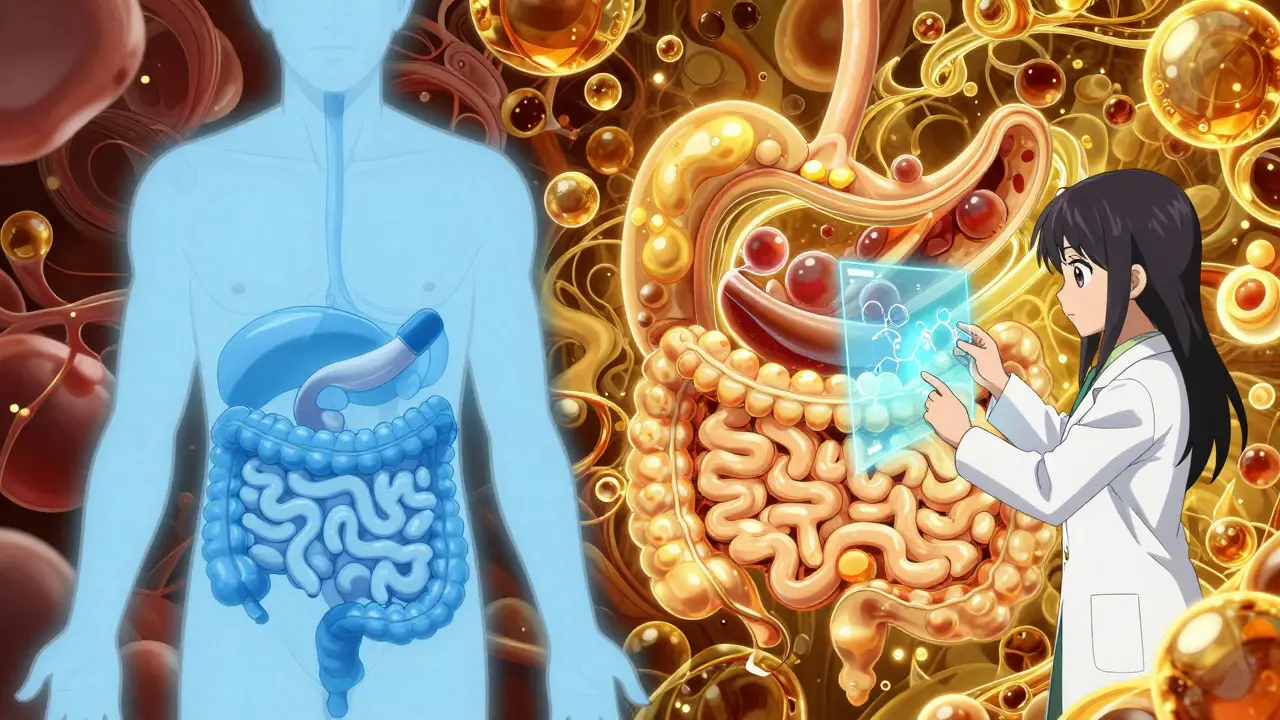
The core of the issue is that your digestive system is a shapeshifter. When you haven't eaten for 10 hours, your stomach is essentially a transit lounge. When you eat, it becomes a complex chemical processing plant. These shifts change how a drug dissolves, how fast it moves into the small intestine, and how much of it actually hits your bloodstream. If a company only tests in one state, they are missing half the story.
The Biological Divide: Fasted vs Fed
To get this right, we first need to define what these states actually look like in a clinical setting. A Fasted State is a physiological condition where a subject has abstained from caloric intake for typically 8 to 12 hours, allowing only water. In this state, the stomach is empty, and the pH levels are generally higher, around 2.5.
On the flip side, the Fed State is the postprandial period, usually occurring 2 to 4 hours after a standardized meal. To make these tests consistent, regulators like the FDA (U.S. Food and Drug Administration) don't just say "eat lunch." They require a specific high-fat, high-calorie meal-usually around 800 to 1,000 calories, with about 500 to 600 of those coming from fat. Why fat? Because fat slows down gastric emptying and changes the chemistry of the gut more than carbs or protein do.
The difference in gastric behavior is staggering. Research using SmartPill technology shows that in a fasted state, the average residence time in the stomach is only about 13.7 minutes. After a meal, that jumps to over 78 minutes. Your stomach pH also drops to a minimum of 1.5 in the fed state, creating a much more acidic environment that can either break down a drug too quickly or prevent it from dissolving at all.
Why Both Conditions are Mandatory for Bioequivalence
In the world of generics, Bioequivalence is the gold standard. It proves that a generic drug delivers the same amount of active ingredient to the bloodstream at the same rate as the brand-name version. However, food can act as a wild card. If a drug is lipophilic (fat-loving), a high-fat meal might increase its bioavailability by 200-300%. Conversely, for other compounds, food might block absorption by 50-70%.
If a manufacturer only conducts fasted tests, they might miss a "food effect" that causes the drug to overdose the patient or fail to work when taken with breakfast. This is why the EMA (European Medicines Agency) and the FDA require dual-condition testing for almost all new drug applications. If the food effect exceeds 20% in bioavailability, the dosing instructions must explicitly tell the patient whether to take the pill with or without food.
| Parameter | Fasted State | Fed State (High-Fat Meal) |
|---|---|---|
| Gastric Residence Time | ~13.7 Minutes | ~78.3 Minutes |
| Median Minimum pH | 2.5 | 1.5 |
| Stomach Pressure | 30-304 mbar | Consistently >240 mbar |
| Primary Driver | Water/Air | Macronutrients (Fat/Protein) |
The Ripple Effect: Beyond the Pill
While this is a cornerstone of pharmacy, the fasted vs fed debate isn't just for scientists in white coats; it's huge in exercise physiology too. The same logic applies: how does the body respond to a stimulus based on what's in the tank? In sports science, Substrate Metabolism-how your body chooses between burning fat or carbs-shifts dramatically between these states.
When you train fasted, you see about 30-50% higher availability of free fatty acids. This can lead to better mitochondrial adaptations and an upregulation of PGC-1α, which basically tells your cells to get better at burning fat. However, there's a trade-off. Fasted training often reduces high-intensity work capacity by 12-15%. You might burn more fat, but you won't hit your peak power output.
On the other hand, fed-state exercise-typically involving 1-4 g/kg of carbohydrates-can boost prolonged aerobic performance by over 8%. For an elite athlete, that's the difference between a podium finish and fourth place. It shows that whether you're testing a drug or a training program, the "state" of the subject is just as important as the intervention itself.

Common Pitfalls in Dual-State Testing
Running these trials isn't as simple as giving someone a burger and a pill. There are several traps that can ruin the data:
- The "Standard Meal" Trap: If the meal isn't strictly controlled within ±10% of the calories and macros, the results are useless. A "healthy" salad is not the same as the FDA-mandated high-fat meal.
- Individual Variability: Not every body reacts the same. Recent data suggests that Asian subjects may have gastric emptying times 18-22% slower than Caucasian subjects in fed conditions. A one-size-fits-all protocol can lead to skewed bioequivalence data.
- The Hydration Oversight: In both pharmaceutical and athletic trials, hydration status can mimic or mask the effects of fasting. Using urine specific gravity (keeping it below 1.020) is a must to ensure the results aren't just a byproduct of dehydration.
Moving Toward Precision Testing
We are moving away from the era of "average" results. The future is precision. In the pharma world, the EMA has started implementing continuous glucose monitoring during fed-state trials to see exactly how metabolic spikes affect drug absorption in real-time. This removes the guesswork of "snapshot" blood draws.
Similarly, in sports medicine, we're finding that genetics play a role. Variants in the PPARGC1A gene can explain why some people thrive on fasted training while others feel dizzy and sluggish. This means that in a few years, "fasted vs fed" won't be a general debate, but a personalized prescription based on your DNA and metabolic profile.
Why does the FDA require a high-fat meal for fed-state testing?
High-fat meals are used because fat has the most significant impact on gastric emptying and bile secretion. Since many drugs are lipophilic or interact with bile, a high-fat meal provides the "worst-case scenario" or the most extreme physiological shift, ensuring the drug is safe and effective regardless of what the patient eats.
Can a drug be bioequivalent in a fasted state but not in a fed state?
Yes. This happens when the food effect is different between the brand-name drug and the generic. For example, the generic might have different fillers or a different coating that reacts differently to the acidic environment of a fed stomach, causing it to absorb slower or faster than the original.
What is the typical time window for a "fasted" state in clinical trials?
The standard window is typically 8 to 12 hours without any caloric intake. Only water is permitted. This ensures that the stomach is empty and the body has shifted its metabolism away from recently ingested nutrients.
How does fed-state testing affect the drug's dosing instructions?
If dual-state testing shows a significant difference (usually >20%) in bioavailability, the label will be updated. This results in instructions like "Take on an empty stomach" or "Must be taken with food" to avoid therapeutic failure or toxicity.
Is fasted training always better for fat loss?
Not necessarily. While fasted training increases the immediate burning of free fatty acids and improves insulin sensitivity, some studies show no significant difference in long-term body composition changes compared to fed training. It's more about metabolic efficiency and preference than a guaranteed weight-loss shortcut.
